Posts filed under ‘Financial Markets’
Stock Market Nirvana: Butter in Bangladesh

Hallelulah to Jason Zweig at The Wall Street Journal for tackling the subject of data mining through his interview with David Leinweber, author of Nerds on Wall Street. All this talk about Goldman Sachs, High Frequency Trading (HFT) and quantitative models is making my head spin and distorting the true value of data modeling. Quantitative modeling should serve as a handy device in your tool-box, not a robotic “black box” solely relied on for buy and sell recommendations. As the article points out, all types of sites and trading platforms are hawking their proprietary tools and models du jour.
The problem with many of these models, even for the ones that work, is that financial market behavior and factors are constantly changing. Therefore any strategy exploiting outsized profits will eventually be discovered by other financial vultures and exploited away. As Mr. Leinweber points out, these models become meaningless if the data is sliced and diced to form manipulated relationships and predictive advice that make no sense.
Butter in Bangladesh: To drive home the shortcomings of data mining, Leinweber uses a powerful example in his book, Nerds on Wall Street, of butter production in Bangladesh. In searching for the most absurd data possible to explain the returns of the S&P 500 index, Leinweiber discovered that butter production in Bangladesh was an excellent predictor of stock market returns, explaining 75% of the variation of historical returns. The Wall Street Journal goes onto add:
By tossing in U.S. cheese production and the total population of sheep in both Bangladesh and the U.S., Mr. Leinweber was able to “predict” past U.S. stock returns with 99% accuracy.
For some money managers, the satirical stab Leinweber was making with the ridiculous analysis was lost in translation – after the results were introduced Leinweber had multiple people request his dairy-sheep model. “A distressing number of people don’t get that it was a joke,” Leinweber sighed.
Super Bowl Crystal Ball: Leinweber is not the first person to discover the illogical use of meaningless factors in quantitative models. Industry observers have noticed stocks tend to perform well in years the old National Football league team wins the Super Bowl. Unfortunately, this year we had two “old” NFL teams play each other (Pittsburgh Steelers and Arizona Cardinals). Oops, I guess we need to readjust those models again.
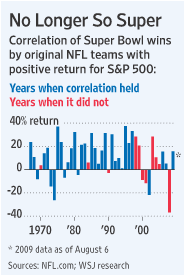
Other bizarre studies have been done linking stock market performance to the number of nine-year-olds living in the U.S. and another linking positive stock market returns to smog reduction.
Data Mining Avoidance Rules:
1) Sniff Test: The data results have to make sense. Correlation between variables does not necessarily equate to causation.
2) Cut Data into Slices: By dividing the data into pieces, you can see how robust the relationships are across the whole data set.
3) Account for Costs: The results may look wonderful, but the model creator must verify the inclusion of all trading costs, fees, and taxes to increase confidence results will work in the real world.
4) Let Data Brew: What looks good on paper might not work in real life. “If a strategy’s worthwhile,” Mr. Leinweber says, “then it’ll still be worthwhile in six months or a year.”
Not everyone has a PhD in statistics, however you don’t need one to skeptically ask tough questions. Doing so will help avoid the buried land mines in many quantitative models. Happy butter churning…
Wade W. Slome, CFA, CFP®
Plan. Invest. Prosper.
V-Shaped Recovery or Road to Japan Lost Decades?
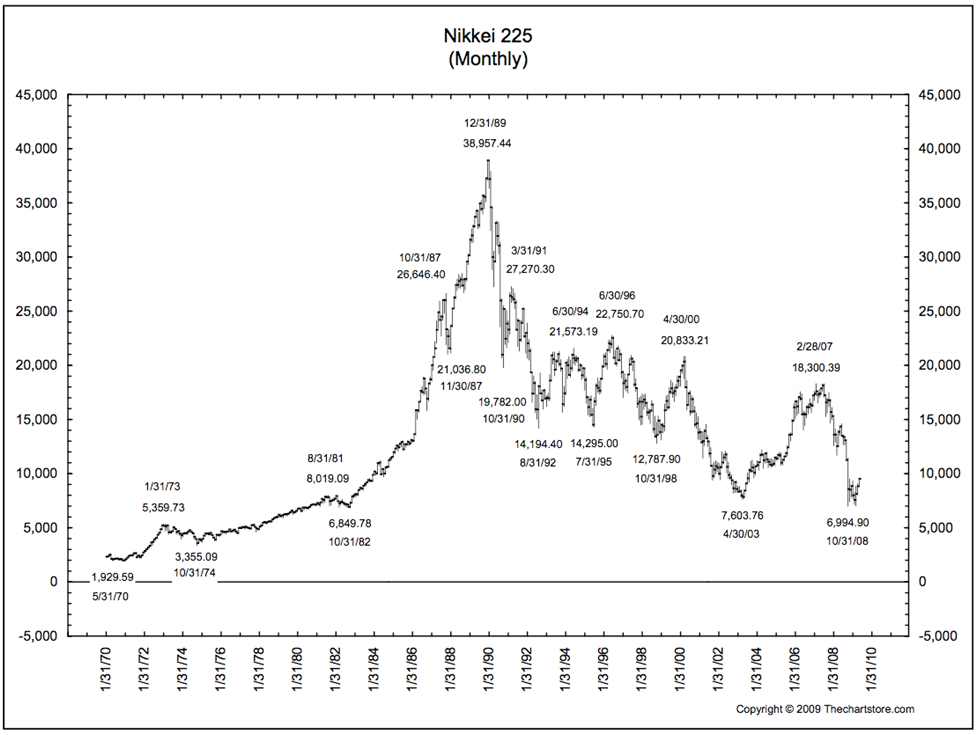
The Lost Decades from the 1989 Peak
On the 6th day of March this year, the S&P 500 reached a devilish low of 666. Now the market has rebounded more than 50% over the last five months. So is this a new bull market throttled into gear, or is it just a dead-cat bounce on route to a lost two decades, like we saw in Japan?
Smart people like Nobel Prize winner and economist Paul Krugman make the argument that like Japan, the bigger risk for the U.S. is deflation (NY Times Op-Ed), not inflation.
Now I’m no Nobel Prize winner, but I will make a bold argument of why Professor Krugman is out to lunch and why we will not go in a Japanese death-like, deflationary spiral.
Let’s review why our situation is dissimilar from our South Pacific friends.
Major Differences:
- Japanese Demographics: The Japanese population keeps getting older (see UN chart), which will continue to pressure GDP growth. According to the National Institute of Population and Social Security Research, by 2055 the Japanese population will fall 30% to 90 million (equivalent to 1955 level). Over the same time frame, the number of elderly under age 65 is expected to halve. To minimize the effects of the contraction of the working population, it will be necessary both to increase labor productivity, loosen immigration laws, and to promote the employment of woman and people over 65. Japan’s population is expected to expected contraction in Japan’s labor force of almost 1% a year in 2009-13.

Source: The Financial Times/UN (Declining Workforce Per 65 Year Old)
- Bank of Japan Was Slow to React: Japan recognized the bubble occurring and as a result hiked its key lending discount rate from 1989 through May 1991. The move had the desired effect by curbing the danger of inflation and ultimately popped the Nikkei-225 bubble. Stock prices soon plummeted by 50% in 1990, and the economy and land prices began to deteriorate a year later. Belatedly, Japan’s central bank began a series of interest rate-cuts, lowering its discount rate by 500-basis points to 1% by 1995. But the Japanese economy never recovered, despite $1-trillion in fiscal stimulus programs.
- The Higher You Fly, the Farther You Fall: The relative size of the Japanese bubble was gargantuan in scale compared to what we experienced here in the United States. The Nikkei 225 Index traded at an eye popping Price-Earnings ratio of about 60x before the collapse. The Nikkei increased over 450% in the eight years leading up to the peak in 1989, from the low of about 6,850 in October 1982 to its peak of 38,957 in December 1989. Compare those extreme bubble-icious numbers with the S&P 500 index, which rose approximately a more meager 20% from the end of 1999 to the end of 2007 (U.S. peak) and was trading at more reasonable 18x’s P-E ratio.
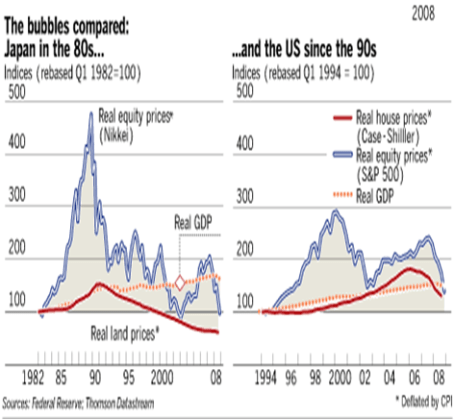
Source: Dow Jones
- Debt Levels not Sustainable: Japan is the most heavily indebted nation in the OECD. Japan is moving towards that 200% Debt/GDP level rapidly and the last time Japanese debt went to 200% of GDP (during WWII), hyper-inflation ensued and forced many fixed income elderly into poverty. Although our debt levels have yet to reach the extremes seen by Japan, we need to recognize the inflationary pressure building. Japan’s debt bubble cannot indefinitely sustain these debt increases, leaving little option but to eventually inflate their way out of the problem.
- Banking System Prolongs Japanese Deflation: Despite the eight different stimulus plans implemented in the 1990s, Japan lacked the fortitude to implement the appropriate corrective measures in their banking system by writing off bad debts. An article from July 2003 Barron’s article put it best:


After the collapse of the property bubble, many families and businesses had debts that far exceeded their devalued assets. When a version of this happened in America in the savings-and-loan crisis, the resulting mess was cleaned up quickly. The government seized assets, sold them off, bankrupted ailing banks and businesses, sent a few crooks to jail and everything started fresh, so that deserving new businesses could get loans. The process is like a tooth extraction — painful but mercifully short. In Japan this process has barely begun. Dynamic new businesses cannot get loans, because banks use available credit to lend to bankrupt businesses, so they can pretend they are paying their debts and avoid the pain of write-offs. This is self-deception. The rotten tooth is still there. And the Japanese people know it.
The Future – Rise of the Rest: Fareed Zakaria, Newsweek editor wrote about the “Rise of the Rest” in an incredible article (See Sidoxia Website) describing the rising tide of globalization that is pulling up the rest of the world. The United States population represents only 5% of the global total, and as the technology revolution raises the standard of living for the other 95%, this trend will only accelerate the demand of scarce resources, which will create a constant inflationary headwind.
For those countries in decline, like Japan, demand destruction raises the risk of deflation, but historically the innovative foundation of capitalism has continually allowed the U.S. to grow its economic pie. Economic legislation by our Congress will help or hinder our efforts in dealing with these inflationary pressures. One way is to incentivize investment in innovation and productive technologies. Another is to expand our targeted immigration policies towards attracting college educated foreigners, thereby relieving aging demographics pressures (as seen in Japan). These are only a few examples, but regardless of political leanings, our country has survived through wars, assassinations, terrorist attacks, banking crises, currency crises, and yes recessions, to only end up in a stronger global position.
This crisis has been extremely painful, but so have the many others we have survived. I believe time will heal the wounds and we will eventually conquer this crisis. I’m confident that historians will look at the coming years in favorable light, not the lost decades of pain as experienced in Japan.
Wade W. Slome, CFA, CFP®
Plan. Invest. Prosper.
Surviving in a Post-Merger Financial World

The financial institution dominoes have fallen.
Over the last two years we have experienced the worst financial crisis since the Great Depression. As a result, financial institutions have come under assault from all angles, including its customers, suppliers, and regulators. And as we have watched the walls cave in on the banking and brokerage industries, we have seen a tremendous amount of consolidation. Like it or not, we need to adapt to the new environment.
The accelerated change began in early 2008 with the collapse of Bear Stearns and negotiated merger with JP Morgan Chase. Since then we saw the largest investment banking failure (Lehman Brothers), and the largest banking failure in history (Washington Mutual). Other mergers included the marriage of Merrill Lynch and Bank of America, the combination of Wachovia into Wells Fargo, and most recently the blending of Smith Barney into Morgan Stanley. These changes don’t even take into account the disruption caused by the government control of Fannie Mae, Freddie Mac, and AIG.
So what does all this change mean for consumers and investors?
1) Rise in Customer Complaints: Change is not always a good thing. Customer complaints rose 54% in 2008, and climbed 86% in the first three months of 2009 according to FINRA (Financial Industry Regulatory Authority), a nongovernmental regulator of securities companies. The main complaint is “breach of fiduciary duty,” which requires the advisor to act in the best interest of the client. Making the complaint stick can be difficult if the broker only must fulfill a “suitability” standard. To combat the suitability limitation, investors would be well served by investigating an independent Registered Investment Adviser (RIA) who has a fiduciary duty towards clients.
2) Less Competition = Higher Prices: The surviving financial institutions are now in a stronger position with the power to raise prices. Pricing can surface in various forms, including higher brokerage commissions, administrative fees, management fees, ATM fees, late fees, 12b-1 fees and more.
3) Customer Service Weakens: The profit pool has shrunk as lending has slowed and the real estate gravy train has come to a screeching halt. By cutting expenses in non-revenue generating areas, such as customer service, the financial institutions are having a difficult time servicing all their client questions and concerns. There is still fierce competition for lucrative accounts, but if you are lower on the totem pole, don’t expect extravagant service.
4) Increased Regulation: Consumer pain experienced in the financial crisis will likely lead to heightened regulation. For example, the Obama administration is proposing a consumer protection agency, but it may be years before tangible benefits will be felt by consumers. Financial institutions are doing their best to remove themselves from direct oversight by paying back government loans. In the area of financial planning, proposals have been brought to Congress to raise standards and requirements, given the limited licensing requirements. Time will tell, but changes are coming.
Investing in a Post-Merger Financial World: Take control of your financial future by getting answers from your advisor and financial institution. Get a complete list of fees. Find out if they are an independent RIA with a “fiduciary duty” to act in the client’s best interest. Research the background of the advisor through FINRA’s BrokerCheck site (www.finra.org) and the SEC’s Investment Adviser Public Disclosure Web site (www.sec.gov). Get referrals and shop around for the service you deserve. Survival in a post-merger world is difficult, but with the right plan you can be successful.
For disclosure purposes, Sidoxia Capital Management, LLC is an independent Registered Investment Advisor in California.
Wade W. Slome, CFA, CFP®
Plan. Invest. Prosper.
Mountains of Cash Starting to Trickle Back

The month of July was an interesting month because investors opened their 401k and investment statements for the first time in a long while to notice an unfamiliar trend… account values were actually up. Like a child that has burnt their hand on a stove, the wounds and memories are still too fresh – more time must pass before investors decide to get back into the market in full force.
As you can see from the charts below, as investors globally panicked throughout 2008 and early 2009, money earning next to nothing in CDs and Money Market accounts was stuffed under the mattress in droves. The fear factor of last fall has caused current liquid assets to stand near 10 year highs at a level near 120% of the S&P 500 total market capitalization (Thomson Reuters) and at more extreme levels last fall if you just look at Money Market assets (bottom chart) . Now that the Armageddon scenario has been temporarily put to rest, we’re starting to see some of that cash to trickle back into the market. The silver lining is that there is still plenty of dry powder left to drive the market higher – not overnight, but once sustained confidence returns. If the earnings outlook continues to improve, come the beginning of October when 3rd quarter statements arrive in the mail, the pain of not being in the market will overwhelm the fear of burning another hand on the stove like in 2008.

It is funny how the sentiment pendulum can swing from the grips of despair a year ago. There is still headroom for the market to climb higher before the pendulum swings too far in the bullish direction – if you don’t believe me just look on the horizon at the mountain of cash.

Source: SentimenTrader.com (Fall 2008)
Wade W. Slome, CFA, CFP®
Plan. Invest. Prosper.
Momentum Investing: Riding the Wave

Riding the Momentum Wave Can Be Dangerous
As famed trader Jesse Livermore (July 26, 1877 — November 28, 1940) stated, “Prices are never too high to begin buying or too low to begin selling.”
For the most part, the momentum trading philosophy dovetails with Livermore’s mantra. The basic premise of momentum investing is to simply buy the outperforming stocks and sell (or short) the underperforming stocks. By following this rudimentary formula, investors can generate outsized returns. AQR Capital Management and Tobias Moskowitz (consultant), professor at Chicago Booth School of Management, ascribe to this belief too. AQR just recently launched the AQR Momentum Funds:
- AQR Momentum Fund (AMOMX – Domestic Large & Mid Cap)
- AQR Small Cap Momentum Fund (ASMOX – Domestic Small Cap)
- AQR International Momentum Fund (AIMOX – International Large & Mid Cap)
Professor Moskowitz Speaks on Bloomberg (Thought I looked young?!)
As I write in my book, How I Managed $20,000,000,000.00 by Age 32, I’m a big believer that successful investing requires a healthy mixture of both art and science. Too much of either will create negative outcomes. Modern finance teaches us that any profitable strategy will eventually be arbitraged away, such that any one profitable strategy will eventually stop producing profits.
A perfect example of a good strategy, gone bad is Long Term Capital Management. Robert Merton and Myron Scholes were world renowned Nobel Prize winners who single handedly brought the global financial markets to its knees in 1998 when it lost $500 million in one day and required a $3.6 billion bailout from a consortium of banks. Their mathematical models weren’t necessarily implementing momentum strategies, however this case is a good lesson in showing that even when smart people implement strategies that work for long periods of time, various factors can reverse the trend.
I wish AQR good luck with their quantitative momentum funds, but I hope they have a happier ending than Jesse Livermore. After making multiple fortunes and surviving multiple personal bankruptcies, Mr. Livermore committed suicide in 1940. In the mean time, surf’s up and the popularity of quantitative momentum funds remains alive and well.
Wade W. Slome, CFA, CFP®
Plan. Invest. Prosper.
High Frequency Trading: Buggy Whip Deja Vu

Slow Frequency Traders (SFT) Moving the Direction of the Buggy Whip
Innovation can be a thorn in the side of dying legacy industries. With the advent of the internal combustion engine from Swiss inventor Isaac de Riva (1807) and the subsequent introduction of Henry Ford’s affordable Model-T automobile (1908), the buggy whip industry came under assault and eventually disappeared. I’m sure the candle lobbyists weren’t too happy either when Thomas Edison first presented the light bulb (1879).
Legacy broker dealers and floor traders are suffering similar pains as those in the buggy whip industry did. New competitors are shrewdly exploiting technology in the field of High Frequency Trading (HFT) and as a result are gaining tremendous market share. Supercomputers and complex mathematical algorithms have now invaded the financial market exchanges, shrinking the profit pools of slow-moving, fat-cat broker dealers (a.k.a., Slow Frequency Traders – SFT) by simply trading faster and smarter than the legacy dealers and exchanges. As Dan Akroyd says to Eddie Murphy in the movie Trading Places, before making millions on the commodities trading floor, “It’s either kill, or be killed.” And right now it’s the traditional broker dealers and floor traders that are getting killed. According to a study by the Tabb Group, 73% of U.S. daily equity volume currently comes from high frequency traders (up from 30% in 2005). And despite only representing 2% of the relevant, actively trading financial institutions, the HFT industry generated an estimated $21 billion in profits last year.
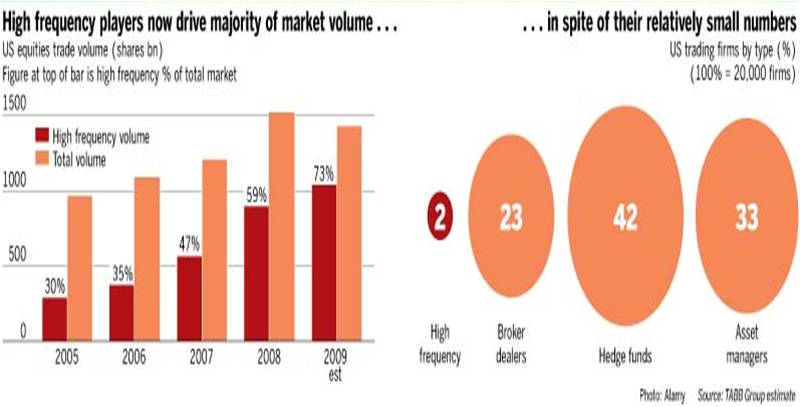
Source: The Financial Times
HFT Controversy: So what’s the big controversy regarding HFT? Critics of these high speed traders (including Joe Saluzzi at Themis Trading) claim the fast traders are unfairly using the technology for selfish, greedy profit motives, and in the process are disadvantaging investors. Screams of “front-running,” effectively using the information obtained from fast computer processes to surreptitiously trade before poor, unassuming individual investors can react, is a foundational argument used by opponents. Also the detractors argue that the additional liquidity (traditionally considered a positive factor by academics) provided by the HFT-ers is “low-quality” liquidity because the fast trades are believed to suck valuable liquidity out of the system and contribute to heightened volatility. HFT participants are equated to aggressive ticket scalpers, who in the real world buy low priced tickets and later gouge legitimate buyers by reselling the original tickets at outrageously high prices.
Rebuttal:
- On HFT Price Impact: If HFT is so damaging for individual investors, then why have price spreads narrowed so dramatically since the existence of this fast style of trading? The computerization and decimalization of trading has made trading more efficient – much like ATM machines and e-mail have made banking and document mailing more efficient. Investors can buy at lower prices and sell at higher prices – sounds like a beneficial trend to me.
- On HFT Volatility: If HFT-ers are demonized for the market crash, then why isn’t anyone patting them on the back or buying them a drink for the ~+50% surge in the equity markets since March of this year? Maybe the investment banks that were levered 30x’s, or the $100s of billions in unregulated mortgage debt stand to shoulder more of the volatility blame?
- On HFT Price Discovery: At the end of the day, if HFT partakers (robots) are actually manipulating prices, then reasonable and greedy capitalists (humans) will stabilize prices by either scooping up irrationally low-priced stocks and/or selling short illogically high priced securities.
On HFT Front-Running and Flash Orders: The New York Times recently ran an article describing a very specific one sided scenario where “flash orders” tipped off HFT traders to unfairly exploit a profitable trade in Broadcom (BRCM) stock. However, trades do not occur in a vacuum. Other scenarios could have easily been drawn up to show HFT-ers losing money on their computer-based strategy. “Quite possibly these flash orders are happening as an unintended consequence of an automated algorithmic trading program,” says Alex Green, Managing Partner at AMG Advisory Group, an institutional trading consulting firm. Flash orders are used when trying to display an order for a small amount of time while waiting to be displayed in the National Best Bid Best Offer (the bid-ask quotes viewable to the public).
In addition, if front-running is indeed occurring, it is happening at prices between the bid-ask spread, thereby incentivizing other market makers to lower their offer price and raise their bid price (a positive development for investors). Any trading occurring outside the bounds of nationally displayed regulated price quotes constitutes illegal activity and can result in time behind bars.
Common Ground – Dark Pools: One area I believe I share common ground with the SFT-ers is on the issue of “dark pools.” In this murky realm, trading occurs in pools of anonymous buyers and sellers where no price quotes are displayed. These pools are bound by the same regulations as other exchanges, but due to their opaqueness are more difficult to police. According to a recent WSJ article, intensified scrutiny has fallen on these dark pools by the SEC because a large number flash orders are routed to them. Although flash orders may not in and of itself be a problem, there is more room for potential abuse in these dark pools.
Conclusion: When all is said and done, it is very clear to me that innovation through technology has translated into a huge gain for individual and institutional investors. It may take a PhD to write the code for a complex high frequency trading algorithm, however it doesn’t take a genius to figure out spreads have narrowed and liquidity has risen dramatically over the last decade – thanks in large part to HFT technological innovation. Certainly technology, globalization, along with the introduction of electronic communication networks (ECNs) like Direct Edge, flash orders, and dark pools have made trading complex. With a denser group of players and structures, it is important that SEC Chairman Mary Schapiro continue to regulate financial market exchanges with the aim of improved transparency and equality. As long as the trends of heightened liquidity and narrowed spreads continue, investors will benefit while the buggy whip lobbyists (legacy broker dealers and floor traders) will continue to scream.
Wade W. Slome, CFA, CFP®
Plan. Invest. Prosper.
Calamos Still “Growing” Strong

Calamos Investments recently came out with their quarterly Market Review and Outlook. John P. Calamos, Sr., the Company founder, began investing his family’s money over 50 years ago and is well known for their successful “growth” style of investing. Calamos founded Calamos Asset Management in 1977, and won BusinessWeek’s best manager for 2003 and 2004. Over the years, the company diversified from its bread and butter convertibles into equity, enhanced fixed-income, global and international, core bond, cash management and alternative strategies. Overall, the newsletter offers a fairly sobering outlook (“Longterm Scared”); however there are some excellent investing nuggets, especially when it comes to the firm’s current positioning:
“Because we are not in a secular bull market, investing discipline is even more important. We believe these are the rules for today’s environment”:
1. Washington D.C. is the new growth city
2. Valuations will not get as stretched in the equity markets and growth expectations will be revised down considerably
3. Old-fashioned dividends mean something
4. G7 competitive devaluations and protectionist legislation will become the norm
5. To grow, emerging nations must become consumption driven and attempt to become independent of the developed nations
6. Knowledge is free, but capital may be much harder to get
7. Real returns after tax will take on new meaning
8. Baby boomers will reprioritize spending
9. The rules will change often!
Technology Exposure: For those that have followed my writings in the past, you are familiar with my positive bias towards technology. The technology sector is littered with land mines and risks. Nonetheless, through technology, our country has and will continue to innovate new products and services that will improve our standard of living. The “Technology Revolution” is not only benefiting our society, we are exporting the fruits of our discoveries to developing countries across the world. Take Intel Corporation (INTC) for example – it garnered about 85% of its revenues in 2008 from international markets.
Here is what Calamos has to say about their “Significant Overweight” exposure to the Technology sector:
“Productivity enhancement and cost controls should help technology spending.”
- We see consumers remaining willing to purchase certain “special” products such as iPhones, laptops and flat-screens.
- We have found software companies offering stable revenue streams, strong balance sheets with lots of cash, and products that offer solutions for cost reduction and productivity.
- The sector will also benefit from global infrastructure stimulus spending.
- Stock valuations are attractive and the risk/reward is compelling.
- The sector may be re-establishing its leadership position in the equity market for the first time since last decade’s collapse.”
Materials and Energy Exposure: Developing countries are joining the party too, albeit later than the rest of the partygoers. The price of admission to the party is access to valuable commodities. Calamos has other reasons to be overweight the Materials and Energy sectors:
- Muted recovery implied in stock valuations.
- Further U.S. dollar devaluation and global stimulus spending should help boost commodity prices.
- The small capitalization of this sector and volatility of commodity prices will again make it prone to large price swings.
- U.S. dollar devaluation should help support energy prices.
- Mid-East turmoil adds to the attractiveness of this sector as it can hedge unforeseen energy price spikes.
- Stock valuations appear reasonable but government intervention will make this a difficult sector to value.
Like all great managers, Calamos has taken his lumps, but through it all his firm is still “growing” strong.
Wade W. Slome, CFA, CFP®
Plan. Invest. Prosper.
Bill Miller: Revenge of the Dunce?

Bill Miller’s Legg Mason Value Trust Fund (LMVTX) was down more than -55% in 2008 and many people considered him the industry dunce – due in part to his heavily concentrated stock positions and stubborn belief of holding onto his sinking “Financial” picks. Unfortunately this stance cratered results to abysmal depths – earning his fund the infamous Morningstar 1-Star Rating. But let’s not forget Mr. Miller did not become stupid over night. From 1991 through 2005 he beat the S&P 500 every year before hitting a rough patch in 2006-2008. His previous 15 year streak was the equivalent of me hitting .400 off Randy Johnson – very few, if any, can replicate. So, is the dunce back? Thus far in 2009, his fund is up about 25% through July 26th, handily trouncing the S&P 500 by more than 14% (Morningstar). Miller remains bullish on his outlook for financial markets although he caveats his prediction with three endogenous risks:
“Rising interest rates, a sharp rise in commodity prices (especially oil), and policy errors.”
Miller also brings up a topic I have brought up on numerous occasions in my monthly newsletter, which is that investors are sitting on piles of low earning cash:
“Assets in money market funds recently exceeded those in general equity funds for the first time in over 15 years. In contrast, at the market peak in October 2007, assets in equity funds were more than 3x greater than the assets in money market funds. The return on this mountain of cash rounds to zero, which is good when stocks and bonds are falling, but far from optimal when they are rising. Although I expect credit spreads and risk aversion to remain well above the averages of the past decade, there is plenty of room for them to narrow and for equities to move higher as this cash gradually moves out the curve in search of better returns.”
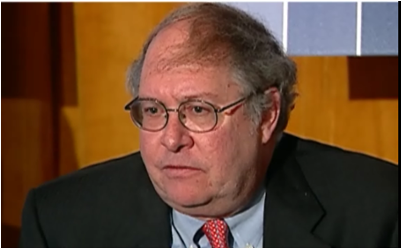
Smart guy, but could use a little help in the hair style department.
The average investor is late to both coming and going from the game. Don Hays, Strategist at Hays Advisory Services, notes, “We believe all good news at the top, and we doubt and disbelieve any good news at the bottom.” I think Bill concurs when he states the following:
“The psychological cycle goes something like this: first it is said the fiscal and monetary stimuli are not sufficient and won’t work. When the markets start up and the economic forecasts begin to be revised up — where we are now — the refrain is that it is only an inventory restocking and once it is over the economy will stall or we may even have a double dip. Once the economy begins to improve, the worry is that profits will not recover enough to justify stock prices. When profits recover, it is said that the recovery will be jobless; and when the jobs start being created, the fear is that this will not be sustained.”
Miller also makes some thoughtful points on the attractiveness of the financial sector, pointing to the disappearance of many competitors, appealing valuations, and rising pre-provision earnings. On the topic of inflation, Miller remains unworried about prices spiking up. He argues, logically, that rising unemployment and excess capacity will keep a lid on prices. True, however, with exploding debt levels and deficits, coupled with the insatiable appetites of emerging markets for commodities, not to mention spiraling healthcare prices, I believe inflation concerns may be here sooner than anticipated. Let’s not forget the stagflation experienced in the 1970s.
Read the Whole Bill Miller Newsletter Here
Bill Miller is still in a deep hole that he dug for himself, but I would not count this dunce out. Mean reversion is one of the most powerful principles of finance and if you ride Bill Miller’s coat-tails on any continued rebound, it could be a prosperous, memorable ride.
Wade W. Slome, CFA, CFP®
Plan. Invest. Prosper.
Quarterly Earnings Avalanche – What the %&*$# is Going On?

Last week we received an avalanche of earnings reports (with a ton more reporting this week) and investors are now interpreting the data.
The recent stock market rally can be simply boiled down to companies releasing better than expected quarterly earnings. As my great pal Peter Lynch says, “People may bet on hourly wiggles of the market but it’s the earnings that waggle the wiggle long term.” A whopping 77% of S&P 500 companies that have reported Q2 (June) earnings thus far have reported earnings results better than Wall Street expectations. Earnings estimates are being ratcheted up for the first time since August 2007. Intel got the party started in the technology world, trouncing both top and bottom line estimates. Certainly, overall, the top line results for corporations have been more challenging and mixed. However, with additional earnings available to companies, more resources can be plowed back into future marketing and revenue generating activities. Moreover, due to the extreme cost-cutting measures taken, once the economy recovers, corporations will be able to tap into the enormous earnings power potential created.
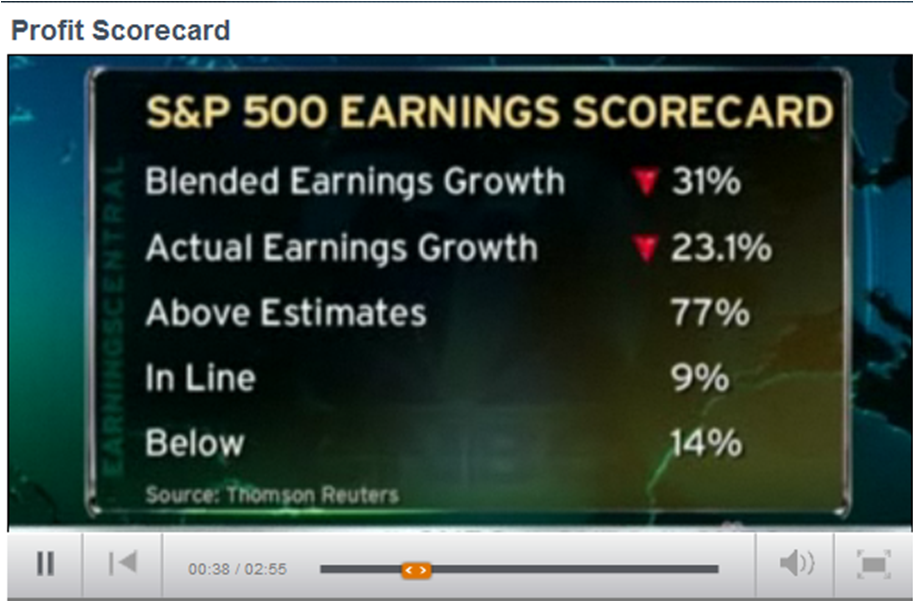
Click Here for CNBC Quarterly Earnings Recap
Across all industries, whether it’s Fred Smith (CEO at FedEx) or Eric Schmidt (CEO at Google), we’re hearing a common theme that although the environment remains challenging, we have stabilized with the worst behind us. When and by what degree the economy turns around is still unclear, but all I know is that great companies don’t disappear in bear markets and as a country we have persevered through many, many recessions and financial crises in our history. In times like these, market leaders and industry innovators use their competitive advantages to step on the throats of their competitors and do whatever it takes to gain market share, so that when things actually do turn, the tide will carry them to the front of the pack.
Although the quarterly reported earnings coming out have in general been relatively anemic, investors should not sit idle. I continue to scour income statements, balance sheets, and cash flow statements to see who is gaining share at the expense of their peers. At the end of the day those share gainers are the ones that will be growing earnings and cash flows the fastest when the economy turns. Investors shouldn’t forget the lessons of 2008 and 2009. Although not all the economic news headlines were bad in the first half of 2008 (as the stock market began its rapid descent), the same principle applies in reverse – as the market has rebounded from the March lows, not all the economic news has been encouraging. Volatility can in fact be a beautiful thing, if you have a disciplined systematic approach in place that opportunistically takes advantage of appealing prospects as they arise. Without doubt, the relative attractiveness of the overall market is less than it was in March 2009, but let’s not forget the stock market is still more than 35% below the market highs of late 2007.
Wade W. Slome, CFA, CFP®
Plan. Invest. Prosper.
Praying for a Better Market with Pope Benedict XVI
As reported on Bloomberg, the pontiff called for a new era of economic justice and for a new global authority to regulate financial institutions. Pope Benedict XVI weighed in on the markets with a 150 page document demanding a retooling of the economic and financial models that got us into this financial crisis.
In a conflicted dilemma, the video clip above ponders the question of whether sinners or saints perform better in the stock market? Unfortunately for church-goers, sin appears to perform better. The indulgent Vice Fund (VICEX) outperformed the virtuous Ave Maria Catholic Values Fund (AVEMX) for the period discussed.

Chomping at the bit to open up that margin account??
I’m not sure if the Pope is going to open a margin account at Scottrade, and start day-trading levered inverse ETFs and options, but perhaps he will be praying for a better market and performance for us honest, trustworthy and faithful investors.
Wade W. Slome, CFA, CFP®
Plan. Invest. Prosper.




