Posts filed under ‘Financial Markets’
Pinning Down Roubini Requires a Lasso

Pinning down a Nouriel Roubini forecast is like lassoing a frenzied cow. They say a broken clock is right twice a day, and maybe the same principle applies to renowned economist, Professor Roubini (NYU)? Sure, credit should be given where credit is due. He nailed the forecast relating to the housing led financial bubble and subsequent financial collapse – even if the prediction was years early.
Here’s where I have a beef. Now that Roubini has become a celebrated rock star with frequent television interviews and speaking engagements, his touring views are becoming more fluid and slippery as time progresses. Sure it’s more comfortable to ride the fence and lean in whatever direction the weekly economic winds are blowing. I suppose if you throw out enough changing viewpoints, which adjust to evolving moods, you can never be wrong.
Let’s examine some of his views:
- Out of Context: Just last week, Mr. Roubini said the “worst is behind us,” but in order to retain his “Dr. Doom” celebrity status he felt compelled to issue a press release clarifying his statements. He noted his “views were taken out of context,” and added, “I have said on numerous occasions that the recession would last roughly 24 months.” That’s funny, because he just stated last year it would be 12-18 months (Click Here for Video).
- Sweating Out Rebound: Maybe the 41% bounce in the S&P 500 or the 49% jump in the NASDAQ from March 9th lows compelled Roubini to make the “worst is behind us” comments, but why then at the beginning of this year did he say, “We are still only in the early stages of this crisis. My predictions for the coming year, unfortunately, are even more dire: The bubbles, and there were many, have only begun to burst.” Hmmm…excuse me while I scratch my head.
- Alphabet Soup Recovery: Also frustrating are the John Kerry-esque waffling comments relating to whether this economic recovery will be a U, W, or L-shaped economic recovery. Last April he was in the U-camp: “My view is closer to a U-shaped recession as I expect that the economic contraction will last at least 12 months and possibly as long as 18 months through the middle of 2009.” Now, as early as last month Roubini is warning of a double dip or “W-shaped” recovery with the rising possibility of a “perfect storm” in 2010 (Click Here for Video). He sees the expiration of tax cuts, rising oil prices, inflating debt and interest rates leading to another downturn. So is it U or W, or will we hear more about an “L” shaped recovery? Maybe the worst is not behind us? I’m confused.
- Doomsday Earnings Yet to Arrive: Still early in the quarterly earnings reporting season but Roubini’s call for a downside in corporate earnings has yet to materialize. As a matter of fact, Zacks Investment Research reported last week that early second quarter upside surprises are beating downside surprises by a ratio of 7 to 1. So far not too “Doom-full.”
I’m no economist or recovery expert, but what I do know is that I’m having difficulty pinning down Professor Roubini’s ever-changing views. I suppose I will just mail CNBC, Bloomberg, or the bevy of other Roubini media groupies a lasso in hopes they will pin Mr. Roubini down.
Wade W. Slome, CFA, CFP®
Wade W. Slome, CFA, CFP®
Plan. Invest. Prosper.
DISCLOSURE: Sidoxia Capital Management (SCM) and some of its clients own certain exchange traded funds, but at the time of publishing SCM had no direct position in any other security referenced in this article. No information accessed through the Investing Caffeine (IC) website constitutes investment, financial, legal, tax or other advice nor is to be relied on in making an investment or other decision. Please read disclosure language on IC “Contact” page.
The China Vacuum, Sucking Up Assets

That's not Hoover making that sucking noise - it's China
Shhh, if you listen hard enough you can hear a faint sucking sound coming from the other side of the Pacific Ocean. In the midst of the greatest economic collapse since the Great Depression, China is rolling around the globe sucking up international assets as if it were a Hoover vacuum cleaner. As a member of the current account and budget surplus club, China is enjoying the membership privileges. Evidence is apparent in several forms.
Most recently, Chinese state oil and gas company, Sinopec (China Petrochemical Corporation) has bid close to $7 billion for Addax Petroleum, an oil explorer with significant energy assets in the Kurdistan region of northern Iraq.
Another deal, newly announced not too long ago, occurred on our own soil when another Chinese company (Sichuan Tengzhong Heavy Industrial Machinery Co.) made a bid for the ailing Hummer unit of bankrupt General Motors. Just as we have begun exporting our obesity to China through McDonald’s and KFC, now we are sharing our lovely gas guzzling habits.
In May, The Wall Street Journal reported the following:
Chinese companies and banks have also agreed to a string of credit and oil supply deals worth more than US$40 billion with countries such as Brazil, Russia and Kazakhstan, in line with efforts to secure its energy supply.
Beyond the oil markets, China is also hungry for other hard assets. The failed $20 billion investment in Chinalco (Aluminum Corporation of China) by Rio Tinto garnered a lot of press. But other deals are making headlines too. Metallurgical Corp. of China Ltd. (MCC) is planning a $5.15 billion thermal coal project in Queensland state, Australia in conjunction with Waratah Coal Pty Ltd. China has a voracious appetite for coal -its coal imports are estimated to surpass 50 million tons in 2009.
Cash is king, especially in crises like we are experiencing now, however we want to be careful that we don’t give away the farm out of desperation. Making tough decisions to preserve assets, like cutting expenditures and expenses, is a better strategy versus making fire sale disposals of crown jewels. Becoming energy independent and investing in environmentally sustaining technologies will serve our long term economic interests better as well.
If we’re not careful, that active Chinese Hoover vacuum cleaner is going to come over to our home turf and suck up more than just our loose change.
Wade W. Slome, CFA, CFP®
Plan. Invest. Prosper.
*DISCLOSURE: Sidoxia Capital Management (SCM) and some of its clients own certain exchange traded funds, RTP and was short MCD, but at the time of publishing SCM had no direct position in YUM, Sinopec (China Petrochemical Corporation), Addax Petroleum, Chinalco (Aluminum Corporation of China), Metallurgical Corp. of China Ltd. (MCC),Waratah Coal Pty Ltd or any security referenced in this article. No information accessed through the Investing Caffeine (IC) website constitutes investment, financial, legal, tax or other advice nor is to be relied on in making an investment or other decision. Please read disclosure language on IC “Contact” page.
PPIP Becomes Miniaturized “Mini Me”

Mini-Me and Dr. Evil from famed Austin Powers movies
In two of Mike Myer’s Austin Powers movies, Verne Troyer plays Dr. Evil’s miniature clone, Mini-Me. At a “breathtaking” one-eighth the size of the fully-sized villain, Mini-Me didn’t quite pack the same evil punch as his surrogate daddy, Dr. Evil. The same can be said of the government’s PPIP (Public Private Investment Program), which was originally designed to unclog the financial system by removing toxic and illiquid investments from owners desiring liquidity.
Unfortunately, the PPIP size has been reduced to ppip dimensions. The Fundamental Analyst (FA) blogger (www.fundamentalanalyst.com) points out that the program’s scope has likely shrunk to $100 billion from the original goal of $1 trilllion – a proportion even smaller than Mini-Me’s relative size to Dr. Evil. Treasury Secretary Timothy Geithner’s explanation for the decline in program size is due to the improving financial market conditions and the capital raising activities of the banks. Perhaps partially true, but “not so fast” says FA – he blames the suspension of mark-to-market accounting as the driver for positive overstated banking earnings, which allowed the banks to hoodwink investors and raise capital under false pretenses.
Read the Fundamental Analyst’s Article on PPIP Here
FA goes onto highlight what little skin the participants (including, AllianceBernstein, BlackRock, Invesco, Oaktree Capital Management, TCW Group, and Wellington Management) have in the game relative to the other 93% of capital fronted by the taxpayers. I agree – the surplus taxpayer exposure is evil. Time will tell how effective the Mini-Me ppip program will be…

Original PPIP plan drawn up by the Financial Times
Cash Strapped Bond Issuers Should Follow Willie Sutton
![940614_83408820[1]](https://investingcaffeine.com/wp-content/uploads/2009/07/940614_834088201.jpg "940614_83408820[1]")
When infamous bank robber Willie Sutton was asked why he robs banks, he coyly responded, “Because that’s where the money is.” Willie Sutton was one of the more prominent bank robbers in American history. During his long career he had robbed close to 100 banks from the late 1920s to 1952. He was known as “Slick Willie” or “The Actor.” As a master of disguise the FBI files show that Sutton masqueraded himself as a mailman, policeman, telegraph messenger, maintenance man and a host of other personas. The Credit Default Swap market has also been disguised in mystery and opaqueness.
With many cash strapped bond issuers looking for ways to negotiate more favorable credit terms during these tough economic times, one strategy has been to approach holders of the CDS instruments. However, CDS holders have no reason to negotiate with corporate bond issuers (for pennies on the dollar) when they stand to collect a full dollar from their bank (due to terms in the CDS contracts). Cash starved corporations rather should listen to Willie Sutton and go straight to the money source – the banks that issued the CDS to the investors. As bankruptcies increase, and bank failures rise, the trio of bond holders, bond issuers, and CDS issuers (banks) will become closer friends (and/or enemies).
Research Reloaded delved more into this issue by discussing the tactics used by media companies, Gannett and McClatchy (Read Article Here). Lots of wrinkles need to be ironed out in the CDS market, measured in the tens of trillions in notional value, but part of the solution involves the bond issuer and investor going straight to the money source (the bank issuer of the CDS). Willie would be proud.
Wade W. Slome, CFA, CFP® www.Sidoxia.com
Treasury Bubble Hasn’t Burst….Yet

10-Year Treasury Chart (5-14-09)
Clusterstlock’s Joe Weisenthal’s takes a historical look on 10-year Treasury yields going back to 1962. As you can see, the yield is still below 1962 levels, despite the massive inflationary steps the Federal Reserve and Treasury have taken over the last 18 months (6-26-09 yield was 3.51%). These trends can also be put into perspective by reading Vincent Fernando’s post at http://www.researchreloaded.com. Take a peek.
Ways to take advantage of this trend include purchases of TBT (UltraShort 20+ Year Treasury ProShares) or short TLT (iShares Barclays 20+ Year Treasury Bond)*.

Reverse View of Historical 10-Year Treasury Yield
*Disclosure: Sidoxia Capital Management clients and/or Slome Sidoxia Fund may have a short position in TLT.
Banking Pigs Back at the Trough

Sooey! With some of the TARP (Troubled Asset Relief Program) government loans paid back, it appears that the malnourished pigs of the banking sector are hungry again and back at the trough for loftier pay packages. A recent Wall Street Journal article pointed out Goldman Sachs is on track to pay its employees $20 billion in 2009, almost double the compensation of 2008, and forking out even a higher average ($700,000 per employee) than 2007.
Beyond gluttonous appetites, these banking execs are attempting to make pigs fly as well. Like a magician using the art of illusion to move an object from one shell to the next, or divert attention with smoke and mirrors, these large Wall Street banks are shuffling around their compensation plans. A recent Bloomberg article noted that Citigroup Inc. is moving to raise base salaries by as much as 50% to help counterbalance reductions in annual bonuses. Citigroup is particularly in hot water because the U.S. bank received $45 billion in government fund assistance. According to the Wall Street Journal, similar trends are bubbling up at Zurich-based UBS, where executives raised banker base pay by 50%. Bank of America also said in March 2009 it may boost salaries as a percentage of total compensation. The banks are hoping that reducing bonuses tied to risky behavior, while raising salaries, will appease the regulators.
The governments “pay czar,” Kenneth Feinberg, may have something to say about these inflating compensation trends. The WSJ points out:
Feinberg will have the authority to regulate compensation for 175 executives at seven companies, including Citigroup, that received “exceptional” government help.

As a rule of thumb, securities firms generally pay out approximately 50% of revenue in employee compensation. Bonuses have traditionally made up about two-thirds of bankers’ total compensation. Compensation consultant Alan Johnson in New York says salaries typically range from $80,000 to $300,000, with bonuses often adding millions of dollars. The article goes onto highlight the five biggest Wall Street firms awarded their employees a record $39 billion of bonuses in 2007. Sparking some of this heated debate stems from the eye-popping bonuses paid out to Merrill employees before the Bank of America merger. Merrill Lynch emptied $14.8 billion out of its wallet for pay and benefits last year before it was acquired by Bank of America – the New York Attorney General Andrew Cuomo is investigating $3.6 billion of the bonuses (tied mostly to payments made in December 2008).
To protect themselves, firms like Morgan Stanley and UBS have also added “clawback” provisions that allow portions of a worker’s bonus to be recouped under certain scenarios if the firms are harmed by an employee in the future. Perhaps this will create a disincentive for harmful behavior, but likely not enough to pacify the regulators
The pigs have regained their appetites and are eagerly awaiting for some more fixings at the trough. Time will tell if 2009 can produce squeals of swinish satisfaction or will regulators take the bankers to an unfortunate visit to the butchers?
Is the Recession Over?

Dennis Kneale, bullish commentator on CNBC presented his case on why he thinks the recession is over:
Positive Technical Indicators: Kneale points out that in recent history when the 50-day moving price average cuts upward through the 200-day moving average there is a positive directional bias for the market in the ensuing months.
Personal Income: +1.4% in May for 2 consecutive months.
Personal Spending: Consumer spending was up again in May, and up more than in April.
University of Michigan Consumer Sentiment: The survey rose again to a reading of 70.8 in the recent measurement period.
VIX Volatity Index: The so called “Fear Index” is down -43% in about 3 months – stabilizing to a more normalized level. He argues this should bring in some cash on the sidelines into the stock market.
Eric Schmidt Positive: CEO of search giant, Google, says the worst is behind for the U.S. economy.
Most of the guests rang a more cautious tone, not the least of which, Peter Schiff sees Armageddon ahead for the U.S. economy. Mr. Schiff goes on to compare CNBC to the Gardening channel with all the talk about “green shoots.” Not to mention, he sees the trillions of stimulus dollars only providing a temporary, artificial boost that will eventually cause a horrible economic hangover. Lucky for Peter, he has perfectly timed the international rebound in 2009…cough, cough.
Cap and Tax Passes in the House

The U.S. House of Representatives passed The American Clean Energy and Security Act of 2009 (ACES), also named the “Waxman- Markey” bill, by a 219-212 vote. The masses are calling it the “Cap and Trade” bill, while detractors are blasting it as the “Cap and Tax” bill.
Joe Petrowsky, CEO of Gulf Oil, sees this bill costing businesses $50-100 per ton of carbon created, which will be passed through as a tax to energy consumers in the form of an annual $1,000+ tax (about $250-$350 per individual). Robert Murray, CEO of Murray Energy Corporation, calls it a $2 trillion tax on consumers over 8 years.
The House passed this bill just as the economy is shuttering on its knees and a rising skepticism is brewing over the validity of global warming – see Kimberley Strassel’s, journalist at The Wall Street Journal, article entitled, The Climate Change Climate Change dated June 26, 2009. Australia is in the process of killing its “Cap and Trade” proposals and many critics point to Spain’s failing carbon initiatives and 18% unemployment as evidence for the program’s shortcomings.
Despite one’s views on the validity of global warming, what cannot be disputed is our reliance (addiction) to oil as we import 70% of our oil demand. Is the time and scope of this bill the silver bullet for our crude dependence as we try to survive through this “Great Recession?” I think not.
Billions of humans across the globe are aspiring to achieve our standard of living here in the U.S., so even those against a “Cap and Trade” system, including myself, need to appreciate the massive energy investment we need to make. The U.S. is considered the “Saudi Arabia” of coal due to our vast reserves, and therefore we must find efficient and cleaner ways to use this abundant commodity. We need to throw the kitchen sink at nuclear, wind, solar, hydrogen, bio-fuels and other alternative energy technologies, even as we look to expand our fossil fuel resources.
But rather than forming randomly created silos of hoarded research across hundreds of universities, why not create domestic centers of excellence that collaborate with both academic and private sector participants. By integrating monetary incentives (i.e., exclusive commercial patent rights), incredible advancements and breakthroughs can be achieved. Historically, when the United States has focused on a task, we’ve been able to achieve greatness – for example sending a man to the moon. Heck, recently NASA mastered the art of converting urine into water!
Bold new steps need to be taken to solve our energy crisis, but I’m afraid this “Cap and Tax” bill is not the right answer.
Jack Welch University: Diploma or Black Belt?
You too can get your name plastered across a university (or online) for a measly $2 million. That’s what Jack Welch did when he purchased a 12% stake in the primarily online Masters of Business Administration Program (MBA) of Chancellor University. The name of the school according to The Wall Street Journal will be the Jack Welch Institute (JWI).
According to the WSJ:
Boston research firm EduVentures Inc. estimates that 11% of the roughly 18.5 million U.S. college students took most of their classes online in the fall of 2008, up from 1% a decade ago.Online higher education will generate revenue of $11.5 billion this year, EduVentures says. But “there is a concern about quality,” says EduVentures Chief Executive Tom Dretler, because there’s “much, much less selectivity” of students in the admissions process.
So what does a Jack Welch student receive upon graduation – a diploma or a General Electric (GE) Six Sigma Black Belt? And what about Jack’s hard-nosed, no-nonsense business approach? Will all students learn how to negotiate like Jack, especially when it comes to retirement perks? The $21,000 tuition bill sounds steep on the surface, but well worth it if graduates can finagle exit package perks like Welch’s $86,000 a year consultant fee, use of an $80,000 per month Manhattan apartment, court-side seats to the New York Knicks and U.S. Open, seating at Wimbledon, box seats at Red Sox and Yankees baseball games, country club fees, security services and restaurant bills (The New York Times), not to mention a limousine, a cook, free flowers, country-club memberships and a charge account at Jean Georges restaurant.
Now that’s an MBA degree that may attract interest.
Wade W. Slome, CFA, CFP® www.Sidoxia.com
U.S. to China, “What’s Wrong With a Little Porn and Anarchy?”
The U.S. recently scheduled talks with the Chinese government to discuss the appropriateness of automated personal computer (PC) content filtering (including, pornography, Falun Gong, and governmental protest content). Falun Gong is a meditatitve spiritual discipline frowned down upon by the Chinese government.
I can picture it now, U.S. officials calling up Chinese President Hu Jintao and saying, “Hey Hu, why not lighten up a bit on the freedom crackdowns – what’s the big deal with a little pornography and anarchy?” The Chinese government feels that in the absence of structured laws, which would limit access to inappropriate content, the natives will become restless and ultimately disruptive. PC manufacturers would prefer not to reengineer PCs and increase the embedded costs to consumers by adding additional components. However, given the size of the Chinese PC market, the dominant foreign manufacturers are likely to cave to Chinese government demands, given the massive long-term potential of this Asian market. We have already seen Google (GOOG), Yahoo (YHOO), and Microsoft (MSFT) make concessions to the Chinese government in the algorithmic search arena.
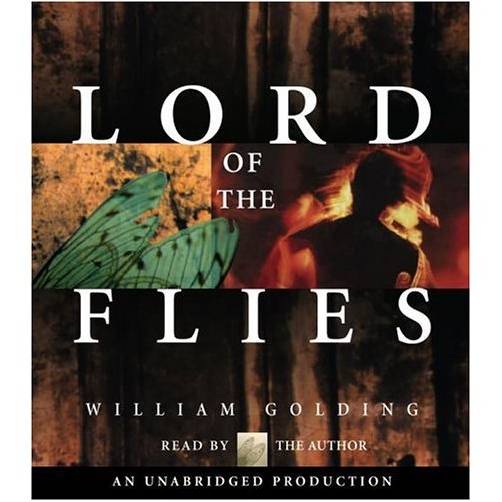
 The thematic parallels presently occurring in China apply to William Golding’s Lord of the Flies (1954) as well. Lord of the Flies is a story about a group of stranded kids (surviving a plane crash) that battle for survival on a deserted island. Due to the lack of law, adult supervision and questionable tendencies, all hell eventually breaks loose. The Chinese government, managing a population of 1.3 billion people, fears a similarly hellacious outcome if an uncontrolled, lawless population consumes unfettered, unhealthy content. Given mistakes we’ve made abroad (e.g., Abu Ghraib, and Guantanomo), the Chinese and other countries are questioning the strength of our moral compass in judging or guiding other countries’ policies.
Although the U.S. government’s intentions are in the right place to protect the personal freedoms of people globally, we are not currently in the strongest moral position right now to cram our beliefs down other’s throats. Even the freest of societies such as our own limits certain actions – such as underage voting, underage drinking, and public nudity (O.K., I’m stretching a bit).
Regardless of your political views, one can appreciate the fear of anarchy in the hearts of the Chinese government. Practically speaking however, given the openness and rapid expansion of the global internet, the Chinese can only slow the expansion of individuals’ freedoms – recent events in the Middle East just provide additional evidence to this premise.
DISCLOSURE: At the time of publishing, in addition to owning certain exchange traded funds, Sidoxia Capital Management and some of its clients also owned GOOG, but had no direct positions in YHOO, MSFT, or any other security referenced. No information accessed through the Investing Caffeine (IC) website constitutes investment, financial, legal, tax or other advice nor is to be relied on in making an investment or other decision. Please read disclosure language on IC “Contact” page.