Sidoxia/Wall St. Cheat Sheet Webinar 1/6 @ 7 pm
2011 Investment OpportunitiesDate: January 6, 2011 (Thursday) Time: 7:00 pm EST (4:00 pm PST) Duration:1 hour Click Here to Register |
|
|
| Wade W. Slome, CFA, CFP®
Plan. Invest. Prosper. DISCLOSURE: Sidoxia Capital Management (SCM) and some of its clients own certain exchange traded funds, but at the time of publishing SCM had no direct position in any security referenced in this article. No information accessed through the Investing Caffeine (IC) website constitutes investment, financial, legal, tax or other advice nor is to be relied on in making an investment or other decision. Please read disclosure language on IC “Contact” page. |
Winning the Loser’s Game

Besides hanging out with family and friends, and stuffing my face with endless amounts of food, the other benefit of the holidays is the quality time I’m afforded to dive into a few books. While sinking into the couch in my bloated state, I had the pleasure of reading an incredible, investment classic by Charles Ellis, Winning the Loser’s Game – “WTLG” (click here to view other remarkable book I read [non-investment related]). To put my enthusiasm in perspective, WTLG has even achieved the elite and privileged distinction of making the distinguished “Recommended Reading” list of Investing Caffeine (located along the right-side of the page). Wow…now I know you must be really impressed.
The Man, The Myth, the Ellis
 For those not familiar with Charley Ellis, he has a long, storied investment career. Not only has he authored 12 books, including compilations on Goldman Sachs (GS) and Capital Group, but his professional career dates back prior to 1972, when he founded institutional consulting firm Greenwich Associates. Besides earning a college degree from Yale University, and an MBA from Harvard Business School, he also garnered a PhD from New York University. Ellis also is a director at the Vanguard Group and served as Investment Committee chair at Yale University along investment great David Swensen (read also Super Swensen) from 1992 – 2008.
With this tremendous investment experience come tremendous insights. The original book, which was published in 1998, is already worth its weight in gold (even at $1,384 per ounce), but the fifth edition of WTLG is even more valuable because it has been updated with Ellis’s perspectives on the 2008-2009 financial crisis.
Because the breadth of topics covered is so vast and indispensable, I will break the WTLG review into a few parts for digestibility. I will start off with the these hand-picked nuggets:
Defining the “Loser’s Game”
Here is how Charles Ellis describes the investment “loser’s game”:
“For professional investors, “the ‘money game’ we call investment management evolved in recent decades from a winner’s game to a loser’s game because a basic change has occurred in the investment environment: The market came to be dominated in the 1970s and 1980s by the very institutions that were striving to win by outperforming the market. No longer is the active investment manager competing with cautious custodians or amateurs who are out of touch with the market. Now he or she competes with other hardworking investment experts in a loser’s game where the secret to winning is to lose less than others lose.”
Underperformance by Active Managers
Readers that have followed Investing Caffeine for a while understand how I feel about passive (low-cost do-nothing strategy) and active management (portfolio managers constantly buying and selling) – read Darts, Monkeys & Pros. Ellis’s views are not a whole lot different than mine – here is what he has to say while not holding back any punches:
“The basic assumption that most institutional investors can outperform the market is false. The institutions are the market. They cannot, as a group, outperform themselves. In fact, given the cost of active management – fees, commissions, market impact of big transactions, and so forth-85 percent of investment managers have and will continue over the long term to underperform the overall market.”
He goes on to say individuals do even worse, especially those that day trade, which he calls a “sucker’s game.”
Exceptions to the Rule
Ellis’s bias towards passive management is clear because “over the long term 85 percent of active managers fall short of the market. And it’s nearly impossible to figure out ahead of time which managers will make it into the top 15 percent.” He does, however, acknowledge there is a minority of professionals that can beat the market by making fewer mistakes or taking advantage of others’ mistakes. Ellis advocates a slow approach to investing, which bases “decisions on research with a long-term focus that will catch other investors obsessing about the short term and cavitating – producing bubbles.” This is the strategy and approach I aim to achieve.
Gaining an Unfair Competitive Advantage
According to Ellis, there are four ways to gain an unfair competitive advantage in the investment world:
1) Physical Approach: Beat others by carrying heavier brief cases and working longer hours.
2) Intellectual Approach: Outperform by thinking more deeply and further out in the future.
3) Calm-Rational Approach: Ellis describes this path to success as “benign neglect” – a method that beats the others by ignoring both favorable and adverse market conditions, which may lead to suboptimal decisions.
4) Join ‘em Approach: The easiest way to beat active managers is to invest through index funds. If you can’t beat index funds, then join ‘em.
The Case for Stocks
Investor time horizon plays a large role on asset allocation, but time is on investors’ side for long-term equity investors:
“That’s why in the long term, the risks are clearly lowest for stocks, but in the short term, the risks are just as clearly highest for stocks.”
Expanding on that point, Ellis points out the following:
“Any funds that will stay invested for 10 years or longer should be in stocks. Any funds that will be invested for less than two to three years should be in “cash” or money market instruments.”
While many people may feel stock investing is dead, but Ellis points out that equities should return more in the long-run:
“There must be a higher rate of return on stocks to persuade investors to accept risks of equity investing.”
The Power of Regression to the Mean
Investors do more damage to performance by chasing winners and punishing losers because they lose the powerful benefits of “regression to the mean.” Ellis describes this tendency for behavior to move toward an average as “a persistently powerful phenomenon in physics and sociology – and in investing.” He goes on to add, good investors know “that the farther current events are away from the mean at the center of the bell curve, the stronger the forces of reversion, or regression, to the mean, are pulling the current data toward the center.”
The Power of Compounding
For a 75 year period (roughly 1925 – 2000) analyzed by Ellis, he determines $1 invested in stocks would have grown to $105.96, if dividends were not reinvested. If, however, dividends are reinvested, the power of compounding kicks in significantly. For the same 75 year period, the equivalent $1 would have grown to $2,591.79 – almost 25x’s more than the other method (see also Penny Saved is Billion Earned).
Ellis throws in another compounding example:
“Remember that if investments increase by 7 percent per annum after income tax, they will double every 10 years, so $1 million can become $1 billion in 100 years (before adjusting for inflation).”
The Lessons of History
As philosopher George Santayana stated – “Those who cannot remember the past are condemned to repeat it.” Details of every market are different, but as Ellis notes, “The major characteristics of markets are remarkably similar over time.”
Ellis appreciates the importance of history plays in analyzing the markets:
“The more you study market history, the better; the more you know about how securities markets have behaved in the past, the more you’ll understand their true nature and how they probably will behave in the future. Such an understanding enables us to live rationally with markets that would otherwise seem wholly irrational.”
Home Sweet International Home
Although Ellis’s recommendation to diversify internationally is not controversial, his allocation recommendation regarding “full diversification” is a bit more provocative:
“For Americans, this would mean about half our portfolios would be invested outside the United States.”
This seems high by traditional standards, but considering our country’s shrinking share of global GDP (Gross Domestic Product), along with our relatively small share of the globe’s population (about 5% of the world’s total), the 50% percentage doesn’t seem as high at first blush.
Beware the Broker
This is not new territory for me (see Financial Sharks, Fees/Exploitation, and Credential Shell Game), and Ellis warns investors on industry sales practices:
“Those oh so caring and helpful salespeople make their money by convincing you to change funds. Friendly as they may be, they may be no friend to your long-term investment success.”
Unlike a lot of other investing books, which cover a few aspects to investing, Winning the Loser’s Game covers a gamut of crucial investment lessons in a straightforward, understandable fashion. A lot of people play the investing game, but as Charles Ellis details, many more investors and speculators lose than win. For any investor, from amateur to professional, reading Ellis’s Winning the Loser’s Game and following his philosophy will not only help increase the odds of your portfolio winning, but will also limit your losses in sleep hours.
Wade W. Slome, CFA, CFP®
Plan. Invest. Prosper.
DISCLOSURE: Sidoxia Capital Management (SCM) and some of its clients own certain exchange traded funds, but at the time of publishing SCM had no direct position in GS, or any other security referenced in this article. No information accessed through the Investing Caffeine (IC) website constitutes investment, financial, legal, tax or other advice nor is to be relied on in making an investment or other decision. Please read disclosure language on IC “Contact” page.
Dow Déjà Vu – Shining Rainbow or Bad Nightmare?

Excerpt from Free January Sidoxia Monthly Newsletter (Subscribe on right-side of page)
The Dow Jones Industrial Average is sitting at 11,577 points. Dick Fuld is still CEO of Lehman Brothers, AIG is still trading toxic CDS derivative contracts, and the $700 billion TARP bailout is a pre-idea about to be invented in the brain of Treasury Secretary Hank Paulson. Oops, wait a second, this isn’t the Dow 11,577of September 2008, but rather this is the Dow 11,577 of December 2010 (+11% for the year, excluding dividends). Was the -50% drop we experienced in the equity markets during 2008-2009 all just a bad dream? If not, how in the heck has the stock market climbed spectacularly? Most people don’t realize that stocks have about doubled over the last 21 months (and up roughly +20%-25% in the last 6 months) – all in the face of horrendously depressing news swirling around the media (i.e., jobs, debt, deficits, N. Korea, Iran, “New Normal,” etc.). Market volatility often does not make intuitive sense, and as a result, many market observers have been caught flat-footed.
Here are a few basic factors that average investors have not adequately appreciated:
1) Headlines are in Rearview Mirror: News that everyone reads in newspapers and magazines and hears on the television and radio is all backward looking. It’s always best to drive while looking forward through the windshield and try to anticipate what’s around the corner – not obsess with backward looking activity in the rearview mirror. That’s how the stock market works – tomorrow’s news (not yesterday’s or today’s) is what drives prices up or down. As the economy teetered on the verge of a “Great Depression-like” scenario in 2008-2009, investors became overly pessimistic and stocks became dramatically oversold. More recently, news has been perking up. Previous recessions have seen doubters slowly convert to believers and push prices higher – eventually stocks become overbought and euphoria slows the bull market. I believe we are in phase II of this three-part economic recovery.
2) Ignore Emerging Markets at Own Peril: We Americans tend to wear blinders when it comes to focusing on domestic issues. We focus more on healthcare reform and political issues, such as “Don’t Ask, Don’t Tell,” rather than the billions of foreigners chasing us as they climb the global economic ladder. Citizens in emerging markets are more concerned about out-competing and out-innovating us through educated workforces, so they can steal our jobs and buy more toasters, iPods, and cars – things we Americans have already taken for granted. The insatiable appetite of the expanding global middle class for a better standard of living is also driving ballooning commodity prices – everything from coal to copper and corn to cotton (the 4 Cs). This universal sandbox that we play in offers tremendous opportunities to grasp and tremendous threats to avoid, if investors open their eyes to these emerging market trends.
3) Capital Goes Where it’s Treated Best: Many voters are fed-up with the political climate in Washington and the sad state of economic affairs. The great thing about the global capitalistic marketplace we live in is that it does not discriminate – capital flows to where it is treated best. On a macro basis, money flows to countries that are fiscally responsible, support pro-growth initiatives, harbor educated work forces, control valuable natural resources, and honor the rule of law. On a micro basis, money flows to companies that are attractively priced and/or capable of sustainably growing earnings and cash flow. Voters and politicians will ultimately figure it out, or capital will go where it’s treated best.
Today’s Dow 11,577 is no bad dream, but rather resembles the emergence of a bright shining rainbow after a long, cold, and dark storm. The rainbow won’t stick around forever, but if investors choose to ignore the previously mentioned factors, like so many investors have overlooked, portfolio performance may turn into an ugly nightmare.
Wade W. Slome, CFA, CFP®
Plan. Invest. Prosper.
DISCLOSURE: Sidoxia Capital Management (SCM) and some of its clients own certain exchange traded funds, AAPL, and an AIG derivative security, but at the time of publishing SCM had no direct position in GS, any security referenced in this article. No information accessed through the Investing Caffeine (IC) website constitutes investment, financial, legal, tax or other advice nor is to be relied on in making an investment or other decision. Please read disclosure language on IC “Contact” page.
Strategist Predictions and MacGyver Credo
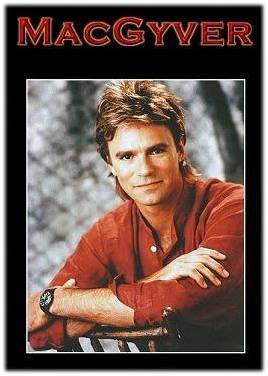
MacGyver: Resourceful dude with sweet mullet (Source: Photobucket).
“Only a fool is sure of anything, a wise man keeps on guessing.” – MacGyver
We have gotten to the part of the year when strategists gather for the annual dart throwing ritual of 2011 price targets. S&P projections get chucked around with the hopes of sticking – like cooked spaghetti to the wall. MacGyver appreciates the fine art of guessing, and so do Wall Street strategists.
How the Game’s Played
You don’t have to be a brain surgeon to figure out how the Wall Street astrology game works. When in doubt, just say the market will be up +10% next year. Hmmm, why +10%?
1) Well, first of all, these strategists work for employers who are in the business of hawking financial products and services to the masses, so if you want to generate revenues, you better attempt to line up some believers with some rosy scenarios.
2) History is on the strategists’ side. Equity markets move up about 70% of the time, so why not make an optimistic bet. Data from Crestmont Research and Roger Ibbotson support the average return over the last 100 years or so has averaged approximately +10% (with a lot of peaks and valleys). Obviously, that hasn’t been the case over the last decade. The PIMCO bond brothers of Bill Gross and Mohamed El-Erian blame the “New Normal” environment despite recently raising their 2011 GDP forecasts to a “Less Sluggish New Normal.” More likely, the decade of the 2000s is more like the “Old Normal” of boom-busts like we experienced in the 1930s and 1970s.
3) The other cardinal rule to be followed religiously: Forecasts made by any Wall Street type need to be made in tight packs like a herd. There is comfort in numbers, and why in the world would someone risk embarrassment or career risk. Fat paychecks abound for these strategists and hugging consensus views is OK, as long as a logical story can be patched together in explaining it.
With all this discussion about +10% average stock market returns, guess what type of returns this year’s Barron’s strategist survey is forecasting? You guessed it…+10% – what a shocker! Let’s hope this guess is more accurate than Barron’s +10% strategist return forecast for 2008 (S&P 500 was actually down -38.5% in 2008). Strategists don’t always get it wrong – the sanguine +12% outlook for 2010 is basically spot on with a few days left in the year. The sanguine 2002 outlook of +13%, however, was about -35% too sanguine (S&P plummeted about -23% that year).
Although most strategists feign absolute knowledge and precision, history shows these projections rarely prove accurate. Like predicting weather, guessers may get the long-term climate forecast fairly close, but the short-term estimates are generally pure speculation. In my book, 12 months is very short-term. Famed investor and author Charles Ellis captures the challenge of market forecasts:
“Predicting the stock market roughly is not hard, but predicting it accurately is truly impossible.”
I ascribe to the Peter Lynch view that speculating about the direction of the market is futile:
“If you spend more than 13 minutes analyzing economic and market forecasts, you’ve wasted 10 minutes.”
Kass Gets Hall Pass
Even though I may relish in flogging strategists, I provide certain professionals a hall pass under the following conditions:
- The educated guesser is putting real, hard-earned money behind their assertions.
- The guesses do not hug a tightly-knit herd.
- Guesses are made transparent and guessers make themselves accountable for bold statements.
- Those making guesses freely admit to the fallibility of making non-consensus suppositions.
One man whom embodies these principles is famed hedge fund manager Doug Kass, whom I have written about on several occasions (read more). Not only are Kass’s 2011 predictions provocative, they are also entertaining. His self proclaimed 40% batting average in 2010 may be a little higher than reality, but I will let you be the judge of his 2010 calls on the dollar, gold, Fed actions, Iran, Goldman Sachs, utilities, Warren Buffett, mutual funds, short-selling, New York Yankees, and more (read full 2010 Kass list).
The herd of strategists may continue having trouble making accurate market forecasts in the future, but perhaps resourcefully adding some duct tape and a Swiss Army knife to their repertoire like MacGyver will help improve accuracy. If not, rest assured, the strategists will sleep well making their +10% forecasts while continuing to collect big fat paychecks.
Wade W. Slome, CFA, CFP®
Plan. Invest. Prosper.
DISCLOSURE: Sidoxia Capital Management (SCM) and some of its clients own certain exchange traded funds, but at the time of publishing SCM had no direct position in any security referenced in this article. No information accessed through the Investing Caffeine (IC) website constitutes investment, financial, legal, tax or other advice nor is to be relied on in making an investment or other decision. Please read disclosure language on IC “Contact” page.
Groupon: From $0 to $6 Billion in 26 Months
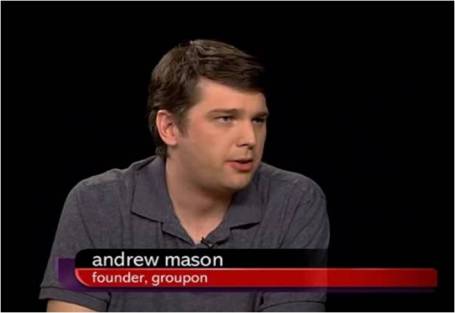
Between football and basketball television viewing, along with non-stop eating, I have found little time to update Investing Caffeine. However, between Oreo and eggnog curls I did find time to plop on the couch and watch an interesting interview with Groupon CEO, Andrew Mason. This is the internet-based coupon company that started operations in November 2008 and has already grown to 40 million members (adding 3 million per week). Within 26 short months, Groupon has already established a presence within 35 countries and supposedly garnered a $6 billion takeover offer from Google (GOOG).
Regardless of whether Groupon becomes a multi-billion division of Google, I’m certain Mr. Mason’s wallet has grown fatter over this year, just as I sit down for another 4,000 calorie, belt-busting, holiday meal. Happy viewing and Happy New Year!
Related Article: Valuing Facebook & Twitter
Wade W. Slome, CFA, CFP®
Plan. Invest. Prosper.
DISCLOSURE: Sidoxia Capital Management (SCM) and some of its clients own certain exchange traded funds and GOOG, but at the time of publishing SCM had no direct position in Groupon, KFT, or any security referenced in this article. No information accessed through the Investing Caffeine (IC) website constitutes investment, financial, legal, tax or other advice nor is to be relied on in making an investment or other decision. Please read disclosure language on IC “Contact” page.
My 10 Holiday Thank You’s of 2010

Source: Photobucket
10.) I am thankful for “QE2” (Quantitative Easing) because it broadens my thesaurus with another acronym meaning “printing press.”
9.) I am thankful for the Goldilocks “-flation” fears. Not too hot inflation and not too cold deflation makes Goldy feel just right.
8.) I am thankful for weak housing prices. Who wants to pay high property taxes?!
7.) I’m thankful to have another bloody, partisan midterm election behind us resulting in gridlock. Oops, I forgot, we just started a bloody, partisan 2012 Presidential election cycle.
6.) I am thankful for May’s “Flash Crash” because I’m an adrenaline junkie and the financial crisis did not provide enough excitement in 2008-2009.
5.) I am thankful for the Irish banking system bailout. Misery loves company.
4.) I am thankful for higher commodity prices, specifically my long wheat futures position. I’ve effectively hedged my daily breakfast bowl of Wheaties.
3.) I am thankful for the Chinese…for supporting our gluttonous consumerism by purchasing all our debt.
2.) I am thankful for a record year at Sidoxia. The launch and leading performance of Fusion added to a memorable 2010 (read more).
1.) I am thankful for the thousands of readers and followers who stopped by my site in 2010. Not only were the compliments appreciated by the die-hards (“Caffeiners”), but also the constructive feedback from casual visitors (i.e., “Slome, you’re a moron”).
Happy New Year and best wishes for a prosperous 2011!
Wade W. Slome, CFA, CFP®
Plan. Invest. Prosper.
DISCLOSURE: Sidoxia Capital Management (SCM) and some of its clients own certain exchange traded funds, but at the time of publishing SCM had no direct position in BP, wheat futures, or any security referenced in this article. No information accessed through the Investing Caffeine (IC) website constitutes investment, financial, legal, tax or other advice nor is to be relied on in making an investment or other decision. Please read disclosure language on IC “Contact” page.
Investor Wake-Up Call

Source: Photobucket
The Pre Wake-Up Conversation

“Hey Milfred, did you see our brokerage statement? There must be a misprint. It says our portfolio of bonds is down.”

“Buford, how can that be, when our bond portfolio has been up for 30 consecutive years? I hear Jim Bernanke is trying to artificially inflate the economy by printing money and using it to buy bonds.”
“Sweetheart, you got it wrong…it’s Ben Jernanke.”
“Ohhh, yeah honey, you’re right. I never expected prices to go down after government bond yields were up almost 50% in a few months.”
“Sweetie, maybe we should give our broker a call?”
“Oh you mean Skip? I think he wants us to call him a financial consultant or financial advisor now…not a broker.”
“Well anyway, I just read the largest fund manager in the world, Bill Gross, is trying to convert his bond fund into a stock fund (read article). I can’t imagine why Mr. Gross would want to do that (see PIMCO article), but maybe Skip knows? You know, after Skip sold us that high commission annuity and Class-A mutual fund with that 6.25% load, he decided to take his wife, kids, parents, and in-laws to Tahiti for the holidays.”
“Oh I know, Skip is such a nice young man, and so thoughtful.”
“You’re right Pumpkin, I just wish we could hear from him more than once every two years.”
“That’s right Snookum, but at least we get to talk to him when he drops off the paperwork, and his secretary is sure nice.”
“What I really like about Skip is that he always makes so much common sense – he always tells us to buy investments that have already done really well like bonds and gold.”
“Exactly Buford. I just wonder how much longer it will take for stocks to become popular again, given the stock market is already up about 100% from the beginning of 2009? Perhaps with another +30% or so, maybe Skip will switch all our money out of bonds back into stocks?”
“What I love even more about Skip is that not only does he have us buy the popular investments, but he really protects us from buying the low-priced investments that are selling at bargain prices.”
“I hear you Muffin – come to think of it, maybe I should return that sweater I recently purchased at Marshall’s for 50% off – there may be an awful reason I do not know about.”
“Good idea Sweet Pea. The other thing I love about Skip is that he is so knowledgeable…he says the exact same thing I hear from those smart news people on TV. Good thing we have a reliable professional to protect our entire life savings.”
“You’re right as usual dear. He may only have a high school GED, but we’re lucky he has these fancy letters behind his name that I never heard of like PFS, AFC, and RFC… those must be some important credentials.”
“I feel better after our conversation. Maybe we’ll hear from Skip, and if not, I’m sure he’ll drop-off some paperwork for a new investment, if our portfolio goes down by another 10%.”
The Wake-Up Reality
I make some of these comments with tongue firmly in cheek, but the fact remains we live in a financial world with a structurally flawed system of loosely regulated, banks, brokerage firms, insurance companies, ratings agencies, hedge funds, mutual funds, and other financial institutions that continue to repeatedly place their interests ahead of clients. If the 2008-2009 financial crisis hasn’t taught you anything, then you should realize it behooves you to take control of your financial situation. At least ask tough questions that result in answers you can understand – not a lot of technical mumbo-jumbo that makes an advisor sound smart. Make life easier on yourself and have a blunt wake-up call conversation, otherwise grab a pen and get ready for Skip’s call – he’s about to come over with some more paperwork.
Related articles:
Beating off the Financial Sharks
Fees, Exploitation and Confusion Hammer Investors
Investment Credentials: The Letter Shell Game
Wade W. Slome, CFA, CFP®
Plan. Invest. Prosper.
DISCLOSURE: Sidoxia Capital Management (SCM) and some of its clients own certain exchange traded funds, but at the time of publishing SCM had no direct position in TJX, or any security referenced in this article. No information accessed through the Investing Caffeine (IC) website constitutes investment, financial, legal, tax or other advice nor is to be relied on in making an investment or other decision. Please read disclosure language on IC “Contact” page.
Invisible Costs of Trading

Source: Photobucket
You can feel them, but you can’t see them. I’m talking about invisible trading costs. Although some single transaction trading costs can run as high as hundreds of dollars at the large brokerage firms, investors are generally aware of the bottom-basement commissions paid on trades executed at discount brokerage firms like Scottrade, TD Ameritrade (AMTD), E-Trade (ETFC), and Charles Schwab (SCHW) – generally less than $10 per trade. Unfortunately, these commissions are estimated to only account for 20% of total trading costs1. What most investors are unaware of are the host of invisible trading costs and expenses associated with active trading.
Here are some of the invisible costs:
Bid-Ask Spread: Besides the explicit commissions charged, traders must incur the implicit costs of the bid-ask spread. Let’s suppose you have a stock trading at $12.50 per share (ask price) and $12.25 per share (bid price). If you were to immediately buy one share for $12.50 (ask) and sell immediately for $12.25 (ask), then you would be -2% in the hole instantly – more than double the $7.95 commission paid on a $1,000 investment. Effectively, the investor would already be down about -3% the instant the small investment was made.
Impact Costs: The issue of impact costs is a bigger problem for larger institutional investors, although thinly traded stocks (those securities with relatively small trading volume) can even become expensive for retail investors. Suppose the same stock mentioned previously initially traded at $12.50 per share before you transacted, but reached $13.00 per share upon completion (with an average $12.75 price paid). The $.25 cent increase (average price minus initial price) translates into another -2% increase in the costs.
Taxes: It’s not what you make that matters, but rather what you keep that makes the difference. If you make a decent amount of money actively trading, but end up giving Uncle Sam more than potentially 40% of the gains, then your bank account may grow less than expected.
While my examples may shed some light on the costs of trading, an in-depth study using data from Morningstar and NYSE was conducted by three astute professors (Roger Edelen [University of California, Davis], Richard Evans [University of Virginia], and Gregory Kadlec [Virginia Polytechnic Institute]) showing that an average fund’s annual trading costs were estimated to be 1.44%, higher than an average fund’s overall expense ratio of 1.21%.
Unfortunately from an investor’s standpoint, as much as 30% of all trading costs can be attributed to money naturally pouring in and out of funds, due to fund share purchases and redemptions. Therefore, wildly popular or out-of-favor funds will have a detrimental impact on performance. I know firsthand the costs of managing a large fund, much like captaining a supertanker – you create a lot of waves and it can take a while to change directions. Smaller funds, however, can navigate trades more nimbly, much like a speedboat leaving behind smaller cost waves in its wake.
Style can also have an impact on trading costs. Value-based funds that sell into strength or buy into weakness can be considered liquidity providers, and therefore will experience lower trading costs. On the flip side, momentum strategies effectively pour gasoline on hot stocks purchases and pile on damaging sales to cratering losers.
Emotional Costs of Trading
More impactful, but more difficult to quantify, are the emotional trading costs of greed and fear (i.e., chasing extended winners out of greed and panicking out of losing positions due to fear). Constantly hounding winners and capitulating your losers may work in a few instances, but can lead to disastrous results in the long-run. Even if an investor is correct on the sale of a security, the investor must also be right on the subsequent buy transaction (no easy feat).
With that said, there are no hard and fast rules when buying/selling stocks. Buying a stock that has doubled or tripled in and of itself is not necessarily a bad idea, as long as you have credible assumptions and data to support adequate earnings/cash flow growth and/or multiple expansion. Consistent with that thought process, a plummeting stock is not reason enough to buy, and does not automatically mean the price will subsequently rebound. Reversion to the mean can be a powerful force in security selection, but you need a disciplined process to underpin those investment decisions.
Spiritual Savings
As I have stated in the past, investing is like a religion (read more Investing Religion). Most investors stubbornly believe their financial religion is the right way to make money. I personally believe there is more than one way to make money, just as I believe different religions can coexist to achieve their spiritual goals. Through academic research, and a lot of practical experience, my religion believes in the implementation of low-cost, tax efficient products and strategies used over longer-term time horizons. I use a blend of active and passive management that leverages my professional experience (see Sidoxia’s Fusion product), but I would fault nobody for pursuing a purely passive investment strategy. As John Bogle shows, and has proven with the financial success of his company Vanguard, passive investing by and large materially outperforms professional mutual fund managers (see Hammered Investors article).
Investing can be thrilling and exciting, but like a leaky faucet, the relatively small and apparently harmless list of trading costs have a way of collecting over the long-run before sinking long-term performance returns. Sure, there are some high-frequency traders that make a living by amassing a large sums of rebates for providing short-term liquidity, but for most investors, excessive exposure to invisible trading costs will lead to visible underperformance.
Read more about trading cost study here1
Wade W. Slome, CFA, CFP®
Plan. Invest. Prosper.
DISCLOSURE: Sidoxia Capital Management (SCM) and some of its clients own certain exchange traded funds (including Vanguard funds), but at the time of publishing SCM had no direct position in AMTD, ETFC, SCHW, Scottrade, MORN, or any other security referenced in this article. No information accessed through the Investing Caffeine (IC) website constitutes investment, financial, legal, tax or other advice nor is to be relied on in making an investment or other decision. Please read disclosure language on IC “Contact” page.
Eggs or Oatmeal: Binging on Over-Analysis
I about chuckled my way out of my chair when ESPN reminded me of the absurd over-analysis that takes place in the sports world (I can’t wait for the 8 hour pre-game show before the upcoming Super Bowl) through a 30-second, football commercial. Typically when sports analysts get together, the most irrelevant issues are scrutinized under a microscope. After endless wasted amounts of time, the viewer is generally left with lots of worthless information about an immaterial topic. In this particular video, San Diego NFL quarterback Phillip Rivers innocently asks Sunday Countdown football analysts Chris Berman, Mike Ditka, Keyshawn Johnson, Tom Jackson, and Cris Carter whether they would like some eggs or oatmeal for breakfast?
Mayhem ensues while the analysts breakdown everything from the pros of frittatas and brats to the cons of cholesterol and sauerkraut. After listening to all the jaw flapping, Phillip Rivers is left dejected, banging his head against the kitchen refrigerator. It is funny, I feel much the same way as Phillip Rivers does when I’m presented with same overkill analysis found plastered over the financial media and blogosphere.
Analysis of Over-Analysis
Just as I mock the excess analysis occurring in the financial world, I will move ahead and assess this same over-thinking (that’s what we bloggers do). If this much analysis takes place when examining simple options such as eggs vs. oatmeal, or AFC vs. NFC, just imagine the endless debate that arises when discussing the merits of investing in a simple, diversified domestic equity mutual fund. Sounds simple on paper, but if I want to be intellectually honest, I first need to compare this one fund versus the thousands of other equity fund offerings, not to mention the thousands of other ETFs (Exchange Traded Funds), bond funds, lifecycle funds, annuities, index funds, private equity funds, hedge funds, and other basket-related investment vehicles.
Mutual funds are only part of the investment game. We haven’t even scratched the surface of individual securities, futures, options, currencies, CDs, real estate, mortgage backed securities, or other derivatives.
The investment menu is virtually endless (see TMI – Too Much Information), and new options are created every day – many of which are indecipherable to large swaths of investors (including professionals).
Sidoxia’s Questions of Engagement
Not all analysis is psychobabble, but separating the wheat from the manure can be difficult. Before engaging in the never-ending over-analysis taking place in the financial world, answer these three questions:
1.) “Do I Care?” If the latest advance-decline statistics on the NYSE don’t tickle your fancy, or the latest “breaking news” headline on monthly pending home sales doesn’t float your boat, then maybe it’s time to do something more important like…absolutely anything else.
2.) “Do I Understand?” If conversation drifts towards complex currency swaptions comparing the Thai Baht against the Brazilian Real, then perhaps it’s time to leave the room.
3.) “Is This New News?” Not sure if you heard, but there’s this new shiny metal called gold, and it’s the cure-all for inflation, deflation, and any-flation (hyperbole for those not able to translate my written word sarcasm). The point being, ask yourself if the information you receive is valuable and actionable. Typically the best investment ideas are not discussed 24/7 over every media venue, but rather in the boring footnotes of an unread annual report.
Investing in the Stock Market
For individual securities it’s best to stick to your circle of competence with companies and industries you understand – masters like Peter Lynch and Warren Buffett appreciate this philosophy. Once you find an investment opportunity you understand, you need a way of appraising the value and gauging a company’s growth trajectory. As Charlie Munger and Warren Buffett have described, “value and growth are two sides of the same coin.” Cigar-butt investing solely using value-based metrics is not enough. Even value jock Warren Buffet appreciates the merit of a good business with sustainable expansion prospects. As a matter of fact, some of Buffett’s best performing stocks are considered the greatest growth stocks of all-time. If you cannot assign a price (or range), then you are merely playing the speculation game. Speculation often comes in the form of stock tips (i.e.,stock broker or Jim Cramer) and day trading (see Momentum Investing and Technical Analysis).
We live in a world of endless information, and the analysis can often become overkill. So when overwhelmed with data, do yourself a favor by asking yourself the three questions of engagement – that way you will not miss the forest for the trees. As for stocks, stick with industries and companies you understand and develop a disciplined investment process by appraising both the growth and valuation components of the investment. If making these decisions are too difficult, perhaps you should stay in the kitchen and have Phillip Rivers whip you up some scrambled eggs or serve you a bowl of oatmeal.
Wade W. Slome, CFA, CFP®
Plan. Invest. Prosper.
DISCLOSURE: Sidoxia Capital Management (SCM) and some of its clients own certain exchange traded funds, but at the time of publishing SCM had no direct position in DIS, BRKA/B, or any other security referenced in this article. No information accessed through the Investing Caffeine (IC) website constitutes investment, financial, legal, tax or other advice nor is to be relied on in making an investment or other decision. Please read disclosure language on IC “Contact” page.
Electrifying Profits from Car Prophet

Some people can talk the talk, and others can walk the walk. Well, Shai Agassi is a walker, and this 42 year old wunderkind has a modest goal: change the world radically by 2020. For a youngster who moved to California in 1995 to partner with Apple Inc. (AAPL), and who subsequently sold a company for $110 million before becoming first in line as next CEO at software giant SAP, no idea is too big for Agassi.
Electrifying Idea
When faced with the challenge to crush the world’s polluted addiction to oil powered cars, it didn’t take long for Israeli President Shimon Peres to convince Agassi there actually is a way to convert the world’s 600 million carbon-dirty, gas guzzling cars to electric vehicles (EVs). In 2007 Agassi quit his job at SAP and formed his new electric vehicle company, Better Place.
Better Place’s first challenge is converting two million cars to electric in Israel to get the ball rolling. Before executing this electrifying idea, Agassi needed to raise capital and secure a major auto manufacturing partner. In 2008, after knocking on all the major car makers’ doors at the World Economic Forum in Davos, the only person to answer was Carlos Ghosn, CEO Renault-Nissan Alliance. Not only was Ghosn committed to becoming a partner with Agassi, but Renault-Nissan was willing to pony up over $1.5 billion in capital to see the vision turn to reality.
If you haven’t heard of Shai Agassi or have not heard him speak, do yourself a favor and listen to this must see recent interview with Charlie Rose (approximately 28 minutes).
The Problem
The problem is fairly obvious. The U.S. imports about 2/3 of its oil, which translates into about $1 billion per day. Even if you are not a tree-hugger and do not care about the 33% of the country’s CO2 spewed into the air by cars and trucks, our ballooning trade deficits and our financing of countries harboring terrorists are reasons enough to move towards oil independence. So far, the introduction of hybrids has been a feeble attempt of denting the 98% of transportation vehicles powered by oil. The Toyota Prius has been around for about 15 years and hybrids have gained less than 2% of the overall automobile market share. For the electric car market to really take off, electric cars must cost $5,000 less than a comparable gas guzzler and also be just as, if not more, convenient and fast according to Agassi. What makes this oil addiction even scarier is the finite nature of this depleting resource. Fortunately the same cannot be said about alternative energy – we have virtually endless amounts of wind, solar and other biofuels.
The Solution
When it comes to politics, it was James Carville who famously quoted “It’s the economy, stupid” when referring to the 1992 Presidential election between George H.W. Bush and Bill Clinton. In other words, citizens vote with their wallets. Agassi feels the same way about consumers when it comes to car purchases. At the end of the day, car buyers vote with their wallets too and will not pay more for a car just because it is environmentally designed.
Better Place believes electric cars need to be $5,000 cheaper, faster, and more convenient. In forming the company, Agassi took a page from the cell phone industry in order to make his dream become a reality. Rather than sell a traditional hybrid car to consumers for a premium (like $35,000-$40,000 for a Prius), Better Place is subsidizing the hardware (i.e., phone or car) to attract the mass market buyers and then charge for the usage (i.e., collect for the minutes used or miles driven). If Agassi can execute this cell phone-like subsidization model, he is confident that 98% of car buyers will move to electric vehicles – predominantly for the reason of saving money (not altruism).
Logistically, a Better Place will design a network of “charge spots” that are placed across the country at workplaces, in public parking lots, and along urban streets so that EV drivers have convenient access to energy in addition to their homes. In addition to the charge spots, Better Place will also be installing “switching stations” that resemble car washes. At the switching stations, EV owners drive in and have drained batteries automatically replaced with fresh ones.
Besides environmental benefits, how would Agassi’s Better Place technology stack up on cost, speed, and convenience?
- EV is Faster: An electric car is two-times faster on acceleration versus a traditional combustible engine car equivalent. The electric car may not reach the top speeds of traditional gasoline cars, but out of the gate, EVs can leave traditional cars in the dust. Since EVs have no gears, instant acceleration is achieved.
- Improving Battery Technology: The cost of lithium-ion batteries has come down by over 75% in the past decade, creating a cost-effective, high-performance solution for EVs. The batteries are expected to perform for over 8 years and 2,000 recharges. If each charge gets 100 miles, the battery is projected to last 200,000 miles.
- Declining Cost Curve: Battery technology is improving at the pace of Moore’s Law, which means a doubling of battery performance every two years (i.e., speed, power, and battery life). For example, over the last 35 years battery life has traditionally doubled every 5-7 years. Now, the cost per unit of energy and number of cycles on a battery is doubling every two years. The consumer benefits because some of the cost savings are passed on to lower the cost of the car. On a total cost per mile basis, the cars built for Agassi can be 70% lower than a gas-powered vehicle in some markets, even after accounting for the amortized cost of the battery.
- Convenient Networks: The most common type of charge spot will provide a standard charge, which will take anywhere from 4-8 hours to fully recharge a typical EV lithium-ion battery, depending on the amount of charge remaining in the existing battery. As far as battery switching, in many cases the process will take less than a minute. At a minimum, there will be no more trips to gas stations and since Better Place will be selling miles to the EV owner, there will not be the traditional volatility in gasoline prices.
As mentioned previously, Better Place is leaning on Renault-Nissan to make this vision become a reality. Better Place has chosen to use Renault’s larger Fluence model in the full-scale Israeli network rollout. In total, Renault-Nissan is committed to rolling out nine different car models and producing 100,000 electric vehicles in the first year.
The Future
As stated earlier, Agassi walks the walk when it comes executing his vision. Besides Israel, Better Place has secured commitments from Denmark, Australia, Japan, Canada and the U.S. In the U.S., electric car networks will be built in Hawaii and California with further expansions in the works.
Agassi is not afraid to talk the talk either. Here are several bold predictions as it relates to the Israel network build out: 1) The nationwide Israeli network will be operational by January 1, 2012; 2) By 2015, more than 50% of new cars sold in Israel will be electric; and 3) By 2017 about 90% of new cars sold will be electric.
His bold predictions don’t stop there – he believes this technology will spread like wildfire. For instance, in 10 years he believes China will make and sell 40 million electric cars per year and the electricity for the car batteries will be generated from rings of solar power (not coal) surrounding various Chinese cities.
Shai Agassi has accomplished a lot in his young professional career, but his ambitions have grown even grander. So far he has been able to walk the talk, and if he is able to pull off this miraculous global electric vehicle conversion by 2020 as he plans, this is one electric prophet you do not want to ignore.
Wade W. Slome, CFA, CFP®
Plan. Invest. Prosper.
DISCLOSURE: Sidoxia Capital Management (SCM) and some of its clients own certain exchange traded funds and AAPL, but at the time of publishing SCM had no direct position in SAP, Renault-Nissan, or any other security referenced in this article. No information accessed through the Investing Caffeine (IC) website constitutes investment, financial, legal, tax or other advice nor is to be relied on in making an investment or other decision. Please read disclosure language on IC “Contact” page.




 Investing Caffeine
