Cash Security Blanket Turns Into Tourniquet

Article is an excerpt from Sidoxia Capital Management’s April 2012 newsletter. Subscribe on right side of page.
That warm safety blanket of cash that millions of Americans have clutched on to during the 2008-09 financial crisis; the 2010 “Flash Crash”; and the 2011 U.S. credit downgrade felt cozy during the bumpy ride we experienced over the last three years. Now with domestic stocks (S&P 500) up +12% in the first quarter of 2012, that same comfy blanket of CDs, money market, and checking accounts is switching into a painful tourniquet, cutting off the lucrative blood and oxygen supply to millions of Americans’ future retirement plans.
Earning next to nothing by stuffing your money under the mattress (0.7% average CD rate – Bankrate.com) isn’t going to make many financial dreams a reality. The truth of the matter is that due to inflation (running +2% to +3% per year), blanket holders are losing about -2% per year in the true value of their savings.
Your Choice: 3 Years or 107 years?
If you like to accumulate money, would you prefer doubling your money in 3 years or 107 years? Although the S&P 500 has more than doubled over the last three years, based on fund flows data and cash balances at the banks, apparently more individuals prefer waiting until the year 2119 (107 years from now) for their money to double – SEE CHART BELOW.
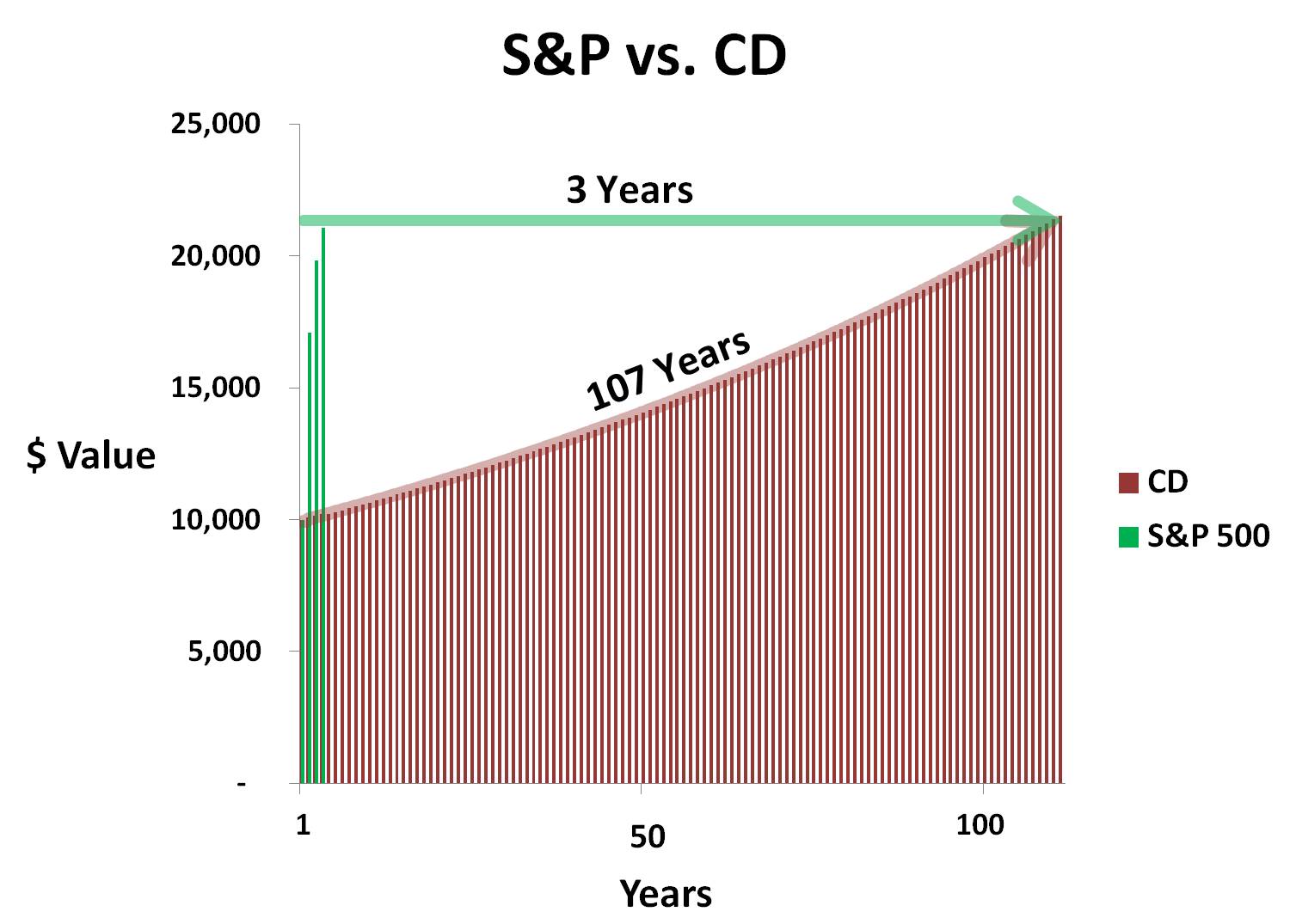
Obviously the massive underperformance of CDs cherry picks the time-period a bit, given the superb performance of stocks from 2009 – 2012 year-to-date. Over 1999-2012 stock performance hasn’t been as spectacular, but what we do know is that despite the lackluster performance of stocks over the last 12 years, corporate profits have about doubled in a similar timeframe, making equity prices that much more attractive relative to 1999.
With the economy and employment picture improving, some doomsday scenarios have temporarily been put on the backburner. As the recovery has gained some steam, many people are opening their bank statements with the painful realization, “I just made $31.49 on my checking maximizer account last year! Wow, how incredible…I can now go out and buy a half-tank of gas.” Never mind that healthcare premiums are exploding, food costs are skyrocketing, and that vacation you were planning is now out of reach. If you’re a mega-millionaire, perhaps you can make these stingy rates work for you, but for most of the other people, successful retirements will require more efficient use of their investment dollars. Or of course you can always work at Wal-Mart (WMT) as a greeter in your 80s.
Rationalizing with a Teen
Some people get it and some don’t. Trying to time the market, by getting in and out at the right times is a losing battle (see Getting Off the Market Timing Treadmill). Even the smartest professionals in the industry have little accuracy and cannot consistently predict the direction of the markets. Rationalizing the ups and downs of the financial markets is equivalent to rationalizing the actions of a teenager. Sometimes the outcomes are explainable, but most of the times they are not.
What an astute investor does know is that higher long-term returns come with higher volatility. So while the last four years have been a bumpy ride for investors, this is nothing new for an experienced investor who has studied the history of financial markets. There have been a dozen or so recessions since World War II, and we’ll have a dozen or so more over the next 50-60 years. Wars, banking crises, currency crises, and political turmoil have been a constant over history. Despite all these setbacks, the equity markets have climbed over +1,300% over the last 30 years or so. The smartest financial minds on the planet (e.g., the Ben Bernankes and Alan Greenspans of the world) haven’t been able to figure it out, so if they couldn’t do it, how is an average Joe supposed to be able to time the market? The answer is nobody can predict the direction of the market reliably.
As my clients and Investing Caffeine followers know, for those individuals with adequate savings and shorter time horizons, much of this conversation is irrelevant. However, based on our country’s low savings rate and the demographics of longer Baby Boomer life expectancies, most individuals can’t afford to stuff all their money under the mattress. As famous investor Sir John Templeton stated, “The only way to avoid mistakes is not to invest – which is the biggest mistake of all.” Earning 0.7% on your nest egg is difficult to call investing.
Ignoring the Experts
Why is the investing game so difficult? For starters, individuals are constantly bombarded by so-called experts through television, radio, and newspapers. Not only did Federal Reserve Chairmen Alan Greenspan and Ben Bernanke get the economy, financial markets, and housing markets wrong, the most powerful and smart financial institution CEOs were dead wrong as well. Look no further than Lehman Brothers (Dick Fuld), Citigroup Inc. (Chuck Prince), and American International Group (Martin Sullivan), which were believed to house some of the shrewdest executives – they too completely missed the financial crisis.
Rather than listening to shoddy predictions from pundits who have little to no investing experience, it makes more sense to listen to successful long-term investors who have survived multiple investment cycles and lived to tell the tale. Those people include the great fund manager Peter Lynch who said it is better to “assume the market is going nowhere and invest accordingly,” rather than try to time the market.
What You Hear
As the market has more than doubled over the last 37 months, here are some clouds of pessimism that these same shoddy economists, strategists, and analysts have described for investors:
* Europe and Greece’s impending fiscal domino collapse
* Excessive money printing at the Federal Reserve through quantitative easing and other programs
* Imminent government disintegration due to unresolved structural debts and deficits
* Elevated unemployment rates and pathetic job creation statistics
* Rigged high frequency trading and “Flash Crash”
* Credit downgrade and political turmoil in Washington
* Looming Chinese real estate bubble and subsequent hard economic landing
Unfortunately, many investors got sucked up in these ominous warnings and missed most, if not all, of the recent doubling in equity markets.
What You Don’t Hear
What you haven’t heard from the popular press are the following headlines:
* 10 consecutive quarters of GDP growth
* Record corporate profits and profit margins
* Equity valuations attractively priced below 50-year average (14.4 < 16.6 via Calafia Beach Pundit)
* Rising dividends with yields approaching 3%, if you consider recent bank announcements
* Record low interest rates and moderate inflation make earnings streams and dividends that much more valuable
* Four million new jobs created over the last three years
* S&P Smallcap near all-time highs (21 years); S&P Midcap index near all-time highs (20 years); NASDAQ is at 11-year highs; Dow Jones Industrials and S&P 500 near 4-year-highs.
* Record retail sales with a consumer that has reduced household debt
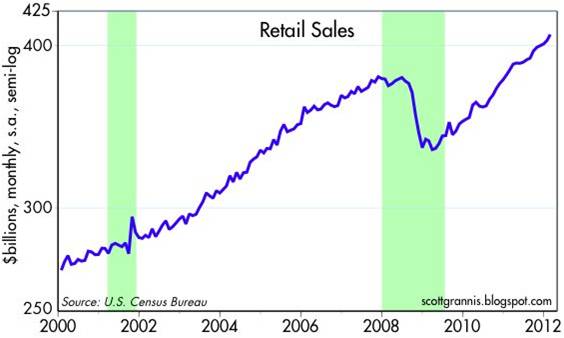
Source: Calafia Beach Pundit
Given the massive upward run in the stock market over the last few years (and a complacent short-term VIX reading of 15), stocks are ripe for a breather. With that said, I would advise any blanket holders to not get too comfy with that money decaying away in a CD, money market, or savings account. Waiting too long may turn that security blanket into a tourniquet – forcing investors to amputate a portion of their future retirement savings.
Wade W. Slome, CFA, CFP®
Plan. Invest. Prosper.
DISCLOSURE: Sidoxia Capital Management (SCM) and some of its clients own certain exchange traded funds and WMT, but at the time of publishing SCM had no direct position in C, AIG, RATE, Lehman Brothers, or any other security referenced in this article. No information accessed through the Investing Caffeine (IC) website constitutes investment, financial, legal, tax or other advice nor is to be relied on in making an investment or other decision. Please read disclosure language on IC “Contact” page.
Time Arbitrage: Investing vs. Speculation

The clock is ticking, and for many investors that makes the allure of short-term speculation more appealing than long-term investing. Of course the definition of “long-term” is open for interpretation. For some traders, long-term can mean a week, a day, or an hour. Fortunately, for those that understand the benefits of time arbitrage, the existence of short-term speculators creates volatility, and with volatility comes opportunity for long-term investors.
What is time arbitrage? The concept is not new and has been addressed by the likes of Louis Lowenstein, Ralph Wanger, Bill Miller, and Christopher Mayer. Essentially, time arbitrage is exploiting the benefits of moving against the herd and buying assets that are temporarily out of favor because of short-term fears, despite healthy long-term fundamentals. The reverse holds true as well. Short-term euphoria never lasts forever, and experienced investors understand that continually following the herd will eventually lead you to the slaughterhouse. Thinking independently, and going against the grain is ultimately what leads to long-term profits.
Successfully executing time arbitrage is easier said than done, but if you have a systematic, disciplined process in place that assists you in identifying panic and euphoria points, then you are well on your way to a lucrative investment career.
Winning via Long-Term Investing
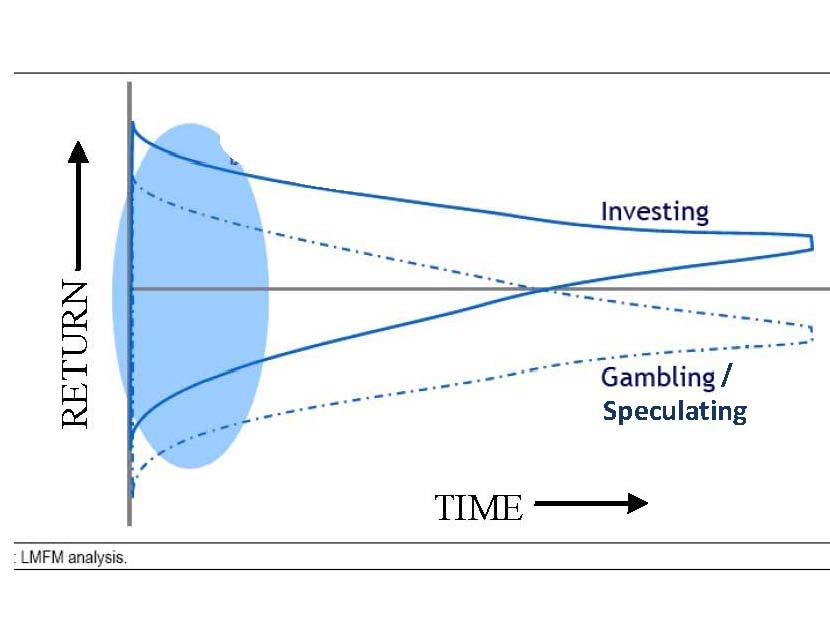
Legg Mason has a great graphical representation of time arbitrage:
Source: Legg Mason Funds Management
The first key point to realize from the chart is that in the short-run it is very difficult to distinguish between gambling/speculating and true investing. In the short-run, speculators can make money just as well as anybody, and in some cases, even make more profits than long-term investors. As famed long-term investor Benjamin Graham so astutely states, “In the short run the market is a voting machine. In the long run it’s a weighing machine.” Or in other words, speculative strategies can periodically outperform in the short run (above the horizontal mean return line), while thoughtful long-term investing can underperform.
Financial Institutions are notorious for throwing up strategies on the wall like strands of spaghetti. If some short-term outperforming products spontaneously stick, then the financial institutions often market the bejesus out of them to unsuspecting investors, until the strategies eventually fall off the wall.
Beware o’ Short-Termism
I believe Jack Gray of Grantham, Mayo, Van Otterloo got it right when he said, “Excessive short-termism results in permanent destruction of wealth, or at least permanent transfer of wealth.” What’s led to the excessive short-termism in the financial markets (see Short-Termism article)? For starters, technology and information are spreading faster than ever with the proliferation of the internet, creating a sense of urgency (often a false sense) to react or trade on that information. With more than 2 billion people online and 5 billion people operating mobile phones, no wonder investors are getting overwhelmed with a massive amount of short-term data. Next, trading costs have declined dramatically in recent decades, to the point that brokerage firms are offering free trades on various products. Lower trading costs mean less friction, which often leads to excessive and pointless, profit-reducing trading in reaction to meaningless news (i.e., “noise”). Lastly, the genesis of ETFs (exchange traded funds) has induced a speculative fervor, among those investors dreaming to participate in the latest hot trend. Usually, by the time an ETF has been created, the cat is already out of the bag, and the low hanging profit fruits have already been picked, making long-term excess returns tougher to achieve.
There is never a shortage of short-term fears, and today the 2008-09 financial crisis; “Flash Crash”; debt downgrade; European calamity; upcoming presidential elections; expiring tax cuts; and structural debts/deficits are but a few of the fear issues du jour in investors’ minds. Markets may be overbought in the short-run, and a current or unforeseen issue may derail the massive bounce from early 2009. For investors who can put on their long-term thinking caps and understand the concept of time arbitrage, buying oversold ideas and selling over-hyped ones will lead to profitable usage of investment time.
Wade W. Slome, CFA, CFP®
Plan. Invest. Prosper.
DISCLOSURE: Sidoxia Capital Management (SCM) and some of its clients own certain exchange traded funds, but at the time of publishing SCM had no direct position in any security referenced in this article. No information accessed through the Investing Caffeine (IC) website constitutes investment, financial, legal, tax or other advice nor is to be relied on in making an investment or other decision. Please read disclosure language on IC “Contact” page.
Ping Pong Vet Blasts Goldman
Source: Photobucket
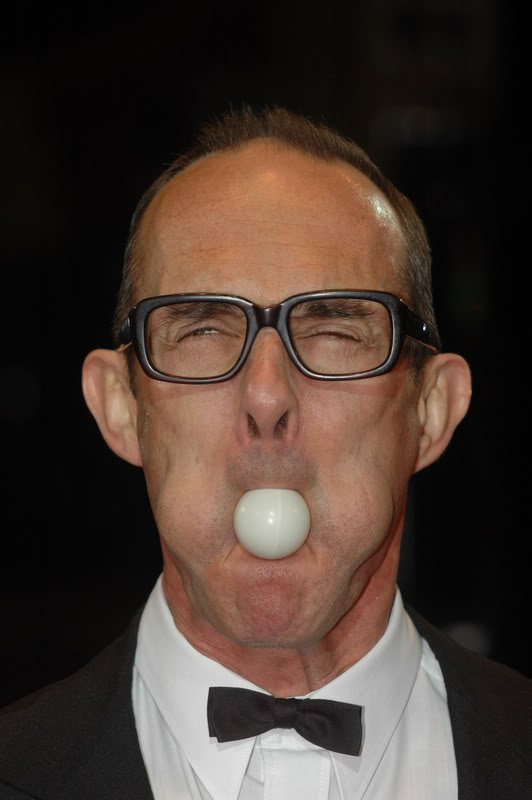
In a recent New York Times op-ed, Greg Smith, former Goldman Sachs Group Inc. (GS) employee and ping pong medalist at the Jewish Olympics, came out with an earth-shattering revelation… he discovered and revealed that Goldman Sachs was not looking out for the best interests of its clients. I was floored to discover that a Wall Street bank valued at $60 billion would value profits more than clients’ needs.
Hmmm, I wonder what new eye-opening breakthrough he will unveil next? Perhaps Smith will get a job at Las Vegas Sands Corp. (LVS) for 12 years and then enlighten the public that casinos are in the business of making money at the expense of their customers. I can’t wait to learn about that breaking news.
But really, with all sarcasm aside, any objective observer understands that Goldman Sachs and any other Wall Street firm are simply middlemen operating at the center of capitalism – matching buyers and sellers (lenders and borrowers) and providing advice on both sides of a transaction. As a supposed trusted intermediary, these financial institutions often hold privileged information that can be used to the firms’ (not clients) benefit.
Most industry veterans like me understand how rife with conflicts the industry operates under, but very few insiders publicly speak out about these “dirty little secrets.” Readers of Investing Caffeine know I am not bashful about speaking my mind. In fact, I have tackled this subject in numerous articles, including Wall Street Meets Greed Street written a few months ago. Here’s an excerpt**:
“Wall Street and large financial institutions, however, are driven by one single mode…and that is greed. This is nothing new and has been going on for generations. Over the last few decades, cheap money, loose regulation, and a relatively healthy economy have given Wall Street and financial institutions free rein to take advantage of the system.”
As with any investment, clients and investors should understand the risks and inherent conflicts of interest associated with a financial relationship before engaging into business. While certain disclosures are sorely lacking, it behooves investors and clients to ask tough questions of bankers and advisors – questions apparently Mr. Smith did not ask his employer over his 12 year professional career at Goldman Sachs.
Reputational Risk Playing Larger Role
Even though Goldman called some clients “muppets,” Smith states there was no illegal activity going on. Regardless of whether the banks have gotten caught conducting explicit law-breaking behavior, the public and politicians love scapegoats, and what better target than the “fat-cat” bankers. With a financial crisis behind us, along with a multi-decade banking bull market of declining interest rates, the culture, profitability-model, and regulations in the financial industry are all in the midst of massive changes. As client awareness and frustration continue to rise, reputational risk will slowly become a larger concern for Wall Street banks.
Could the Goldman glow as the leading Wall Street investment bank finally be getting tarnished? Well, besides their earnings collapsing by about 2/3rds in 2011, the selection of Morgan Stanley (MS) and JPMorgan Chase (JPM) ahead of Goldman Sachs as the lead underwriters in the Facebook (FB) initial public offering (IPO) could be a sign that reputational risk is playing a larger role in investment banking market share shifts.
The public and corporate America may be slow in recognizing the shady behavior practiced on Wall Street, but eventually, the excesses become noticed. Congress eventually implements new regulations (Dodd-Frank) and customers vote with their dollars by moving to banks and institutions they trust more.
I commend Mr. Smith for speaking out about the corrupt conflicts of interest and lack of fiduciary duty at Goldman Sachs, but let’s call a spade a spade and not mischaracterize a situation as suddenly shifting when the practices have been going on forever. Either he is naïve or dishonest (I hope the former rather than the latter), but regardless, finding a new job on Wall Street may be challenging for him. Fortunately for Mr. Smith, he has something to fall back on…the professional ping-pong circuit.
***Other Relevant Articles and Video:
- Goldman Gambling Prosperity at Client Expense
- Goldman Cheat? Really?
- Stephen Colbert: Breaking the Sacred Trust
Wade W. Slome, CFA, CFP®
Plan. Invest. Prosper.
DISCLOSURE: Sidoxia Capital Management (SCM) and some of its clients own certain exchange traded funds, but at the time of publishing SCM had no direct position in FB, GS, MS, JPM, LVS, or any other security referenced in this article. No information accessed through the Investing Caffeine (IC) website constitutes investment, financial, legal, tax or other advice nor is to be relied on in making an investment or other decision. Please read disclosure language on IC “Contact” page.
Happy Birthday Bull Market!

Birthdays are always fun, but they are always more fun when more people come to the party. The birthday of the current bull market started on March 9, 2009, and as many bears point out, volume has been low, with a relatively small number of investors joining the party with hats and horns. This skepticism is not unusual in typical bull markets because the psychological scars from the previous bear market are still fresh in investors’ minds. How can investors get excited about investing when we are surrounded by record deficits, political gridlock, a crumbling European Union, slowing China, and peak corporate margins?
Bears Receive Party Invite but Stay Home
Perma-bears like Peter Schiff, Nouriel Roubini, John Mauldin, Mohamed El-Erian, and David Rosenberg have been consistently wrong over the last three years with their advice, but in some instances can sound smart shoveling it out to unassuming investors.
While nervous investors and bears have missed the 125%+ rally (see table below) over the last three years (mitigated by upward but underperforming gold prices), what many observers have not realized is that the so-called “Lost Decade” (see also Can the Lost Decade Strike Twice?) has actually been pretty spectacular for shrewd investors. Even if you purchased small and mid cap stocks at the peak of the market in March 2000, that large swath of stocks is up over +100%…yes, that’s right, more than doubled over the last 12 years. If you consider dividends, the numbers look significantly better.
Doubters of the equity market rally also ignore the three-year +135% advance in the NASDAQ (see also Ugly Stepchild) in part because the 11-year highs being registered still lag the peak levels reached in March 2000. Even though the NASDAQ increased 9-fold in the 1990s, if you bought the NASDAQ index in the first half of 1999, you would have still outperformed the S&P 500 index through the 2012 year-to-date period. Irrespective of how anyone looks at the performance of the NASDAQ index, it still has outperformed the S&P 500 index by more than +200% over the last 25 years, even if you include the bursting of the 2000 technology bubble.
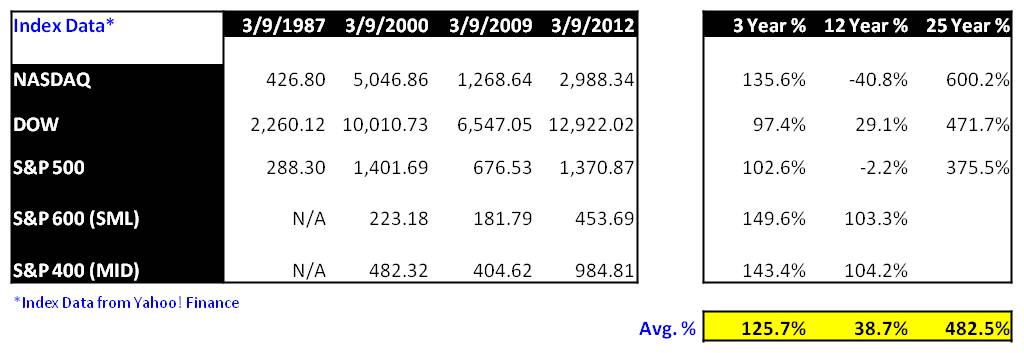
CLICK TO ENLARGE
The point of all these statistics is to show that if you didn’t buy technology stocks at the climax of late 1999 or early 2000 prices, then the amount and type of available opportunities have been plentiful. The table above does not include emerging markets like Brazil, Mexico, and India (to name a few) that have also about doubled in price from the 2000 timeframe to 2012.
Heartburn can Accompany Sweet Treats
Being Pollyannaish after a doubling in market prices is never a wise decision. After three years of massive appreciation, those participating in the bull market run have eaten a lot of tasty cake. Now the question becomes, will investors also get some ice cream and a gift bag to go before the party ends? With the sweetness of the cake still being digested, there are still plenty of scenarios that can create investor heartburn. Obviously, the sovereign debt pig still needs to work its way through the European snake, and that could still take some time. In addition, although macroeconomic data (including employment data) generally have been improving, the trajectory of corporate profits has been decelerating – due in part to near record profit margins getting pressured by rising input costs. Domestically, structural debt and deficit issues have not gone away, and perpetual neglect will only exacerbate the current problems. On the psychology front, even though investors remain skittish, those still in the game are getting more complacent as evidenced by the VIX index now falling to the teens (a negative contrarian indicator).
Despite some of these cautionary signals, the good news is that many of these issues have been known for some time and have been reflected in valuations of the overall large cap indexes. Moreover, trillions of dollars remain idle in low yielding strategies as investors wait on the sidelines. Once prices move higher and there is more comfort surrounding the sustainability of an economic recovery, then capital will come pouring back into equity markets. In other words, investors will have to pay a premium cherry price if they wait for a comforting consensus to coalesce.
Limited Options
The other advantage working in investors’ favor is the lack of other attractive investment alternatives. Where are you going to invest these days when 10-year Treasuries and short-term CDs are yielding next to nothing? How about investing in risky, leveraged, illiquid real estate, just as banks unload massive numbers of foreclosures and process millions of short sales? If those investments don’t tickle your fancy, then how about pricey insurance and annuity products that nobody can understand? Cash was comforting in 2008-2009 and during volatility in recent summers, but with spiking food, energy, leisure, and medical costs, when does that cash comfort turn to cash pain?
Easy money and low interest rate policies being advocated by Federal Reserve Chairman Ben Bernanke and other global central bankers have sucked up available investment opportunities and compelled investors to look more closely at riskier assets like equities. With the large run in equities, I have been trimming back my winners and redeploying proceeds into higher dividend paying stocks and underperforming sectors of the market. Skepticism still abounds, and we may be ripe for a short-term pullback in the equity markets. For those rare birthday party attendees who are called long-term investors, opportunities still remain despite the large run in equities. The cake has been sweet so far, but if you are patient, some ice cream and a gift bag may be coming your way as well.
Wade W. Slome, CFA, CFP®
Plan. Invest. Prosper.
DISCLOSURE: Sidoxia Capital Management (SCM) and some of its clients own certain exchange traded funds (including emerging market, international, and bond/treasury ETFs), but at the time of publishing SCM had no direct position in VXX, MXY, or any other security referenced in this article. No information accessed through the Investing Caffeine (IC) website constitutes investment, financial, legal, tax or other advice nor is to be relied on in making an investment or other decision. Please read disclosure language on IC “Contact” page.
Investors Sit on Fence and Watch New Highs

Article includes excerpts from Sidoxia Capital Management’s 3/1/2012 newsletter. Subscribe on right side of page.
We’ve seen some things jump during this 2012 Leap Year (mainly stock prices), but investors have not been jumping – rather they have been doing a lot of fence sitting. Despite the NASDAQ index hitting 11+ year highs (+14% in 2012 excl. dividends), and the S&P 500 index approaching 4-year highs, investors have been pulling cash out in droves from equities. Just last month, Scott Grannis at Calafia Beach Pundit highlighted that $355 billion in equity outflows has occurred since September 2008, including $155 billion since April 2011 and $6 billion siphoned out at the beginning of 2012.
Once again, listening to the vast majority of TV talking heads has decimated investor portfolios. However, ignoring the dreadful, horrific news over the last three years would have made an equity investor 100%+ (yes, that’s right…double). Somehow, the facts have escaped the psyches of millions of average Americans as the train is leaving the station. Certainly in 2008, a generational decline in equity markets was accompanied by horrific headlines. Those who were positioned too aggressively suffered about 15 months of severe pain, but those who capitulated with knee-jerk reactions after the collapse did incredibly more damage by selling near the bottom and locking in losses. Only now, after the Dow has exploded from 6,500 to 13,000 over the last three years have investors begun to ask whether now is the time to buy stocks.
Of course, making decisions by reacting to news headlines is a horrible way to manage one’s money and will only lead to a puddle of tears in the long-run. Psychological studies have shown that losses are 2.5x’s as painful as the pleasure experienced from gains. The wounds from the 2000 technology bubble and 2008-2009 financial crisis are still too fresh in investors’ minds, and until the scars heal, millions of investors will remain on the sidelines. As usual, average investors unfortunately get more excited after much of the gains have already been garnered.
Investing should be treated like an extended game of chess that requires long-term thinking. As in investing, there are many strategies that can be used in chess. Shadowing your opponent’s every move generally is not a winning strategy. Rather than defensively reacting to an opponent’s every move, proactively planning for the future is a healthier strategy. Don’t be a pawn, but instead create a long-term, low-cost investment plan that accounts for your current balance sheet, future goals, and risk tolerance in order to achieve your retirement checkmate. But before you can do that, you must first get that rump off the fence and put a plan into action.
Hot News Bites

How Do You Like Them Apples? Apple Inc. (AAPL) has become the most valuable company on the planet as it has surpassed a half-trillion dollars in market value at the end of February. Thanks to record sales of new iPhones, iPads, and Mac computers, Apple has managed to stuff away close to $100 billion in cash in its coffers. What’s next for Apple? Besides introducing new versions of existing products, Apple is expected to innovate its television platform later this year.
Greece Dips into Euro Purse Again: Euro-zone ministers approved a $172 billion rescue package for Greece to avoid default for the second time in less than two years. In addition to the Greek citizens, private bondholders are sharing in the pain. The deal calls for debt holders to write down their Greek debt by 74%; demands stark austerity measures (Debt/GDP ratio of 120.5% by 2020); and a continuous monitoring of Greece’s fiscal standing by a European task force.
Taxes-Schmaxes: There’s nothing more exciting in politics than the discussion of taxes. OK, maybe former Speaker Newt Gingrich’s moon colony proposal is a tad more interesting. Nonetheless, Congress voted to extend the payroll-tax cut through December, and both President Obama and presidential candidate Mitt Romney unveiled their new tax plans. Although Obama’s plan hopes to tax the rich, both politicians have plenty of tax-cuts embedded in their plans. In an election year, apparently debt and deficit amnesia have set in.
Investors “Like” Facebook: Although investors appear to be “Like”-ing Facebook in advance of its initial public offering (IPO), employees and owners seem to be even happier, considering the company is estimated to reach up to $100 billion in value once shares begin trading. I can’t wait to read CEO Mark Zuckerberg’s status update when he cashes in on a portion of his stake of $25 billion or so.
Gas Prices Empty Wallet: Improving global economic data is not the only reason behind escalating gasoline prices (currently averaging $3.73 per gallon for Regular). Iran reduced its sales of crude oil to Britain and France after those countries stopped importing Iranian oil, and Iran stated it has made progress on its nuclear-development program. Can’t we just all get along?!
Plan. Invest. Prosper.
Wade W. Slome, CFA, CFP®
Plan. Invest. Prosper.
DISCLOSURE: Sidoxia Capital Management (SCM) and some of its clients own certain exchange traded funds, FB and AAPL, but at the time of publishing SCM had no direct position in any other security referenced in this article. No information accessed through the Investing Caffeine (IC) website constitutes investment, financial, legal, tax or other advice nor is to be relied on in making an investment or other decision. Please read disclosure language on IC “Contact” page.
NASDAQ: The Ugly Stepchild Index

All the recent media focus has been fixated on whether the Dow Jones Industrial Average index (“The Dow”) will close above the 13,000 level. In the whole scheme of things, this specific value doesn’t mean a whole lot, but it does make for a great topic of conversation at a cocktail party. Today, the Dow is trading at 12,983, a level not achieved in more than three and a half years. Not a bad accomplishment, given the historic financial crisis on our shores and the debacle going on overseas, but I’m still not so convinced a miniscule +0.1% move in the Dow means much. While the Dow and the S&P 500 indexes garner the hearts and minds of journalists and TV reporters, the ugly stepchild index, the NASDAQ, gets about as much respect as Rodney Dangerfield (see also No Respect in the Investment World).
While the S&P 500 hundred has NOT even reached the level from one year ago, the technology-heavy NASDAQ index has hit a 11+ year record high. Yes that’s right; the NASDAQ has not reached these levels since December 2000. Sure, the NASDAQ receives a lot of snickers since the technology bubble burst in 2000, when the index peaked at over 5,100 and subsequently plummeted to 1,108 (-78%) over the ensuing 31 months. But now the ugly stepchild index is making an extraordinary comeback into maturity. Since September 2002, near the lows, the NASDAQ has outperformed both the Dow and the S&P 500 indexes by more than a whopping 80%+, excluding dividends.
With the NASDAQ (and NASDAQ 100) hitting a new decade-plus high, are we approaching bubble-esque P/E ratios (price-earnings) of the 2000 era? Not even close. According to Birinyi Associates, the NASDAQ 100 index (QQQ) forward P/E ratio is priced at a reasonable 14x level – much lower than the 100x+ ratios we experienced right before the NASDAQ crash of 2000 and close to the P/E of the S&P 500.
With these NASDAQ indexes hitting new highs, does this tell us they are going to go significantly higher? No, not necessarily…just ask buyers of the NASDAQ in the late 1990s how that strategy worked then. Trying to time the market is a fruitless cause, and will always remain so. A few people will be able to do it occasionally, but doing so on a sustained basis is extremely difficult (if not impossible). If you don’t believe me, just ask Alan Greenspan, former Federal Reserve Chairman, who in 1996 said the tech boom had created “irrational exuberance.” When he made this infamous statement in 1996, the NASDAQ was trading around 1,300 – I guess Greenspan was only off by about another 3,800 points before the exuberance exhausted.
While a significantly outperforming index may not give you information on future prices, leadership indexes and sectors can direct you to fertile areas of research. Trends can be easy to identify, but the heavy lifting and sweat lies in the research of determining whether the trends are sustainable. With the significant outperformance of the NASDAQ index over the last decade it should be no surprise that technology has been leading the index brigade. The NASDAQ composite data is difficult to come by, but with the Technology sector accounting for 65% of the NASDAQ 100 index weighting, it makes sense that this index and sector should not be ignored. Cloud computing, mobility, e-commerce, alternative energy, and nanotechnology are but just a few of the drivers catapulting technology’s prominence in financial markets. Globalization is here to stay and technology is flattening the world so that countries and their populations can participate in the ever-expanding technology revolution.
Investors can continue to myopically focus on the narrow group of 30 Dow stocks and its arbitrary short-term target of 13,000, however those ignoring the leadership of the ugly stepchild index (NASDAQ) should do so at their own peril. Ugliness has a way of turning to beauty when people are not paying attention.
Wade W. Slome, CFA, CFP®
Plan. Invest. Prosper.
DISCLOSURE: Sidoxia Capital Management (SCM) and some of its clients own certain exchange traded funds, including SPY, but at the time of publishing SCM had no direct position in QQQ, or any other security referenced in this article. No information accessed through the Investing Caffeine (IC) website constitutes investment, financial, legal, tax or other advice nor is to be relied on in making an investment or other decision. Please read disclosure language on IC “Contact” page.
Box Wine, Facebook and PEG Ratios
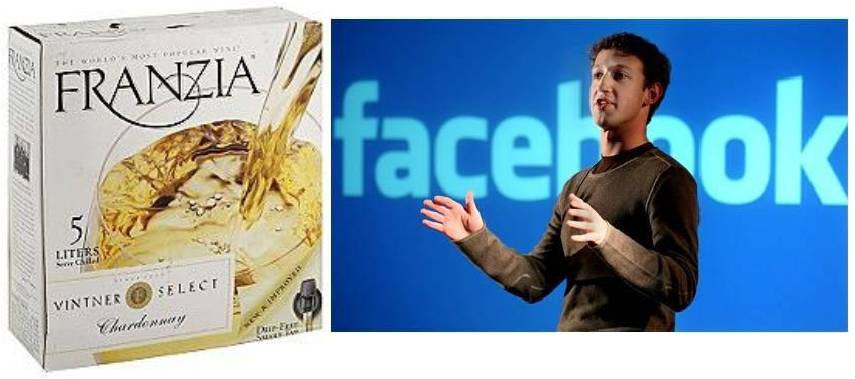
I’m no wine connoisseur, but I do know I would pay more for a bottle of Dom Pérignon champagne than I would pay for a container of Franzia box wine. In the world of stocks, the quality disparity is massive too. In order to navigate the virtually infinite number of stocks, we need to have an instrument in our toolbox that can assist us in accurately comparing stocks across the quality spectrum. Thank goodness we have the handy PEG ratio (Price/Earnings to Growth) that elegantly marries the price paid for a stock (as measured by the P/E ratio) with the relative quality of the stock (as measured by its future earnings growth rate).

Famed investor Peter Lynch (see Inside the Brain of an Investing Genius) understood the PEG concept all too well as he used this tool religiously in valuing and analyzing different companies. Given that Lynch earned a +29% annual return from 1977-1990, I’ll take his word for it that the PEG ratio is a useful tool. As highlighted by Lynch (and others), the key factor in using the PEG ratio is to identify companies that trade with a PEG ratio of less than 1. All else equal, the lower the ratio, the better potential for future price appreciation. Facebook Vs. Eastman Kodak
To illustrate the concept of how a PEG ratio can be used to compare stocks with two completely different profiles, let’s start by answering a few questions. Would a rational investor pay the same price (i.e., Price-Earnings [P/E] ratio) for a company with skyrocketing profits as they would for a company going into bankruptcy? Look no further than the lofty expected P/E multiple to be afforded to the shares of the widely anticipated Facebook (FB) initial public offering (IPO). That same rational investor is unlikely to pay the same P/E multiple for a money losing company like Eastman Kodak Co. (EKDKQ.PK) that faces product obsolescence. The contrasting values for these two companies are stark. Some pundits are projecting that Facebook shares could fetch upwards of a 100x P/E ratio, while not too long ago, Kodak was trading at a P/E ratio of 4x. Plenty of low priced stocks have outperformed expensive ones, but remember, just because a “value” stock may have a lower absolute P/E ratio in the recent past, does not mean it will be a better investment than a “growth” stock sporting a higher P/E ratio (see Fallacy of High P/Es).
Price, Earnings, and Dividends
As I’ve written in the past, a key determinant of future stock prices is future earnings growth (see It’s the Earnings Stupid). The higher the P/E multiple, the more important future earnings growth becomes. The lower the future growth, the more important valuation and dividends become.
We can look at various money-making scenarios that incorporate these factors. If my goal were to double my money in 5 years (i.e., earn a 100% return), there are numerous ways to skin the profit-making cat. Here are four examples:
1) Buy a non-dividend paying stock of a company that achieves earnings growth of 15%/year and maintains its current P/E ratio over time.
2) Buy a stock of a company that has a 5% dividend and achieves earnings growth of 11%/year and maintains its current P/E ratio over time.
3) Buy a value stock with a 5% dividend that achieves earnings growth of 5%/year and increase its P/E ratio by 10% each year.
4) Buy a non-dividend paying growth stock that achieves earnings growth of 20%/year and decreases its P/E ratio by about 5% each year.
I think you get the idea, but as you can see, in addition to earnings growth, dividends and valuation do play a significant role in how an investor can earn excess returns.
Lynch’s Adjusted PEG
Peter Lynch added a slight twist to the traditional PEG analysis by accounting for the role of dividends in the denominator of the PEG equation:
PEG (adjusted by Lynch) = PE Ratio/(Earnings Growth Rate + Dividend Yield)
This “adjusted PEG” ratio makes intuitive sense under various perspectives. For starters, if two different companies both had a PEG ratio of 0.8, but one of the two stocks paid a 3% dividend, Lynch’s adjusted PEG would register in at a more attractive level of 0.6 for the dividend paying stock.
Looked at under a different lens, let’s suppose there are two lemonade stands that IPO their stocks at the same time, and both companies use the exact same business model. Moreover, let us assume the following:
• Lemonade stand #1 has a P/E of 14x and growth rate of 15%.
• Lemonade stand #2 has a P/E of 12x and growth rate of 8%, but it also pays a dividend of 3%.
Given this information, which one of the two lemonade stands would you invest in? Many investors see the lower P/E of Lemonade stand #2, coupled with a nice dividend, as the more attractive opportunity of the two. But as we can see from Lynch’s “adjusted PEG” ratio, Lemonade stand #1 actually has the lower, more attractive value (.9 or 14/15 vs 1.1 or 12/(8+3)).
This analysis may be delving into the weeds a bit, but this framework is critical nonetheless. Valuation and earnings projections should be essential components of any investment decision, and with record low interest rates, dividend yields are playing a much more important role in the investment selection process. Regardless of your purchase decision thought process, whether deciding between Dom Perignon and box wine, or Facebook and Kodak shares, having the PEG ratio at your disposal should help you make wise and lucrative decisions.
Wade W. Slome, CFA, CFP®
Plan. Invest. Prosper.
DISCLOSURE: Sidoxia Capital Management (SCM) and some of its clients own certain exchange traded funds, but at the time of publishing SCM had no direct position in FB, EKDKQ.PK, or any other security referenced in this article. No information accessed through the Investing Caffeine (IC) website constitutes investment, financial, legal, tax or other advice nor is to be relied on in making an investment or other decision. Please read disclosure language on IC “Contact” page.
Cramer Pulls Apple from Romney Tree

Republican Presidential primary candidate Mitt Romney has taken a lot of heat for his lack of conviction on various issues, whether they be on immigration, universal healthcare, or abortion. Jim Cramer, former hedge fund manager and host of TV show Mad Money, has also been known to do a bit of his own John Kerry-esque waffling. One of Cramer’s most recent high profile flip-flops is highflying Apple Inc. (AAPL). If Mitt Romney had his own stock show in his free time like Jim Cramer, there’s a high probability that Romney and Cramer could both agree that they were “for Apple, before they were against it, and now for it again.”
Some might think that picking on Jim Cramer is like clubbing a defenseless seal; wrestling a first grader; or stealing candy from a baby. Suffice it to say, I am not the first person to point out the dangers, inconsistencies, and irresponsible behavior associated with Jim Cramer’s recommendations. Here are some of the highest profile critiques of Jim Cramer in recent years past:
I. Daily Show Destruction
Vodpod videos no longer available.
Daily Show Skewering PART II Daily Show Skewering PART III
II. The Barron’s Bashing
 This 2007 Barron’s article not only dissected all of Jim Cramer’s picks over a multi-year period and outlined how much money was lost relative to the major stock market indices, but also a subsequent Barron’s article highlighted research showing a strategy that could yield 25% per month by betting against Cramer’s picks.
III. New York Times Expose

Last year, this article highlighted the good, bad, and ugly, but the sentiment noted by famed Yale University endowment fund manager David Swensen echoes the sentiment of many investment professionals:
“Cramer induces his viewers to do things that are bad for them. He’s smart enough to know what he’s doing. ‘Mad Money’ delivers a very dangerous message — that individual investors can beat the market with momentum-driven, high-octane trading strategies. There are individuals who do beat the market, but their number is vanishingly small. Cramer is a master manipulator. He has absolutely no accountability. This is serious business; people’s retirements are at stake.”
Spoiled Apple Turns Sweet Again
Apple stock has historically been a favorite of Jim Cramer. Because why? Well, like many short-term traders, it’s a stock that has been going up! A few short months ago, however, Apple’s stock stopped going up, and was actually going down. Jim Cramer’s long love affair with Apple was on the rocks – this is what he had to say about Apple on November 9th (AAPL price – $395.28):
“Times Have Changed for Apple. I’m hearing about weak tablet sales, about iPhone 4S sales not up to snuff, along with worries about holiday sales for iPods.” In the past Jim would brush these worries aside, but in the past, the visionary Steve Jobs was still breathing. “These days though, every nuance, every little bit of worry about Apple, as we heard today from a brokerage firm talking about lighter tablet sales seaps into my ears, and I actually listen, and I agonize over it – I don’t want to…But I can’t dismiss these minute Apple data points as irrelevant any more. These days it would just be too glib…Apple is no longer a given. We are not going to re-recommend endlessly right here. We are waiting. I think actually better prices are coming. No reason to pull the trigger [buy]. No reason until then [lower prices].”
Oh my, what a difference 90 days makes! Has Steve Jobs been resurrected from the dead? Last I checked, the answer is no. Anxiety of whether new CEO Tim Cook was about to drive Apple off a cliff to obsolescence, like Research in Motion Ltd. (RIMM), has apparently been put on hold. Previous deep-rooted concerns about iPad and iPhone 4S sales from Jim Cramer’s in-depth analysis turned out to be completely off base. As a matter of fact, two months after Cramer went on his anti-Apple rant, the company reported blowout quarterly results of record proportions. Not only did earnings results explode +116% from a year ago (+37% higher than Wall Street forecasts), but iPad unit sales grew by +111% (15.4 million iPads) and iPhone unit sales grew +128% (37.0 million iPhones). To make matters worse, during Cramer’s temporary Apple break-up, he told his followers to buy Google Inc. (GOOG) instead of Apple. Oops…since that short time ago, Apple has only outperformed Google by a massive +28% or so.
Well, no reason to fret now because any worries about a dead Steve jobs, collapsing iPad/iPhone sales, and a RIMM-like train wreck have been quickly forgotten by Cramer over the last few months. Apple gloom has turned to champagne cheers. Here’s what Jim has to say now:
“This stock (Apple) has gripped the imagination like no other I’ve seen in my career. A stock going to $500 in a straight line.”
When Wall Street analysts recently weren’t bullish enough for Cramer (despite 50 “Buy” ratings, 3 “Hold” ratings, 2 “Sell” ratings), he had this to say:
“I want to grab them by the throat and say, ‘Will you give me a break?’ Apple sells at 10 times earnings; the average stock sells at 15 times earnings; Apple is a lot better than the average stock. Don’t you understand this stock is galloping to where it has to go, simply to catch up with the rest of the market? Don’t you see that happening? Don’t you understand that apple has to go higher?!
If these whipsaw stock recommendation reversals are not fast enough for you, no need to worry. Apparently flip-flopping on the overall market only takes 24 hours. Last week, Cramer could hardly control his excitement during his show’s opening, given another up-day in the market. To bolster his bullish case, Cramer proceeded to chastise Wall Street analysts for being so negative. With one rotation of the Earth, the following day, Cramer turned negative and nervous once again as the Dow Jones Industrials index fell 0.69%. Who knows what Cramer’s ever-changing mood will be next, but I can give you a hint – if you look at the daily direction of the Dow, your mood guessing batting average will be higher than Ty Cobb’s career average.
Selective Consumption at the Investment Supermarket
Despite all the criticisms, one should not shed a tear for this multi-mega-millionaire, Harvard grad, and Goldman Sachs Group Inc. alum (GS). Mad Money is highly entertaining for short-term traders, and in upward trending momentum markets, Cramer followers might do OK. Unfortunately, the lucrative, straight-upward market that Cramer made his fortunes in during the 1990s hasn’t been in existence over the last 12 years. For the untrained, investing masses who are looking to preserve and grow their retirement nest eggs, the schizophrenic recommendations that Jim Cramer provides can prove extremely damaging. We have seen this destructive dynamic especially at key inflection points in the market, whether it was at the 2000 peak of the market when his 10-stock “Winners of the New World” portfolio that collapsed by over -90%, or in late 2008/early 2009, near the market bottom, when Cramer told all investors to sell stocks unless you can wait five years.
Jim Cramer is not an evil person and he his very entertaining and sharp individual. I fully admit that I occasionally watch Mad Money for a chuckle and to also gain perspective of the speculative sentiment in the market. Although I would like to see better programming on the network, CNBC is not to be fully blamed. CNBC is like a supermarket that sells both healthy and unhealthy goods. While long-time Investing Caffeine readers know, I have been known to take numerous cavalier economists and strategists to task, many of my investing philosophies and strategies have been built off of long-time, successful investors that CNBC has interviewed or profiled. CNCB guests whom I have written about include, Warren Buffett, Ron Baron, Bill Gross, Ken Heebner, Wilbur Ross, Joel Greenblatt, Laszlo Birinyi, Jimmy Rogers, and others.
While Jim Cramer can be consumed in small doses by professionals and short-term traders, average investors should tread lightly. Investors will be better served by reading the labels of television commentators’ advice, and instead listen to those advisors or managers that have a time horizon consistent with your long-term financial goals.
Jim Cramer has been picked apart by many, but his screaming “Booyahs!,” singing “hallelujah” choirs, and flying bulls, make for compelling television. Although Jim Cramer and I are on the same page as Apple currently (I’ve owned for a long time), I have yet to come to a definitive decision on the 2012 presidential elections. If Cramer changes his view on Apple again in the coming days and weeks, I hope he invites his friend Mitt Romney on as a guest. That way I can kill two birds with one stone, and if one flip-flopper is entertaining to watch, having two should certainly be twice as amusing.
Wade W. Slome, CFA, CFP®
Plan. Invest. Prosper.
DISCLOSURE: Sidoxia Capital Management (SCM) and some of its clients own certain exchange traded funds, AAPL, and GOOG but at the time of publishing SCM had no direct position in RIMM, GS, or any other security referenced in this article. No information accessed through the Investing Caffeine (IC) website constitutes investment, financial, legal, tax or other advice nor is to be relied on in making an investment or other decision. Please read disclosure language on IC “Contact” page.
Markets Race Out of 2012 Gate

Article includes excerpts from Sidoxia Capital Management’s 2/1/2012 newsletter. Subscribe on right side of page.
Equity markets largely remained caged in during 2011, but U.S. stocks came racing out of the gate at the beginning of 2012. The S&P 500 index rose +4.4% in January; the Dow Jones Industrials climbed +3.4%; and the NASDAQ index sprinted out to a +8.0% return. Broader concerns have not disappeared over a European financial meltdown, high U.S. unemployment, and large unsustainable debts and deficits, but several key factors are providing firmer footing for financial race horses in 2012:
• Record Corporate Profits: 2012 S&P operating profits were recently forecasted to reach a record level of $106, or +9% versus a year ago. Accelerating GDP (Gross Domestic Product Growth) to +2.8% in the fourth quarter also provided a tailwind to corporations.
• Mountains of Cash: Companies are sitting on record levels of cash. In late 2011, U.S. non-financial corporations were sitting on $1.73 trillion in cash, which was +50% higher as a percentage of assets relative to 2007 when the credit crunch began in earnest.
• Employment Trends Improving: It’s difficult to fall off the floor, but since the unemployment rate peaked at 10.2% in October 2009, the rate has slowly improved to 8.5% today. Data junkies need not fret – we have fresh new employment numbers to look at this Friday.
• Consumer Optimism on Rise: The University of Michigan’s consumer sentiment index showed optimism improved in January to the highest level in almost a year, increasing to 75.0 from 69.9 in December.
• Federal Reserve to the Rescue: Federal Reserve Chairman, Ben Bernanke, and the Fed recently announced the extension of their 0% interest rate policy, designed to assist economic expansion, through the end of 2014. In addition, Bernanke did not rule out further stimulative asset purchases (a.k.a., QE3 or quantitative easing) if necessary. If executed as planned, this dovish stance will extend for an unprecedented six year period (2008 -2014).
Europe on the Comeback Trail?
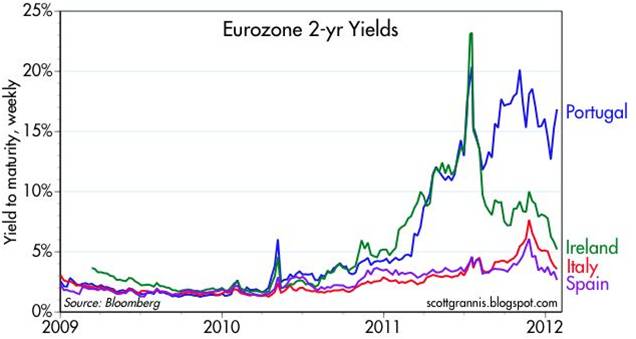
Source: Calafia Beach Pundit
Europe is by no means out of the woods and tracking the day to day volatility of the happenings overseas can be a difficult chore. One fairly easy way to track the European progress (or lack thereof) is by following the interest rate trends in the PIIGS countries (Portugal, Ireland, Italy, Greece, and Spain). Quite simply, higher interest rates generally mean more uncertainty and risk, while lower interest rates mean more confidence and certainty. The bad news is that Greece is still in the midst of a very complex restructuring of its debt, which means Greek interest rates have been exploding upwards and investors are bracing for significant losses on their sovereign debt investments. Portugal is not in as bad shape as Greece, but the trends have been moving in a negative direction. The good news, as you can see from the chart above (Calafia Beach Pundit), is that interest rates in Ireland, Italy and Spain have been constructively moving lower thanks to austerity measures, European Central Bank (ECB) actions, and coordination of eurozone policies to create more unity and fiscal accountability.
Political Horse Race
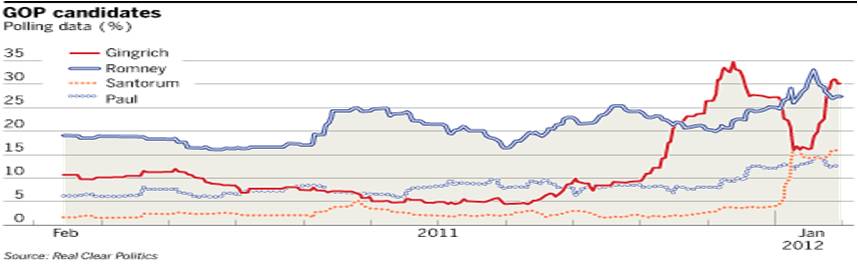
Source: Real Clear Politics via The Financial Times
The other horse race going on now is the battle for the Republican presidential nomination between former Massachusetts governor Mitt Romney and former House of Representatives Speaker Newt Gingrich. Some increased feistiness mixed with a little Super-Pac TV smear campaigns helped whip Romney’s horse to a decisive victory in Florida – Gingrich ended up losing by a whopping 14%. Unlike traditional horse races, we don’t know how long this Republican primary race will last, but chances are this thing should be wrapped up by “Super Tuesday” on March 6th when there will be 10 simultaneous primaries and caucuses. Romney may be the lead horse now, but we are likely to see a few more horses drop out before all is said and done.
Flies in the Ointment

As indicated previously, although 2012 has gotten off to a strong start, there are still some flies in the ointment:
• European Crisis Not Over: Many European countries are at or near recessionary levels. The U.S. may be insulated from some of the weakness, but is not completely immune from the European financial crisis. Weaker fourth quarter revenue growth was suffered by companies like Exxon Mobil Corp (XOM), Citigroup Inc. (C), JP Morgan Chase & Co (JPM), Microsoft Corp (MSFT), and IBM, in part because of European exposure.
• Slowing Profit Growth: Although at record levels, profit growth is slowing and peak profit margins are starting to feel the pressure. Only so much cost-cutting can be done before growth initiatives, such as hiring, must be implemented to boost profits.
• Election Uncertainty: As mentioned earlier, 2012 is a presidential election year, and policy uncertainty and political gridlock have the potential of further spooking investors. Much of these issues is not new news to the financial markets. Rather than reading stale, old headlines of the multi-year financial crisis, determining what happens next and ascertaining how much uncertainty is already factored into current asset prices is a much more constructive exercise.
Stocks on Sale for a Discount
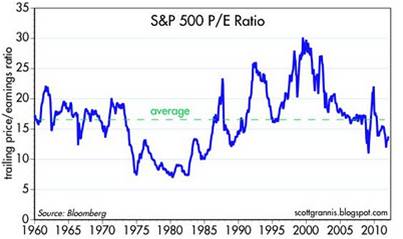
Source: Calafia Beach Pundit
A lot of the previous concerns (flies) mentioned is not new news to investors and many of these worries are already factored into the cheap equity prices we are witnessing. If everything was all roses, stocks would not be selling for a significant discount to the long-term averages.
A key ratio measuring the priceyness of the stock market is the Price/Earnings (P/E) ratio. History has taught us the best long-term returns have been earned when purchases were made at lower P/E ratio levels. As you can see from the 60-year chart above (Calafia Beach Pundit), stocks can become cheaper (resulting in lower P/Es) for many years, similar to the challenging period experienced through the early 1980s and somewhat analogous to the lower P/E ratios we are presently witnessing (estimated 2012 P/E of approximately 12.4). However, the major difference between then and now is that the Federal Funds interest rate was about 20% back in the early-’80s, while the same rate is closer to 0% currently. Simple math and logic tell us that stocks and other asset-based earnings streams deserve higher prices in periods of low interest rates like today.
We are only one month through the 2012 financial market race, so it much too early to declare a Triple Crown victory, but we are off to a nice start. As I’ve said before, investing has arguably never been as difficult as it is today, but investing has also never been as important. Inflation, whether you are talking about food, energy, healthcare, leisure, or educational costs continue to grind higher. Burying your head in the sand or stuffing your money in low yielding assets may work for a wealthy few and feel good in the short-run, but for much of the masses the destructive inflation-eroding characteristics of purported “safe investments” will likely do more damage than good in the long-run. A low-cost diversified global portfolio of thoroughbred investments that balances income and growth with your risk tolerance and time horizon is a better way to maneuver yourself to the investment winner’s circle.
Wade W. Slome, CFA, CFP®
Plan. Invest. Prosper.
DISCLOSURE: Sidoxia Capital Management (SCM) and some of its clients own certain exchange traded funds, but at the time of publishing SCM had no direct position in XOM, MSFT, JPM, IBM, or any other security referenced in this article. No information accessed through the Investing Caffeine (IC) website constitutes investment, financial, legal, tax or other advice nor is to be relied on in making an investment or other decision. Please read disclosure language on IC “Contact” page.
The $100 Billion Facebook Man

Source: Photobucket
If you don’t pay close enough attention, you may miss the Facebook initial public offering (IPO) in the blink of an eye. Since computer programming or Botox has frozen Facebook CEO Mark Zuckerberg’s face into a wide-eyed, blink-free state, you may have bought yourself a little more time to buy shares in this imminent IPO, which is estimated to value the company at upwards of $100 billion.
We don’t know a lot of details about the financial health of Facebook right now, but what we do know is that this snot-nosed, 27-year-old Mark Zuckerberg has created one of the most powerful companies on this planet and his estimated net worth is currently around $17 billion. Not bad for a college drop-out who started Facebook in 2004 as a freshman at Harvard University. Hmmm, maybe I should have dropped out of college like Mark Zuckerberg, Steve Jobs, and Bill Gates, and I too could have become a billionaire? OK, maybe not, but sometimes living in dreamland can be fun.
Speaking of dreams, Zuckerberg has a dream of connecting the whole world, and with more than 800 million-plus Facebook users, he is well on his way. If Facebook users made their own own country, it would be #3 behind only China and India – I’ll check back in a few years to see if Facebook can climb to the top position.
The Pre-IPO Interview
Charlie Rose recently ditched the tie and headed to Silicon Valley to conduct an interview at Facebook headquarters with Mark Zuckerberg and his Chief Operating Officer Sheryl Sandberg. If you fast forward to MINUTE 9:30 you can listen to the official Facebook IPO response:
Vodpod videos no longer available.
The Hype Machine
The hype surrounding the Facebook IPO is palpable and feels a lot like the Google Inc. (GOOG) IPO in 2004, but that capital raising event only resulted in proceeds of $1.9 billion for Google. The recent chatter surrounding the pending Facebook IPO places the value to be raised closer to $10 billion. Partial offerings seem to be the trend du jour in the social media IPO world, where companies like LinkedIn Corp. (LNKD), Groupon Inc. (GRPN), and Zillow Inc. (Z) all sold just a sliver of their shares to the public in order to create artificial scarcity, thereby pumping up short-term demand for their respective stocks. These companies trade at or above their initial offering price, but significantly below the early investor mouth-frothing spikes in share prices near the time of the IPOs. Facebook appears to be using the same playbook to build up hype for its eventual offering.
Even at an estimated value of $100 billion, Facebook still has some wood to chop if wants to pass Google (about $185 billion in value) and Apple Inc’s (AAPL) approximate $415 billion, but Zuckerberg is no stranger to ambition. When Facebook unveils its inevitable IPO prospectus in the not too distant future, we will have a better idea of whether Facebook and the 2010 Time magazine Person of the Year deserve all the mega-billion dollar accolades, or will an IPO feeding frenzy bring tears to those investors’ eyes that are not privileged enough to receive IPO allocated shares? Regardless of your faith or skepticism, we’re likely to find out the answer to these critical questions in a blink of an eye.
Wade W. Slome, CFA, CFP®
Plan. Invest. Prosper.
DISCLOSURE: Sidoxia Capital Management (SCM) and some of its clients own certain exchange traded funds, AGN, AAPL, GOOG but at the time of publishing SCM had no direct position in Facebook, MSFT, LNKD, GRPN, Z, TWX, or any other security referenced in this article. No information accessed through the Investing Caffeine (IC) website constitutes investment, financial, legal, tax or other advice nor is to be relied on in making an investment or other decision. Please read disclosure language on IC “Contact” page.




 Investing Caffeine
