Posts filed under ‘Profiles’
Investing Holy Grail: Brain or Machine?

Source: Photobucket
Paul Meehl was a versatile academic who held numerous faculty positions, covering the diverse disciplines of psychology, law, psychiatry, neurology, and yes, even philosophy. The crux of his research was focused on how well clinical analysis fared versus statistical analysis. Or in other words, he looked to answer the controversial question, “What is a better predictor of outcomes, a brain or an equation?” His conclusion was straightforward – mechanical methods using quantitative measures are much more efficient than the professional judgments of humans in coming to more accurate predictions.
Those who have read my book, How I Managed $20,000,000,000.00 by Age 32 know where I stand on this topic – I firmly believe successful investing requires a healthy balance between both art and science (i.e., “brain and equation”). A trader who only relies on intuition and his gut to make all of his/her decisions is likely to fall on their face. On the other hand, a quantitative engineer’s sole dependence on a robotic multi-factor model to make trades is likely to fail too. My skepticism is adequately outlined in my Butter in Bangladesh article, which describes how irrational statistical games can be misleading and overused.
As much as I would like to attribute all of my investment success to my brain, the emotion-controlling power of numbers has played an important role in my investment accomplishments as well. The power of numbers simply cannot be ignored. More than 50 years after Paul Meehl’s seminal research was published, about two hundred studies comparing brain power versus statistical power have shown that machines beat brains in predictive accuracy in the majority of cases. Even when expert judgments have won over formulas, human consistency and reliability have muddied the accuracy of predictions.
Daniel Kahneman, a Nobel Prize winner in Economics, highlights another important decision making researcher, Robyn Dawes. What Dawes discovers in her research is that the fancy and complex multiple regression methods used in conventional software adds little to no value in the predictive decision-making process. Kahneman describes Dawes’s findings more specifically here:
“A formula that combines these predictors with equal weights is likely to be just as accurate in predicting new cases as the multiple-regression formula…Formulas that assign equal weights to all the predictors are often superior, because they are not affected by accidents of sampling…It is possible to develop useful algorithms without any prior statistical research. Simple equally weighted formulas based on existing statistics or on common sense are often very good predictors of significant outcomes.”
The results of Dawes’s classic research have significant application to the field of stock picking. As a matter of fact, this type of research has had a significant impact on Sidoxia’s stock selection process.
How Sweet It Is!

In the emotional roller-coaster equity markets we’ve experienced over the last decade or two, overreliance on gut-driven sentiments in the investment process has left masses of casualties in the wake of losses. If you doubt the destructive after-effects on investors’ psyches, then I urge you to check out my Fund Flow Paradox article that shows the debilitating effects of volatility on investors’ behavior.
In order to more objectively exploit investment opportunities, the Sidoxia Capital Management investment team has successfully formed and utilized our own proprietary quantitative tool. The results were so sweet, we decided to call it SHGR (pronounced “S-U-G-A-R”), or Sidoxia Holy Grail Ranking.
My close to two decades of experience at William O’Neil & Co., Nicholas Applegate, American Century Investments, and now Sidoxia Capital Management has allowed me to build a firm foundation of growth investing competency – however understanding growth alone is not sufficient to succeed. In fact, growth investing can be hazardous to your investment health if not kept properly in check with other key factors.
Here are some of the key factors in our Sidoxia SHGR ranking system:
Valuation:
- Free cash flow yield
- Price/earnings ratio
- PEG ratio
- Dividend yield
Quality:
- Financials: Profit margin trends; balance sheet leverage
- Management Team: Track record; capital stewardship
- Market Share: Industry position; runway for growth
Contrarian Sentiment Indicators:
- Analyst ratings
- Short interest
Growth:
- Earnings growth
- Sales growth
Our proprietary SHGR ranking system not only allows us to prioritize our asset allocation on existing stock holdings, but it also serves as an efficient tool to screen new ideas for client portfolio additions. Most importantly, having a quantitative model like Sidoxia’s Holy Grail Ranking system allows investors to objectively implement a disciplined investment process, whether there is a presidential election, Fiscal Cliff, international fiscal crisis, slowing growth in China, and/or uncertain tax legislation. At Sidoxia we have managed to create a Holy Grail machine, but like other quantitative tools it cannot replace the artistic powers of the brain.
Wade W. Slome, CFA, CFP®
Plan. Invest. Prosper.
DISCLOSURE: Sidoxia Capital Management (SCM) and some of its clients own certain exchange traded funds, but at the time of publishing SCM had no direct position in any other security referenced in this article. No information accessed through the Investing Caffeine (IC) website constitutes investment, financial, legal, tax or other advice nor is to be relied on in making an investment or other decision. Please read disclosure language on IC “Contact” page.
Sidoxia’s Investor Hall of Fame

Investing Caffeine has profiled many great investors over the months and years, so I thought now would be a great time to compile a “Hall of Fame” summarizing some of the greatest of all-time. Nothing can replace experience, but learning from the greats can only improve your investing results – I’ve benefitted firsthand and so have Sidoxia’s clients. Here is a partial list from the Pantheon of investing greats along with links to the complete articles (special thanks to Kevin Weaver for helping compile):
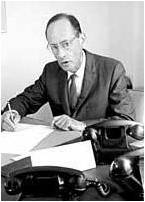 Phillip Fisher – Author of the must-read classic Common Stocks and Uncommon Profits, he enrolled in college at age 15 and started graduate school at Stanford a few years later, before he dropped out and started his own investment firm in 1931. “If the job has been correctly done when a common stock is purchased, the time to sell it is – almost never.” Not every investment idea made the cut, however he is known to have bought Motorola (MOT) stock in 1955 and held it until his death in 2004 for a massive gain. (READ COMPLETE ARTICLE)
 Peter Lynch – Lynch graduated from Boston College in 1965 and earned a Master of Business Administration from the Wharton School of the University of Pennsylvania in 1968. Lynch’s Magellan fund averaged +29% per year from 1977 – 1990 (almost doubling the return of the S&P 500). In 1977, the obscure Magellan Fund started with about $20 million, and by his retirement the fund grew to approximately $14 billion (700x’s larger). Magellan outperformed 99.5% of all other funds, according to Barron’s. (READ COMPLETE ARTICLE)

William O’Neil – After graduating from Southern Methodist University, O’Neil started his career as a stock broker. Soon thereafter, at the ripe young age of 30, O’Neil purchased a seat on the New York Stock Exchange and started his own company, William O’Neil + Co. Incorporated. Following the creation of his firm, O’Neil went on to pioneer the field of computerized investment databases. He used his unique proprietary data as a foundation to unveil his next entrepreneurial baby, Investor’s Business Daily, in 1984. (READ COMPLETE ARTICLE)

Sir John Templeton – After Yale and Oxford, Templeton moved onto Wall Street, borrowed $10,000 to purchase more than 100 stocks trading at less than $1 per share (34 of the companies were in bankruptcy). Only four of the investments became worthless and Templeton made a boatload of money. Templeton bought an investment firm in 1940, leading to the Templeton Growth Fund in 1954. A $10,000 investment made at the fund’s 1954 inception would have compounded into $2 million in 1992 (translating into a +14.5% annual return). (READ COMPLETE ARTICLE)
 Charles Ellis – He has authored 12 books, founded institutional consulting firm Greenwich Associates, a degree from Yale, an MBA from Harvard, and a PhD from New York University. A director at the Vanguard Group and Investment Committee chair at Yale, Ellis details that many more investors and speculators lose than win. Following his philosophy will not only help increase the odds of your portfolio winning, but will also limit your losses in sleep hours. (READ COMPLETE ARTICLE)
 Seth Klarman – President of The Baupost Group, which manages about $22 billion, he worked for famed value investors Max Heine and Michael Price of the Mutual Shares. Klarman published a classic book on investing, Margin of Safety, Risk Averse Investing Strategies for the Thoughtful Investor, which is now out of print and has fetched upwards of $1,000-2,000 per copy in used markets. From it’s 1983 inception through 2008 his Limited partnership averaged 16.5% net annually, vs. 10.1% for the S&P 500. During the “lost decade” he crushed the S&P, returning 14.8% and 15.9% for the 5 and 10-year periods vs. -2.2% and -1.4%. (READ COMPLETE ARTICLE)
 George Soros – Escaping Hungary in 1947, Soros immigrated to the U.S. in 1956 and held analyst and management positions for the next 20 years. Known as the “The man who broke the Bank of England,” he risked $10 billion against the British pound in 1992 in a risky trade and won. Soros also gained notoriety for running the Quantum Fund, which generated an average annual return of more than 30%. (READ COMPLETE ARTICLE)
Bruce Berkowitz -Bruce Berkowitz has not exactly been a household name. With his boyish looks, nasally voice, and slicked-back hair, one might mistake him for a grad student. However, his results are more than academic, which explains why this invisible giant was recently named the equity fund manager of the decade by Morningstar. The Fairholme Fund (FAIRX) fund earned a 13% annualized return over the ten-year period ending in 2009, beating the S&P 500 by an impressive 14%. (READ COMPLETE ARTICLE)

Thomas Rowe Price, Jr. – Known as the “Father of Growth Investing,” in 1937 he founded T. Rowe Price Associates (TROW) and successfully ramped up the company before the launch of the T. Rowe Price Growth Stock Fund in 1950. Expansion ensued until he made a timely sale of his company in the late 1960s. His Buy and Hold strategy proved successful. For example, in the early 1970s, Price had accumulated gains of +6,184% in Xerox (XRX), which he held for 12 years, and gains of +23,666% in Merck (MRK), which he held for 31 years. (READ COMPLETE ARTICLE)
There you have it. Keep investing and continue reading about investing legends at Investing Caffeine, and who knows, maybe you too can join Sidoxia’s Hall of Fame?!
Wade W. Slome, CFA, CFP®
Plan. Invest. Prosper.
DISCLOSURE: Sidoxia Capital Management (SCM) and some of its clients own certain exchange traded funds and WMT, but at the time of publishing SCM had no direct position in MOT, TROW, XRX, MRK, FAIRX, or any other security referenced in this article. No information accessed through the Investing Caffeine (IC) website constitutes investment, financial, legal, tax or other advice nor is to be relied on in making an investment or other decision. Please read disclosure language on IC “Contact” page.
Ping Pong Vet Blasts Goldman

Source: Photobucket
In a recent New York Times op-ed, Greg Smith, former Goldman Sachs Group Inc. (GS) employee and ping pong medalist at the Jewish Olympics, came out with an earth-shattering revelation… he discovered and revealed that Goldman Sachs was not looking out for the best interests of its clients. I was floored to discover that a Wall Street bank valued at $60 billion would value profits more than clients’ needs.
Hmmm, I wonder what new eye-opening breakthrough he will unveil next? Perhaps Smith will get a job at Las Vegas Sands Corp. (LVS) for 12 years and then enlighten the public that casinos are in the business of making money at the expense of their customers. I can’t wait to learn about that breaking news.
But really, with all sarcasm aside, any objective observer understands that Goldman Sachs and any other Wall Street firm are simply middlemen operating at the center of capitalism – matching buyers and sellers (lenders and borrowers) and providing advice on both sides of a transaction. As a supposed trusted intermediary, these financial institutions often hold privileged information that can be used to the firms’ (not clients) benefit.
Most industry veterans like me understand how rife with conflicts the industry operates under, but very few insiders publicly speak out about these “dirty little secrets.” Readers of Investing Caffeine know I am not bashful about speaking my mind. In fact, I have tackled this subject in numerous articles, including Wall Street Meets Greed Street written a few months ago. Here’s an excerpt**:
“Wall Street and large financial institutions, however, are driven by one single mode…and that is greed. This is nothing new and has been going on for generations. Over the last few decades, cheap money, loose regulation, and a relatively healthy economy have given Wall Street and financial institutions free rein to take advantage of the system.”
As with any investment, clients and investors should understand the risks and inherent conflicts of interest associated with a financial relationship before engaging into business. While certain disclosures are sorely lacking, it behooves investors and clients to ask tough questions of bankers and advisors – questions apparently Mr. Smith did not ask his employer over his 12 year professional career at Goldman Sachs.
Reputational Risk Playing Larger Role
Even though Goldman called some clients “muppets,” Smith states there was no illegal activity going on. Regardless of whether the banks have gotten caught conducting explicit law-breaking behavior, the public and politicians love scapegoats, and what better target than the “fat-cat” bankers. With a financial crisis behind us, along with a multi-decade banking bull market of declining interest rates, the culture, profitability-model, and regulations in the financial industry are all in the midst of massive changes. As client awareness and frustration continue to rise, reputational risk will slowly become a larger concern for Wall Street banks.
Could the Goldman glow as the leading Wall Street investment bank finally be getting tarnished? Well, besides their earnings collapsing by about 2/3rds in 2011, the selection of Morgan Stanley (MS) and JPMorgan Chase (JPM) ahead of Goldman Sachs as the lead underwriters in the Facebook (FB) initial public offering (IPO) could be a sign that reputational risk is playing a larger role in investment banking market share shifts.
The public and corporate America may be slow in recognizing the shady behavior practiced on Wall Street, but eventually, the excesses become noticed. Congress eventually implements new regulations (Dodd-Frank) and customers vote with their dollars by moving to banks and institutions they trust more.
I commend Mr. Smith for speaking out about the corrupt conflicts of interest and lack of fiduciary duty at Goldman Sachs, but let’s call a spade a spade and not mischaracterize a situation as suddenly shifting when the practices have been going on forever. Either he is naïve or dishonest (I hope the former rather than the latter), but regardless, finding a new job on Wall Street may be challenging for him. Fortunately for Mr. Smith, he has something to fall back on…the professional ping-pong circuit.
***Other Relevant Articles and Video:
- Goldman Gambling Prosperity at Client Expense
- Goldman Cheat? Really?
- Stephen Colbert: Breaking the Sacred Trust
Wade W. Slome, CFA, CFP®
Plan. Invest. Prosper.
DISCLOSURE: Sidoxia Capital Management (SCM) and some of its clients own certain exchange traded funds, but at the time of publishing SCM had no direct position in FB, GS, MS, JPM, LVS, or any other security referenced in this article. No information accessed through the Investing Caffeine (IC) website constitutes investment, financial, legal, tax or other advice nor is to be relied on in making an investment or other decision. Please read disclosure language on IC “Contact” page.
Cramer Pulls Apple from Romney Tree

Republican Presidential primary candidate Mitt Romney has taken a lot of heat for his lack of conviction on various issues, whether they be on immigration, universal healthcare, or abortion. Jim Cramer, former hedge fund manager and host of TV show Mad Money, has also been known to do a bit of his own John Kerry-esque waffling. One of Cramer’s most recent high profile flip-flops is highflying Apple Inc. (AAPL). If Mitt Romney had his own stock show in his free time like Jim Cramer, there’s a high probability that Romney and Cramer could both agree that they were “for Apple, before they were against it, and now for it again.”
Some might think that picking on Jim Cramer is like clubbing a defenseless seal; wrestling a first grader; or stealing candy from a baby. Suffice it to say, I am not the first person to point out the dangers, inconsistencies, and irresponsible behavior associated with Jim Cramer’s recommendations. Here are some of the highest profile critiques of Jim Cramer in recent years past:
I. Daily Show Destruction
Vodpod videos no longer available.
Daily Show Skewering PART II Daily Show Skewering PART III
II. The Barron’s Bashing
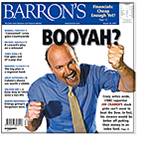 This 2007 Barron’s article not only dissected all of Jim Cramer’s picks over a multi-year period and outlined how much money was lost relative to the major stock market indices, but also a subsequent Barron’s article highlighted research showing a strategy that could yield 25% per month by betting against Cramer’s picks.
III. New York Times Expose

Last year, this article highlighted the good, bad, and ugly, but the sentiment noted by famed Yale University endowment fund manager David Swensen echoes the sentiment of many investment professionals:
“Cramer induces his viewers to do things that are bad for them. He’s smart enough to know what he’s doing. ‘Mad Money’ delivers a very dangerous message — that individual investors can beat the market with momentum-driven, high-octane trading strategies. There are individuals who do beat the market, but their number is vanishingly small. Cramer is a master manipulator. He has absolutely no accountability. This is serious business; people’s retirements are at stake.”
Spoiled Apple Turns Sweet Again
Apple stock has historically been a favorite of Jim Cramer. Because why? Well, like many short-term traders, it’s a stock that has been going up! A few short months ago, however, Apple’s stock stopped going up, and was actually going down. Jim Cramer’s long love affair with Apple was on the rocks – this is what he had to say about Apple on November 9th (AAPL price – $395.28):
“Times Have Changed for Apple. I’m hearing about weak tablet sales, about iPhone 4S sales not up to snuff, along with worries about holiday sales for iPods.” In the past Jim would brush these worries aside, but in the past, the visionary Steve Jobs was still breathing. “These days though, every nuance, every little bit of worry about Apple, as we heard today from a brokerage firm talking about lighter tablet sales seaps into my ears, and I actually listen, and I agonize over it – I don’t want to…But I can’t dismiss these minute Apple data points as irrelevant any more. These days it would just be too glib…Apple is no longer a given. We are not going to re-recommend endlessly right here. We are waiting. I think actually better prices are coming. No reason to pull the trigger [buy]. No reason until then [lower prices].”
Oh my, what a difference 90 days makes! Has Steve Jobs been resurrected from the dead? Last I checked, the answer is no. Anxiety of whether new CEO Tim Cook was about to drive Apple off a cliff to obsolescence, like Research in Motion Ltd. (RIMM), has apparently been put on hold. Previous deep-rooted concerns about iPad and iPhone 4S sales from Jim Cramer’s in-depth analysis turned out to be completely off base. As a matter of fact, two months after Cramer went on his anti-Apple rant, the company reported blowout quarterly results of record proportions. Not only did earnings results explode +116% from a year ago (+37% higher than Wall Street forecasts), but iPad unit sales grew by +111% (15.4 million iPads) and iPhone unit sales grew +128% (37.0 million iPhones). To make matters worse, during Cramer’s temporary Apple break-up, he told his followers to buy Google Inc. (GOOG) instead of Apple. Oops…since that short time ago, Apple has only outperformed Google by a massive +28% or so.
Well, no reason to fret now because any worries about a dead Steve jobs, collapsing iPad/iPhone sales, and a RIMM-like train wreck have been quickly forgotten by Cramer over the last few months. Apple gloom has turned to champagne cheers. Here’s what Jim has to say now:
“This stock (Apple) has gripped the imagination like no other I’ve seen in my career. A stock going to $500 in a straight line.”
When Wall Street analysts recently weren’t bullish enough for Cramer (despite 50 “Buy” ratings, 3 “Hold” ratings, 2 “Sell” ratings), he had this to say:
“I want to grab them by the throat and say, ‘Will you give me a break?’ Apple sells at 10 times earnings; the average stock sells at 15 times earnings; Apple is a lot better than the average stock. Don’t you understand this stock is galloping to where it has to go, simply to catch up with the rest of the market? Don’t you see that happening? Don’t you understand that apple has to go higher?!
If these whipsaw stock recommendation reversals are not fast enough for you, no need to worry. Apparently flip-flopping on the overall market only takes 24 hours. Last week, Cramer could hardly control his excitement during his show’s opening, given another up-day in the market. To bolster his bullish case, Cramer proceeded to chastise Wall Street analysts for being so negative. With one rotation of the Earth, the following day, Cramer turned negative and nervous once again as the Dow Jones Industrials index fell 0.69%. Who knows what Cramer’s ever-changing mood will be next, but I can give you a hint – if you look at the daily direction of the Dow, your mood guessing batting average will be higher than Ty Cobb’s career average.
Selective Consumption at the Investment Supermarket
Despite all the criticisms, one should not shed a tear for this multi-mega-millionaire, Harvard grad, and Goldman Sachs Group Inc. alum (GS). Mad Money is highly entertaining for short-term traders, and in upward trending momentum markets, Cramer followers might do OK. Unfortunately, the lucrative, straight-upward market that Cramer made his fortunes in during the 1990s hasn’t been in existence over the last 12 years. For the untrained, investing masses who are looking to preserve and grow their retirement nest eggs, the schizophrenic recommendations that Jim Cramer provides can prove extremely damaging. We have seen this destructive dynamic especially at key inflection points in the market, whether it was at the 2000 peak of the market when his 10-stock “Winners of the New World” portfolio that collapsed by over -90%, or in late 2008/early 2009, near the market bottom, when Cramer told all investors to sell stocks unless you can wait five years.
Jim Cramer is not an evil person and he his very entertaining and sharp individual. I fully admit that I occasionally watch Mad Money for a chuckle and to also gain perspective of the speculative sentiment in the market. Although I would like to see better programming on the network, CNBC is not to be fully blamed. CNBC is like a supermarket that sells both healthy and unhealthy goods. While long-time Investing Caffeine readers know, I have been known to take numerous cavalier economists and strategists to task, many of my investing philosophies and strategies have been built off of long-time, successful investors that CNBC has interviewed or profiled. CNCB guests whom I have written about include, Warren Buffett, Ron Baron, Bill Gross, Ken Heebner, Wilbur Ross, Joel Greenblatt, Laszlo Birinyi, Jimmy Rogers, and others.
While Jim Cramer can be consumed in small doses by professionals and short-term traders, average investors should tread lightly. Investors will be better served by reading the labels of television commentators’ advice, and instead listen to those advisors or managers that have a time horizon consistent with your long-term financial goals.
Jim Cramer has been picked apart by many, but his screaming “Booyahs!,” singing “hallelujah” choirs, and flying bulls, make for compelling television. Although Jim Cramer and I are on the same page as Apple currently (I’ve owned for a long time), I have yet to come to a definitive decision on the 2012 presidential elections. If Cramer changes his view on Apple again in the coming days and weeks, I hope he invites his friend Mitt Romney on as a guest. That way I can kill two birds with one stone, and if one flip-flopper is entertaining to watch, having two should certainly be twice as amusing.
Wade W. Slome, CFA, CFP®
Plan. Invest. Prosper.
DISCLOSURE: Sidoxia Capital Management (SCM) and some of its clients own certain exchange traded funds, AAPL, and GOOG but at the time of publishing SCM had no direct position in RIMM, GS, or any other security referenced in this article. No information accessed through the Investing Caffeine (IC) website constitutes investment, financial, legal, tax or other advice nor is to be relied on in making an investment or other decision. Please read disclosure language on IC “Contact” page.
The $100 Billion Facebook Man

Source: Photobucket
If you don’t pay close enough attention, you may miss the Facebook initial public offering (IPO) in the blink of an eye. Since computer programming or Botox has frozen Facebook CEO Mark Zuckerberg’s face into a wide-eyed, blink-free state, you may have bought yourself a little more time to buy shares in this imminent IPO, which is estimated to value the company at upwards of $100 billion.
We don’t know a lot of details about the financial health of Facebook right now, but what we do know is that this snot-nosed, 27-year-old Mark Zuckerberg has created one of the most powerful companies on this planet and his estimated net worth is currently around $17 billion. Not bad for a college drop-out who started Facebook in 2004 as a freshman at Harvard University. Hmmm, maybe I should have dropped out of college like Mark Zuckerberg, Steve Jobs, and Bill Gates, and I too could have become a billionaire? OK, maybe not, but sometimes living in dreamland can be fun.
Speaking of dreams, Zuckerberg has a dream of connecting the whole world, and with more than 800 million-plus Facebook users, he is well on his way. If Facebook users made their own own country, it would be #3 behind only China and India – I’ll check back in a few years to see if Facebook can climb to the top position.
The Pre-IPO Interview
Charlie Rose recently ditched the tie and headed to Silicon Valley to conduct an interview at Facebook headquarters with Mark Zuckerberg and his Chief Operating Officer Sheryl Sandberg. If you fast forward to MINUTE 9:30 you can listen to the official Facebook IPO response:
Vodpod videos no longer available.
The Hype Machine
The hype surrounding the Facebook IPO is palpable and feels a lot like the Google Inc. (GOOG) IPO in 2004, but that capital raising event only resulted in proceeds of $1.9 billion for Google. The recent chatter surrounding the pending Facebook IPO places the value to be raised closer to $10 billion. Partial offerings seem to be the trend du jour in the social media IPO world, where companies like LinkedIn Corp. (LNKD), Groupon Inc. (GRPN), and Zillow Inc. (Z) all sold just a sliver of their shares to the public in order to create artificial scarcity, thereby pumping up short-term demand for their respective stocks. These companies trade at or above their initial offering price, but significantly below the early investor mouth-frothing spikes in share prices near the time of the IPOs. Facebook appears to be using the same playbook to build up hype for its eventual offering.
Even at an estimated value of $100 billion, Facebook still has some wood to chop if wants to pass Google (about $185 billion in value) and Apple Inc’s (AAPL) approximate $415 billion, but Zuckerberg is no stranger to ambition. When Facebook unveils its inevitable IPO prospectus in the not too distant future, we will have a better idea of whether Facebook and the 2010 Time magazine Person of the Year deserve all the mega-billion dollar accolades, or will an IPO feeding frenzy bring tears to those investors’ eyes that are not privileged enough to receive IPO allocated shares? Regardless of your faith or skepticism, we’re likely to find out the answer to these critical questions in a blink of an eye.
Wade W. Slome, CFA, CFP®
Plan. Invest. Prosper.
DISCLOSURE: Sidoxia Capital Management (SCM) and some of its clients own certain exchange traded funds, AGN, AAPL, GOOG but at the time of publishing SCM had no direct position in Facebook, MSFT, LNKD, GRPN, Z, TWX, or any other security referenced in this article. No information accessed through the Investing Caffeine (IC) website constitutes investment, financial, legal, tax or other advice nor is to be relied on in making an investment or other decision. Please read disclosure language on IC “Contact” page.
Munger: Buffett’s Wingman & the Art of Stock Picking
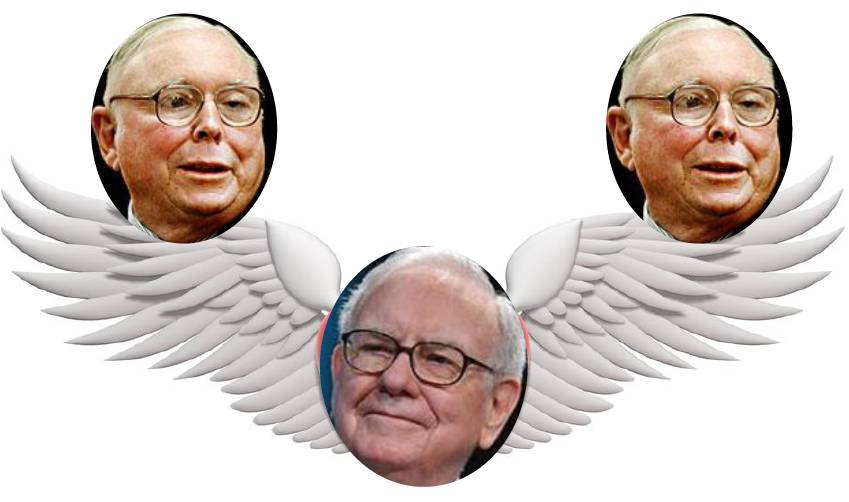
Simon had Garfunkel, Batman had Robin, Hall had Oates, Dr. Evil had Mini Me, Sonny had Cher, and Malone had Stockton. In the investing world, Buffett has Munger. Charlie Munger is one of the most successful and famous wingmen of all-time – evidenced by Berkshire Hathaway Corporation’s (BRKA/B) outperformance of the S&P 500 index by approximately +624% from 1977 – 2009, according to MarketWatch. Munger not only provides critical insights to his legendary billionaire boss, Warren Buffett, but he also is Chairman of Berkshire’s insurance subsidiary, Wesco Financial Corporation. The magic of this dynamic duo began when they met at a dinner party during 1959.
In an article he published in 2006, the magnificent Munger describes the “Art of Stock Picking” in a thorough review about the secrets of equity investing. We’ll now explore some of the 88-year-old’s sage advice and wisdom.
Model Building
Charlie Munger believes an individual needs a solid general education before becoming a successful investor, and in order to do that one needs to study and understand multiple “models.”
“You’ve got to have models in your head. And you’ve got to array your experience both vicarious and direct on this latticework of models. You may have noticed students who just try to remember and pound back what is remembered. Well, they fail in school and in life. You’ve got to hang experience on a latticework of models in your head.”
Although Munger indicates there are 80 or 90 important models, the examples he provides include mathematics, accounting, biology, physiology, psychology, and microeconomics.
Advantages of Scale
Great businesses in many cases enjoy the benefits of scale, and Munger devotes a good amount of time to this subject. Scale advantages can be realized through advertising, information, psychological “social proofing,” and structural factors.
The newspaper industry is an example of a structural scale business in which a “winner takes all” phenomenon applies. Munger aptly points out, “There’s practically no city left in the U.S., aside from a few very big ones, where there’s more than one daily newspaper.”
General Electric Co. (GE) is another example of a company that uses scale to its advantage. Jack Welch, the former General Electric CEO, learned an early lesson. If the GE division is not large enough to be a leader in a particular industry, then they should exit. Or as Welch put it, “To hell with it. We’re either going to be # 1 or #2 in every field we’re in or we’re going to be out. I don’t care how many people I have to fire and what I have to sell. We’re going to be #I or #2 or out.”
Bigger Not Always Better
Scale comes with its advantages, but if not managed correctly, size can weigh on a company like an anchor. Munger highlights the tendency of large corporations to become “big, fat, dumb, unmotivated bureaucracies.” An implicit corruption also leads to “layers of management and associated costs that nobody needs. Then, while people are justifying all these layers, it takes forever to get anything done. They’re too slow to make decisions and nimbler people run circles around them.”
Becoming too large can also create group-think, or what Munger calls “Pavlovian Association.” Munger goes onto add, “If people tell you what you really don’t want to hear what’s unpleasant there’s an almost automatic reaction of antipathy…You can get severe malfunction in the high ranks of business. And of course, if you’re investing, it can make a lot of difference.”
Technology: Benefit or Burden?
Munger recognizes that technology lowers costs for companies, but the important question that many managers fail to ask themselves is whether the benefits from technology investments accrue to the company or to the customer? Munger summed it up here:
“There are all kinds of wonderful new inventions that give you nothing as owners except the opportunity to spend a lot more money in a business that’s still going to be lousy. The money still won’t come to you. All of the advantages from great improvements are going to flow through to the customers.”
Buffett and Munger realized this lesson early on when productivity improvements gained from technology investments in the textile business all went to the buyers.
Surfing the Wave
When looking for good businesses, Munger and Buffett are looking to “surf” waves or trends that will generate healthy returns for an extended period of time. “When a surfer gets up and catches the wave and just stays there, he can go a long, long time. But if he gets off the wave, he becomes mired in shallows,” states Munger. He notes that it’s the “early bird,” or company that identifies a big trend before others that enjoys the spoils. Examples Munger uses to illustrate this point are Microsoft Corp. (MSFT), Intel Corp. (INTC), and National Cash Register from the old days.
Large profits will be collected by those investors that can identify and surf those rare large waves. Unfortunately, taking advantage of these rare circumstances becomes tougher and tougher for larger investors like Berkshire. If you’re an elephant trying to surf a wave, you need to find larger and larger waves, and even then, due to your size, you will be unable to surf as long as small investors.
Circle of Competence
Circle of competence is not a new subject discussed by Buffett and Munger, but it is always worth reviewing. Here’s how Munger describes the concept:
“You have to figure out what your own aptitudes are. If you play games where other people have the aptitudes and you don’t, you’re going to lose. And that’s as close to certain as any prediction that you can make. You have to figure out where you’ve got an edge. And you’ve got to play within your own circle of competence.”
For Munger and Buffett, sticking to their circle of competence means staying away from high-technology companies, although more recently they have expanded this view to include International Business Machines (IBM), which they invested in late last year.
Market Efficiency or Lack Thereof
Munger acknowledges that financial markets are quite difficult to beat. Since the markets are “partly efficient and partly inefficient,” he believes there is a minority of individuals who can outperform the markets. To expand on this idea, he compares stock investing to the pari-mutuel system at the racetrack, which despite the odds stacked against the bettor (17% in fees going to the racetrack), there are a few individuals who can still make decent money.
The transactional costs are much lower for stocks, but success for an investor still requires discipline and patience. As Munger declares, “The way to win is to work, work, work, work and hope to have a few insights.”
Winning the Game – 10 Insights / 20 Punches
As the previous section implies, outperformance requires patience and a discriminating eye, which has allowed Berkshire to create the bulk of its wealth from a relatively small number of investment insights. Here’s Munger’s explanation on this matter:
“How many insights do you need? Well, I’d argue: that you don’t need many in a lifetime. If you look at Berkshire Hathaway and all of its accumulated billions, the top ten insights account for most of it….I don’t mean to say that [Warren] only had ten insights. I’m just saying, that most of the money came from ten insights.”
Chasing performance, trading too much, being too timid, and paying too high a price are not recipes for success. Independent thought accompanied with selective, bold decisions is the way to go. Munger’s solution to these problems is to provide investors with a Buffett 20-punch ticket:
“I could improve your ultimate financial welfare by giving you a ticket with only 20 slots in it so that you had 20 punches ‑ representing all the investments that you got to make in a lifetime. And once you’d punched through the card, you couldn’t make any more investments at all.”
The great thing about Munger and Buffett’s advice is that it is digestible by the masses. Like dieting, investing can be very simple to understand, but difficult to execute, and legends like these always remind us of the important investing basics. Even though Charlie Munger may be slowing down a tad at 88-years-old, Warren Buffett and investors everywhere are blessed to have this wingman around spreading his knowledge about investing and the art of stock picking.
Wade W. Slome, CFA, CFP®
Plan. Invest. Prosper.
DISCLOSURE: Sidoxia Capital Management (SCM) and some of its clients own certain exchange traded funds, but at the time of publishing SCM had no direct position in BRKA/B, GE, MSFT, INTC, National Cash Register, IBM, or any other security referenced in this article. No information accessed through the Investing Caffeine (IC) website constitutes investment, financial, legal, tax or other advice nor is to be relied on in making an investment or other decision. Please read disclosure language on IC “Contact” page.
Ken Heebner: Dr. Adrenaline

Is the market making you feel a little lost, down, or disconnected? Then perhaps what you need is a prescription of adrenaline in the form of some CGM Focus Fund shares (CGMFX). Ken Heebner has captained the CGM Focus Fund since its 1997 inception. This hyper-volatile fund is not for the faint of heart. The concentrated fund holds a narrow portfolio (often 20-30 positions), which is managed with a very itchy trigger-finger. The eye-popping 363% turnover last year is proof of Heebner’s rapid fire approach, which equates to an average stock holding period of around three months. Although “Dr. Adrenaline” has earned the top Morningstar ranking for his Focus Fund on a 10-year basis (annualized +11.8% vs. +2.1% S&P 500 – Morningstar 6/9/11), Heebner is dead last on a 3-year basis (annualized -19.9% vs. +.4% S&P 500).
The Journey from First to Worst
How does a manager go from first to worst? Well, given the fund’s “go anywhere” mandate, Heebner became a hero when he shorted technology and internet stocks in 2000 and 2001during the bubble burst (yes, that’s correct, the Focus Fund has the ability to short securities as well). Simultaneously, Heebner went long the homebuilders and watched the massive appreciation transpire as the real estate bubble inflated. This clever maneuvering earned the fund a whopping +54% return in 2000 and an encore +47% advance in 2001, while the S&P 500 index plummeted -9% and -12%, respectively.
While Heebner captured the inflection of the tech bubble bursting, he has fared less well through the financial crisis and recovery of 2008-2011. After riding the commodities boom in 2007, on the way to an +80% killing, Heebner overstayed his welcome at the trough. Not only did his commodity stocks tank, he prematurely piled into financials and insurance companies (e.g., BAC, C, WFC, HIG). Like many other managers, Heebner underestimated the severity and scope of the financial crisis and he and his investors suffered the consequences (underperformed the S&P 500 by -11% in 2008 and -16% in 2009).
This is what Heebner had to say about the housing market in late 2007:
“It’s a narrow sector. Globally the US housing market is not that important. I think it may flatten out our retail sales and our economy may go sidewise, but I don’t think that’s going to derail this global economy.”
That forecast didn’t really pan out as expected and this year hasn’t exactly gotten off to a rosy start either. The fund is already down -12% in 2011, trailing the S&P 500 by an overwhelming -15% margin.
Behind the Brains
The grey-haired, 70-year-old Heebner has accumulated a lot of real world schooling before starting CGM (Capital Growth Management) in 1990. Heebner started his career as an economist with A & H Kroeger in 1965, before he decided to get his feet wet in money management as a portfolio manager at Scudder, Stevens & Clark, as well as Loomis Sayles & Co.
Heebner does not follow your ordinary run of the mill investment strategy. As the antithesis of a traditional value investor, Heebner typically buys stocks that have already appreciated in price. He is looking for stocks with a “pattern of earnings development in excess of consensus.” Or as Heebner clarifies, “I try and find a situation where the development of the fundamentals is going to be more positive than other investors are experiencing.” When investing in the fund, Heebner combines fundamental analysis with an overlay of a top-down macroeconomic assessment.
At last check in April, Heebner was still optimistic about the prospects for equities, despite the outlook for inflation:
“I ran money from 1976 to 1980. The inflation rate went from 6 to 15. There was a lot of money to be made.”
In inflationary environments, Heebner advocates finding companies with earnings growth profiles that will expand faster than the compression in price-earnings ratios.
Vodpod videos no longer available.Heebner Not Alone
Ken Heebner is certainly not the only hot-shot manager in history to suffer a cold-spell. After setting records and beating the S&P 500 index for 15 consecutive years, Bill Miller has found his fund (Legg Mason Capital Management Value Fund – LMVTX) firmly in the bottom decile of his peer group on a 1-year, 3-year, 5-year, and 10-year basis (see also Revenge of the Dunce). Moreover, Morningstar’s fund manager of the decade, Bruce Berkowitz of the Fairholme Fund (FAIRX), has also recently been hit by the performance ugly stick (see also The Invisible Giant), albeit less bad than Heebner and Miller.
When all is said and done, the flexibility afforded to Ken Heebner in managing the CGM Focus Fund has served long-term investors very well – if they were not prematurely spooked out the investments due to volatility. For those not invested in the CGM Focus Fund, or for those bored individuals looking for rollercoaster returns, Dr. Heebner may have just the adrenaline prescription you were looking for…a healthy dosage of CGM Focus Fund shares!
Wade W. Slome, CFA, CFP®
Plan. Invest. Prosper.
DISCLOSURE: Performance data from Morningstar.com. Sidoxia Capital Management (SCM) and some of its clients own certain exchange traded funds, but at the time of publishing SCM had no direct position in CGMFX, LMVTX, FAIRX, BAC, C, WFC, HIG, MORN, or any other security referenced in this article. No information accessed through the Investing Caffeine (IC) website constitutes investment, financial, legal, tax or other advice nor is to be relied on in making an investment or other decision. Please read disclosure language on IC “Contact” page.
O’Neil Swings for the Fences

Approaches used in baseball strategy are just as varied as they are in investing. Some teams use a “small ball” approach to baseball, in which a premium is placed on methodically advancing runners around the bases with the help of bunts, bases on ball, stolen bases, sacrifice flies, and hit-and- run plays. Other teams stack their line-up with power-hitters, with the sole aim of achieving extra base hits and home runs.
Investing is no different than baseball. Some investors take a conservative, diversified value-approach and seek to earn small returns on a repeated basis. Others, like William J. O’Neil, look for the opportunities to knock an investment out of the park. O’Neil has no problem of concentrating a portfolio in four or five stocks. Warren Buffett talks about how Ted Williams patiently waited for fat pitches–O’Neil is very choosy too, when it comes to taking investment swings.
The Making of a Growth Guru
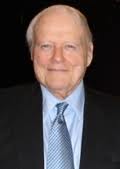
Born in Oklahoma and raised in Texas, William O’Neil has accomplished a lot over his 53-year professional career. After graduating from Southern Methodist University, O’Neil started his career as a stock broker in the late-1950s. Soon thereafter in 1963, at the ripe young age of 30, O’Neil purchased a seat on the New York Stock Exchange (NYX) and started his own company, William O’Neil + Co. Incorporated. Ambition has never been in short supply for O’Neil – following the creation of his firm, O’Neil the investment guru put on his computer science hat and went onto pioneer the field of computerized investment databases. He used his unique proprietary data as a foundation to unveil his next entrepreneurial baby, Investor’s Business Daily, in 1984.
O’Neil’s Secret Sauce
The secret sauce behind O’Neil’s system is called CAN SLIM®. O’Neil isn’t a huge believer in stock diversification, so he primarily focuses on the cream of the crop stocks in upward trending markets. Here are the components of CAN SLIM® that he searches for in winning stocks:
C Current Quarterly Earnings per Share
A Annual Earnings Increases
N New Products, New Management, New Highs
S Supply and Demand
L Leader or Laggard
I Institutional Sponsorship
M Market Direction
Rebel without a Conventional Cause
In hunting for the preeminent stocks in the market, the CAN SLIM® method uses a blend of fundamental and technical factors to weed out the best of the best. I may not agree with everything O’Neil says in his book, How to Make Money in Stocks, but what I love about the O’Neil doctrine is his maverick disregard of the accepted modern finance status quo. Here is a list of O’Neil’s non-conforming quotes:
- Valuation Doesn’t Matter: “The most successful stocks from 1880 to the present show that, contrary to most investors’ beliefs, P/E ratios were not a relevant factor in price movement and have very little to do with whether a stock should be bought or sold.” (see also The Fallacy of High P/Es)
- Diversification is Bad: “Broad diversification is plainly and simply a hedge for ignorance… The best results are usually achieved through concentration, by putting your eggs in a few baskets that you know well and watching them very carefully.”
- Buy High then Buy Higher: “[Buy more] only after the stock has risen from your purchase price, not after it has fallen below it.”
- Dollar-Cost Averaging a Mistake: “If you buy a stock at $40, then buy more at $30 and average out your cost at $35, you are following up your losers and throwing good money after bad. This amateur strategy can produce serious losses and weigh down your portfolio with a few big losers.”
- Technical Analysis Matters: “Learn to read charts and recognize proper bases and exact buy points. Use daily and weekly charts to materially improve your stock selection and timing.”
- Ignore TV & So-Called Experts: “Stop listening to and being influenced by friends, associates, and the continuous array of experts’ personal opinions on daily TV shows.”
- Stay Away from Dividends: “Most people should not buy common stocks for their dividends or income, yet many people do.”
Managing Momentum Risk
Although O’Neil’s CAN SLIM® investment strategy does not rely on a full-fledged, risky style of momentum investing (see Riding the Momentum Wave), O’Neil’s investment approach utilizes very structured rules designed to limit downside risk. Since true O’Neil disciples understand they are dealing with flammable and volatile hyper-growth companies, O’Neil always keeps a safety apparatus close by – I like to call it the 8% financial fire extinguisher rule. O’Neil simply states, “Investors should definitely set firm rules limiting the loss on the initial capital they have invested in each to an absolute maximum of 7% or 8%.” If a trade is not working, O’Neil wants you to quickly cut your losses. As the “M” in CAN SLIM® indicates, downward trending markets make long position gains very challenging to come by. Raising cash and cutting margin is the default strategy for O’Neil until the next bull cycle begins.
While some components of William O’Neil’s “cup and handle” teachings (see link)are considered heresy among various traditional financial textbooks, O’Neil’s lessons and CAN SLIM® method shared in How to Make Money in Stocks provide a wealth of practical information for all investors. If you want to add a power-hitting element to your investing game and hit a few balls out of the park, it behooves you to invest some time in better familiarizing yourself with the CAN SLIM® teachings of William O’Neil.
Wade W. Slome, CFA, CFP®
Plan. Invest. Prosper.
DISCLOSURE: Wade Slome, President of Sidoxia Capital Management (SCM), worked at William O’Neil + Co. Incorporated in 1993-1996. SCM and some of its clients own certain exchange traded funds, but at the time of publishing SCM had no direct position in NYX or any security referenced in this article. No information accessed through the Investing Caffeine (IC) website constitutes investment, financial, legal, tax or other advice nor is to be relied on in making an investment or other decision. Please read disclosure language on IC “Contact” page.
Getting & Staying Rich 101

Fred J. Young worked 27 years as a professional money manager and investment counselor in the trust department at Harris Bank in Chicago. While working there he learned a few things about wealth accumulation and preservation, which he outlines in his book How to Get Rich and Stay Rich.
There is more than one way to skin a cat, and when it comes to getting rich, Young describes the only three ways of getting loaded:
1.) Inherit It: Using this method on the path to richness generally doesn’t take a lot of blood, sweat, and tears (perhaps a little brown-nosing wouldn’t hurt), but young freely admits you can skip his book if you are fortunate enough to garner boatloads of cash through your ancestry.
2.) Marry It: This approach to wealth accumulation can require a bit more effort than method number one. However, Young explains that if the Good Lord intended you to find your lifetime lover through destiny, then if your soul-mate has a lot of dough Young advises, “You [should] graciously accept the situation. Don’t fight it.”
3.) Spend < Earn: Normally this avenue to champagne and caviar requires the most effort. How does one execute option number three? “You spend less than you earn and invest the difference in something you think will increase in value and make you rich,” simply states Young. Sounds straightforward, but what does one invest their excess cash in? Young succinctly lists the customary investment tools of choice for wealth creation:
- Real estate
- Own their own business
- Common stocks
- Savings accounts (thanks to the magic of compound interest rates) – see also Penny Saved is Billions Earned
Rich Luck
If faced with choosing between good luck and good judgment, here is Fred Young’s response:
“You should take good luck. Good luck, by definition, denotes success. Good judgment can still go wrong.”
Like many endeavors, it’s good to have some of both (good luck and good judgment).
The Role of Courage
Courage is especially important when it comes to equity investing because buying stocks includes a very counterintuitive behavioral aspect that requires courage. Following the herd of average investors and buying stocks at new highs is easy and does not require a lot of courage. Young describes the various types of courage required for successful investing:
“The courage to buy when others are selling; the courage to buy when stocks are hitting new lows; the courage to buy when the economy looks bad; courage to buy at the bottom…The times when the gloom was the thickest invariably turned out to have been the best times to buy stocks.”
Keeping the Cash
Becoming rich is only half the challenge. In many cases staying rich can be just as difficult as accumulating the wealth. Young points out the intolerable pain caused by transitioning from wealth to poverty. What is Young’s solution to this tricky problem? Seek professional help. The risks undertaken to build wealth still exist when you are rich, and those same risks have the capability of tearing financial security away.
There are three paths to riches according to Fred Young (inheritance, marriage, and prudent investing). Some of these directions leading to mega-money require more effort than others, but if you are lucky enough to have deep pockets of riches, make sure you have the discipline and focus necessary to maintain that wealth – those deep pockets could have a hole.
Wade W. Slome, CFA, CFP®
Plan. Invest. Prosper.
DISCLOSURE: Sidoxia Capital Management (SCM) and some of its clients own certain exchange traded funds, but at the time of publishing SCM had no direct position in any other security referenced in this article. No information accessed through the Investing Caffeine (IC) website constitutes investment, financial, legal, tax or other advice nor is to be relied on in making an investment or other decision. Please read disclosure language on IC “Contact” page.
The Fallacy of High P/E’s

Would you pay a P/E ratio (Price-Earnings) of 1x’s future earnings for a dominant market share leading franchise that is revolutionizing the digital industry and growing earnings at an +83% compounded annual growth rate? Or how about shelling out 3x’s future profits for a company with ambitions of taking over the global internet advertising and commerce industries while expanding earnings at an explosive +51% clip? If you were capable of identifying Apple Inc. (AAPL) and Google Inc. (GOOG) as investment ideas in 2004, you would have made approximately +2,000% and +600%, respectively, over the following six years. I know looking out years into the future can be a lot to ask for in a world of high frequency traders and stock renters, but rather than focusing on daily jobless claims and natural gas inventory numbers, there are actual ways to accumulate massive gains on stocks without fixating on traditional trailing P/E ratios.
At the time in 2004, Apple and Google were trading at what seemed like very expensive mid-30s P/E ratios (currently the S&P 500 index is trading around 15x’s trailing profits) before these stocks made their explosive, multi-hundred-percent upward price moves. What seemingly appeared like expensive rip-offs back then – Apple traded at a 37x P/E ($15/$0.41) and Google 34x P/E ($85/$2.51) – were actually bargains of a lifetime. The fact that Apple’s share price appreciated from $15 to $347 and Google’s $85 to $538, hammers home the point that analyzing trailing P/E ratios alone can be hazardous to your stock-picking health.
Why P/Es Don’t Matter
In William O’Neil’s book, How to Make Money in Stocks he comes to the conclusion that analyzing P/E ratios is worthless:
“Our ongoing analysis of the most successful stocks from 1880 to the present show that, contrary to most investors beliefs, P/E ratios were not a relevant factor in price movement and have very little to do with whether a stock should be bought or sold. Much more crucial, we found, was the percentage increase in earnings per share.”
Here is what O’Neil’s data shows:
- From 1953 – 1985 the best performing stocks traded at a P/E ratio of 20x at the early stages of price appreciation versus an average P/E ratio of 15x for the Dow Jones Industrial Average over the same period. The largest winners saw their P/E multiples expand by 125% to 45x.
- From 1990 – 1995, the leading stocks saw their P/E ratios more than double from an average of 36 to the 80s. Once again, O’Neil explains why you need to pay a premium to play with the market leading stocks.
You Get What You Pay For
When something is dirt cheap, many times that’s because what you are buying is dirt. Or as William O’Neil says,
“You can’t buy a Mercedes for the price of a Chevrolet, and you can’t buy oceanfront property for the same price you’d pay for land a couple of miles inland. Everything sells for about what it’s worth at the time based on the law of supply and demand…The very best stocks, like the very best art, usually command a higher price.”
Any serious investor has “value trap” scars and horror stories to share about apparently cheap stocks that seemed like bargains, only to later plummet lower in price. O’Neil uses the example of when he purchased Northrop Grumman Corp (NOC) many years ago when it traded at 4x’s earnings, and subsequently watched it fall to a P/E ratio of 2x’s earnings.
Is Your Stock a Teen or a Senior?
A mistake people often make is valuing a teen-ager company like it’s an adult company (see also the Equity Life Cycle article). If you were offered the proposition to pay somebody else an upfront lump-sum payment in exchange for a stream of their lifetime earnings, how would you analyze this proposal? Would you make a higher lump-sum payment for a 21-year-old, Phi Beta Kappa graduate from Harvard University with a 4.0 GPA, or would you pay more for an 85 year old retiree generating a few thousand dollars in monthly Social Security income? As you can imagine, the vast majority of investors would pay more for the youngster’s income because the stream of income over 65-70 years would statistically be expected to be much larger than the stream from the octogenarian. This same net present value profit stream principle applies to stocks – you will pay a higher price or P/E for the investment opportunity that has the best growth prospects.
Price Follows Earnings
At the end of the day, stock prices follow the long-term growth of earnings and cash flows, whether a stock is considered a growth stock, a value stock, or a core stock. Too often investors are myopically focused on the price action of a stock rather than the earnings profile of a company. Or as investment guru Peter Lynch states:
”People may bet on hourly wiggles of the market but it’s the earnings that waggle the wiggle long term.”
“People Concentrate too much on the P (Price), but the E (Earnings) really makes the difference.”
Correctly determining how a company can grow earnings is a more crucial factor than a trailing P/E ratio when evaluating the attractiveness of a stock’s share price.
Valuations Matter
Even if you buy into the premise that trailing P/E ratios do not matter, valuation based on future earnings and cash flows is critical. When calculating the value of a company via a discounted cash flow or net present value analysis, one does not use historical numbers, but rather future earnings and cash flow figures. So when analyzing companies with apparently sky-high valuations based on trailing twelve month P/E ratios, do yourself a favor and take a deep breath before hyperventilating, because if you want to invest in unique growth stocks it will require implementing a unique approach to evaluating P/E ratios.
See also Evaluating Stocks Vegas Style
Wade W. Slome, CFA, CFP®
Plan. Invest. Prosper.
DISCLOSURE: Sidoxia Capital Management (SCM) and some of its clients own certain exchange traded funds, AAPL, and GOOG, but at the time of publishing SCM had no direct position in NOC, or any other security referenced in this article. No information accessed through the Investing Caffeine (IC) website constitutes investment, financial, legal, tax or other advice nor is to be relied on in making an investment or other decision. Please read disclosure language on IC “Contact” page.




 Investing Caffeine
