Posts tagged ‘T. Boone Pickens’
Green Loses to Greenback

We are currently in a political environment that sees no gray, but rather only sharp contrasts in black and white. As it turns out, these three colors are not the winners or losers – the winner is the almighty “greenback” and the loser is the “green” movement. The so-called environmentally friendly Obama administration recently approved the Alberta Clipper project – a 1,000 mile pipeline being built by Endbridge Energy that is designed to carry 800,000 barrels of fuel from Canada to the U.S.
As our reliance on what New York Times journalist Tom Friedman calls the “petro dictators” has not gone away, the recent decision seems very rational in securing supplies from friendlier neighbors. However, environmental constituents like the Sierra Club feel differently:
“At a time when concern is growing about the national security threat posted by global warming, it doesn’t make sense to open our gates to one of the dirtiest fuels on earth.”
-Carl Pope (Executive Director of the Sierra Club)
As far as I’m concerned, we still import about 2/3 of our oil and until alternative energies become more cost effective, we have little choice but to explore a multitude of strategic supply agreements. Canada is a neighbor and ally, therefore the U.S. should not walk away from any similar future agreement that will bring a stable and reliable source of supply. The scarcity of the critical resource and other commodities is evident by strategic deals and acquisitions being made by China and its government (See previous Investing Caffeine article, “The China Vacuum, Sucking Up Assets”).
As economic hungry emerging markets seek expansionary policies, I expect to see even more of these international types of deals.
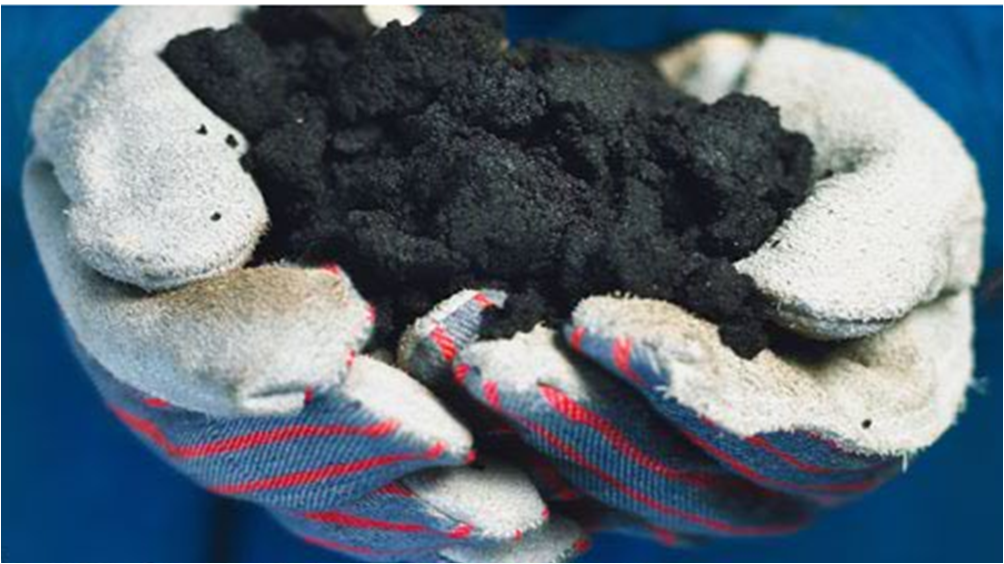
The oil-sands region in the Athabasca region (about the size of Florida) of Alberta holds great promise. If you believe famous oil investor/speculator T. Boone Pickens and other pundits, the oil-sands region holds the equivalent amount of reserves as world supply leader Saudi Arabia – about 250 billion barrels.
I concur with recent comments Financial Times article that says the Endbridge Energy deal meets a number of U.S. strategic interests, including:
“Increasing the diversity of oil supplies for the U.S., amid political tension in many major oil-producing regions; shortening the transportation path for crude oil supplies; and increasing crude oil supplies from a major non-Organization of Petroleum Exporting Countries producer.”
I am not a believer in damaging our environment for the pure sake of profits, however in this competitive global economy I think we need to seek an aggressive dual-source supply of energy (alternative energy AND traditional petroleum/coal products). The fact of the matter is that we have been pursuing solar, wind, nuclear, and other alternative energy resources for decades with very limited success. More financial resources and subsidies must be thrown at these alternative resource possibilities, while we simultaneously seek strategic supplies like this Canadian oil-sands deal.
Wade W. Slome, CFA, CFP®
Plan. Invest. Prosper.
DISCLOSURE: Sidoxia Capital Management and its clients have direct investment exposure in companies investing in Canadian oil-sand projects (SU) at the time the article was published. No information accessed through the Investing Caffeine (IC) website constitutes investment, financial, legal, tax or other advice nor is to be relied on in making an investment or other decision. Please read disclosure language on IC “Contact” page.
Water…the Next Oil?
Water engulfs our daily lives – we drink, bathe, wash clothes, soak our lawns and brush our teeth with it on a consistent basis. We notice our reliance in our monthly water bills. The earth is covered by approximately 70% water, so if this commodity is so abundant, then how could it be such a scarce, valuable resource? Water is so important; the majority of our body mass consists of the fluid (about 60% in males and 55% in females). Although our planet is covered with this liquid, the main problem surrounding the issue is that only about 2% of the water supply is considered fresh water (predominantly located in Antarctica). Desalinization of salt water is one solution to the limited amount of fresh water, but unfortunately the current technology and energy requirements make it a cost prohibitive process. As a result of the inadequate supply, over an estimated 1 billion people do not have access to clean water and 2.4 billion people are subject to stressed water conditions.

In the “Golden State” of California, budgetary problems are not the only concern on people’s minds – the state is in the middle of a water shortage. Certain water jurisdictions are escalating prices by upwards of +15%. Regardless of your view on “climate change,” objective data points to declining water levels and heightened scarcity. By 2030, OECD predicts that half of the world’s population will live in areas under severe water stress.
I’m certainly not the only believer in this theme as an investment opportunity. T. Boone Pickens, renowned commodity investor, is spending over $100 million on water investments (including access to water rights) because he believes that H2O is the next oil. Water, like oil, is a depleting resource that will experience intensified demand over time.
How to Invest in Water:
Not everyone has millions of dollars like Pickens to invest in land and water rights, so there are different ways for the average investor to participate in the rising demand for water. For example, investors, like Sidoxia Capital Management, can invest in ETFs (exchange traded funds) with a water focus. ETF options include, PowerShares Water Resources (PHO), PowerShares Global Water ETF (PIO), and/or Claymore S&P Global Water (CGW). For those wishing to invest in individual stocks, some water related companies include, Nalco Holding Company (NLC), Danaher Corporation (DHR), Itron Inc. (ITRI), and Valmont Industries, Inc. (VMI).
Water Demand Drivers
- The globe’s population of approximately 6.5 billion people is growing and becoming thirstier. Water demand is expanding much faster than population growth.
- Climate change exacerbates the growing water supply problem.
- Agriculture and irrigation needs are driving the majority of global water demand.
- There is no substitute for water at any price.
Conservation, technology, and efficiency are tools to improve the usage of our finite water resources. As the water problem becomes more acute, profiting from water investments is a way to offset the inevitably higher costs of usage. Now if you’ll please excuse me, I’m thirsty for a glass of water.
Wade W. Slome, CFA, CFP® www.Sidoxia.com
DISCLOSURE: At the time of publishing, Sidoxia Capital Management and some of its clients owned certain exchange traded funds (including PHO & CGW), but had no direct positions in PIO, CGW, NLC, DHR, ITRI, VMI, or any other security referenced. No information accessed through the Investing Caffeine (IC) website constitutes investment, financial, legal, tax or other advice nor is to be relied on in making an investment or other decision. Please read disclosure language on IC “Contact” page.




 Investing Caffeine
