Posts tagged ‘John Calamos’
A Rare Breed: Father of Growth Investing
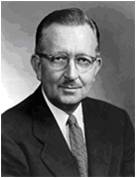
The man, the myth, the legend.
Successful long-term growth managers are part of a rare breed, but Thomas Rowe Price, Jr. – also known as the “Father of Growth Investing” – certainly qualifies. Too often, value legends like Warren Buffett and Benjamin Graham are highlighted in media circles. Using a baseball analogy, growth heroes like Mr. Price are more akin to atypical knuckleball pitchers, like Hall of Famer Phil Neikro. Writing about Mr. Price is consistent with my belief that investors striving to improve performance will be served well by studying great investors (for other growth superstars, see also Phil Fisher, Ron Baron, and John Calamos, Sr.).
History
T. Rowe Price was born in Linwood, Maryland, in 1898 and died in 1983. Price graduated from Swathmore College in 1919 with a degree in Chemistry, and then went onto work at Baltimore-based Mackubin Goodrich, which eventually became Legg Mason Inc. (LM). In 1937 he founded T. Rowe Price Associates (TROW) and successfully ramped up the company before the launch of the T. Rowe Price Growth Stock Fund in 1950. Expansion ensued until he made a timely sale of his company in the late 1960s (fortuitously before the 1973-1974 crash).
Philosophy
How did Price feel about growth investing?
“The growth stock theory of investing requires patience, but is less stressful than trading, generally has less risk, and reduces brokerage commissions and income taxes.”
This philosophy makes perfect sense to me; however it runs contrary to the strategies implemented by many managers whom are categorized in the “growth” style box today. In the hyper-sensitive, short-term focused performance world, many “momentum” managers play in this same “growth” sandbox. Typically this means managers buy stocks that are going up and sell stocks that are going down (see “momentum” article) over relatively short time frames, on average.
Price also firmly believed in fundamental research. As part of the investment process, Price believed in the “Life Cycle Theory of Companies,” meaning companies followed the phases of a human (birth, maturity, and decline). Price expands on this idea by stating the following: “An understanding of the life cycle of earnings growth and judgment in appraising future earnings trends are essential to investing.” He placed emphasis on investing in quality companies in good times and bad. In order to strip out economic cycle impacts, he compared company performance to peer performance – regardless of macroeconomic conditions.
John Train, the writer of “The Money Masters,” maintained the following factors were key underpinnings of Price’s investments:
- Superior research to develop products and markets.
- A lack of cutthroat competition.
- A comparative immunity from government regulation.
- Low total labor costs, but well-paid employees.
- At least a 10% return on invested capital, sustained high profit margins, and a superior growth of earnings per share.
Buy and Hold
The proof was in the pudding when it came to the “patience” referenced in Price’s quote above. For example, in the early 1970s, Price had accumulated gains of +6,184% in Xerox (XRX), which he held for 12 years, and gains of +23,666% in Merck (MRK), which he held for 31 years (Lessons from the Legends of Wall Street, Nikki Ross). Timing was not the most important factor in pulling the decision trigger:
“It is better to be early than too late in recognizing the passing of one era, the waning of old investment favorites and the advent of a new era affording new opportunities for the investor.”
In the polluted world of mass information that we sift through every day, I recommend reviewing the strategies of greats, including the “Father of Growth Investing” (T. Rowe Price). That’s my fatherly advice for you.
Wade W. Slome, CFA, CFP®
Plan. Invest. Prosper.
DISCLOSURE: Sidoxia Capital Management (SCM) and its clients owns certain exchange traded funds, but currently have no direct position in LM, TROW, XRX or MRK. No information accessed through the Investing Caffeine (IC) website constitutes investment, financial, legal, tax or other advice nor is to be relied on in making an investment or other decision. Please read disclosure language on IC “Contact” page.
Calamos Still “Growing” Strong

Calamos Investments recently came out with their quarterly Market Review and Outlook. John P. Calamos, Sr., the Company founder, began investing his family’s money over 50 years ago and is well known for their successful “growth” style of investing. Calamos founded Calamos Asset Management in 1977, and won BusinessWeek’s best manager for 2003 and 2004. Over the years, the company diversified from its bread and butter convertibles into equity, enhanced fixed-income, global and international, core bond, cash management and alternative strategies. Overall, the newsletter offers a fairly sobering outlook (“Longterm Scared”); however there are some excellent investing nuggets, especially when it comes to the firm’s current positioning:
“Because we are not in a secular bull market, investing discipline is even more important. We believe these are the rules for today’s environment”:
1. Washington D.C. is the new growth city
2. Valuations will not get as stretched in the equity markets and growth expectations will be revised down considerably
3. Old-fashioned dividends mean something
4. G7 competitive devaluations and protectionist legislation will become the norm
5. To grow, emerging nations must become consumption driven and attempt to become independent of the developed nations
6. Knowledge is free, but capital may be much harder to get
7. Real returns after tax will take on new meaning
8. Baby boomers will reprioritize spending
9. The rules will change often!
Technology Exposure: For those that have followed my writings in the past, you are familiar with my positive bias towards technology. The technology sector is littered with land mines and risks. Nonetheless, through technology, our country has and will continue to innovate new products and services that will improve our standard of living. The “Technology Revolution” is not only benefiting our society, we are exporting the fruits of our discoveries to developing countries across the world. Take Intel Corporation (INTC) for example – it garnered about 85% of its revenues in 2008 from international markets.
Here is what Calamos has to say about their “Significant Overweight” exposure to the Technology sector:
“Productivity enhancement and cost controls should help technology spending.”
- We see consumers remaining willing to purchase certain “special” products such as iPhones, laptops and flat-screens.
- We have found software companies offering stable revenue streams, strong balance sheets with lots of cash, and products that offer solutions for cost reduction and productivity.
- The sector will also benefit from global infrastructure stimulus spending.
- Stock valuations are attractive and the risk/reward is compelling.
- The sector may be re-establishing its leadership position in the equity market for the first time since last decade’s collapse.”
Materials and Energy Exposure: Developing countries are joining the party too, albeit later than the rest of the partygoers. The price of admission to the party is access to valuable commodities. Calamos has other reasons to be overweight the Materials and Energy sectors:
- Muted recovery implied in stock valuations.
- Further U.S. dollar devaluation and global stimulus spending should help boost commodity prices.
- The small capitalization of this sector and volatility of commodity prices will again make it prone to large price swings.
- U.S. dollar devaluation should help support energy prices.
- Mid-East turmoil adds to the attractiveness of this sector as it can hedge unforeseen energy price spikes.
- Stock valuations appear reasonable but government intervention will make this a difficult sector to value.
Like all great managers, Calamos has taken his lumps, but through it all his firm is still “growing” strong.
Wade W. Slome, CFA, CFP®
Plan. Invest. Prosper.




 Investing Caffeine
