Posts tagged ‘Chinese economy’
Fed Injects Rate Cut Adrenaline

There were a lot of injections, of the COVID vaccine variety, four years ago, but now the Federal Reserve is injecting some financial adrenaline through stimulative interest rate cuts. Expectations are for seven more -0.25% cuts over the next 12 months, but this cycle started two weeks ago when the FOMC (Federal Open Market Committee) initiated a larger -0.50% reduction in the benchmark federal funds rate target (see chart below). For now, investors have enjoyed the boost of adrenaline, which should help lower consumer interest rates on things like home mortgages, credit cards, and car loans.

Source: Yardeni.com
For the month, the S&P 500 climbed +2.0%, the Dow Jones Industrial +1.9%, and the NASDAQ index +2.7%. The monthly gains are adding to a 2024 that is shaping up to be a potentially banner year. With one quarter left in the year, the S&P has catapulted +21% higher, the Dow Jones Industrial Average +12%, and the NASDAQ index +21% for the first nine months.
Economy Strong, So Why Cut Now?
Before the Fed’s last action a couple weeks ago, the last Fed rate cut occurred in 2020 (a -1.50% cut) in the midst of a global pandemic with the aim of boosting financial activity while the brick-and-mortar economy had effectively been shut down. But compared to today, the economy is performing much better. Second quarter GDP growth came in at +3.0% with 3rd quarter GDP growth forecasts coming in at +3.1%.
So, if things look so great, why would the Fed be cutting rates to stimulate the economy now? In short, inflation has been coming down (see chart below) from a peak of 9.1% a couple years ago to 2.5% last month (near the Fed’s long-term 2.0% target). And although the current unemployment rate is low at 4.2%, it has nevertheless weakened and climbed substantially from a 3.4% level last year).

Source: Trading Economics
China Chugs Higher
While the U.S. economy has been leading developed countries during the post-COVID recovery period, China’s financial system has been struggling due to a collapsing real estate market and deteriorating consumer spending. As a result, the Chinese stock market has been drastically underperforming other foreign markets, until Beijing just recently announced a number of stimulus initiatives last week in hopes of buoying economic growth closer to its 5% target.
Here are some of the Chinese government measures:
- China plans to issue 2 trillion yuan in special sovereign bonds
- China’s central bank cut its reserve requirement ratio by 50 basis points
- Fiscal policies to focus on increasing consumer subsidies and controlling government debt
- Shanghai, Shenzhen plan to lift key home purchase restrictions
Investors cheered the announcements by binge-buying Chinese stocks, as you can see from the CSI 300 China index, which rocketed +21% higher last month – the largest monthly gain since 2008.

AI Revolution Continues
While economic headwinds and tailwinds continue to swirl, the AI (Artificial Intelligence) revolution has persisted in the background. While some traders have solely focused on AI juggernaut NVIDIA Corp. (NVDA), which has steamrolled its way into becoming a three trillion-dollar valued company, there are other tech titan companies like Oracle Corp. (ORCL), which are also riding the AI wave. Just last month, Oracle’s billionaire founder, Larry Ellison, stated, “We have 162 data centers now. I expect we will have 1,000 or 2,000 or more data centers…around the world.” Each large-scaled data center can cost in the hundreds of millions or multi-billion-dollar range. With hundreds of billions (if not trillions) of dollars to be spent on the multi-year AI infrastructure buildout, as you can imagine, there is a large, diverse ecosystem of other companies that stand to benefit. At Sidoxia Capital Management (www.Sidoxia.com), we have identified a wide swath of AI investments that have benefited our investors and stand to do so in the future.
Flies in the Ointment
By simply judging the performance of the U.S. stock market, one might think there is nothing for investors to worry about. But as is always the case, there still remain some flies in the ointment. With a tight, hotly-contested presidential election just one month away, coupled with escalated wars in the Mideast and Ukraine, future volatility or a correction in the stock market should come as no surprise to anyone, especially in light of the rich gains already registered this year. Another concern is the risk of rising inflation, which could rear its ugly head again if the Federal Reserve misjudges its rate-cutting program and overheats the economy.
Normally, interest rate cuts are reserved by the Fed for periods when the economy is headed towards a recession or there are major systemic disruptions in the financial system, which affect market liquidity and/or bank lending. That’s not the case today. Thanks to declining inflation and a robust but weakening job market, the Fed has been equipped to provide investors with a healthy injection of adrenaline through an early round of interest rate cuts, which has contributed to the powerful stock market gains. So far, the adrenaline is doing its job.
Wade W. Slome, CFA, CFP®
Plan. Invest. Prosper.
This article is an excerpt from a previously released Sidoxia Capital Management complimentary newsletter (October 1, 2024). Subscribe Here to view all monthly articles.
DISCLOSURE: Sidoxia Capital Management (SCM) and some of its clients hold positions in individual stocks , certain exchange traded funds (ETFs), including AMZN, MSFT, META, GOOGL, NVDA, but at the time of publishing had no direct position in any other security referenced in this article. No information accessed through the Investing Caffeine (IC) website constitutes investment, financial, legal, tax or other advice nor is to be relied on in making an investment or other decision. Please read disclosure language on IC Contact page.
The Bungee Market

This article is an excerpt from a previously released Sidoxia Capital Management complimentary newsletter (September 1, 2015). Subscribe on the right side of the page for the complete text.
Are you an adrenaline junkie? You may be one and not even know it. If you are an investor in the stock market, you may have noticed a sinking feeling in your investment portfolio before a sharp bounce-back, much like a bungee jump. Before the recent drop of -6.6% in the Dow during August, some stock investors got lulled into a state of complacency, considering a tripling in stock prices over the last six years.
Almost any current or future news headline has the capability of potentially triggering a short-term bungee jump in stock prices. Now, worries over the health of the Chinese economy and financial markets, coupled with concerns of an impending rate hike by the Federal Reserve have created some tension for global financial markets. The slowdown in China should not be ignored, but as famed investor Bill Nygren pointed out, its impact should be placed in the proper context. China only represents 15% of global economic activity and U.S. exports to China only account for 0.7% of our GDP.
- 5% market corrections, 3 times per year on average (“correction” = price decline);
- 10% market corrections, 1 time per year on average; and
- 20% market corrections, 1 time every 3.5 years on average.
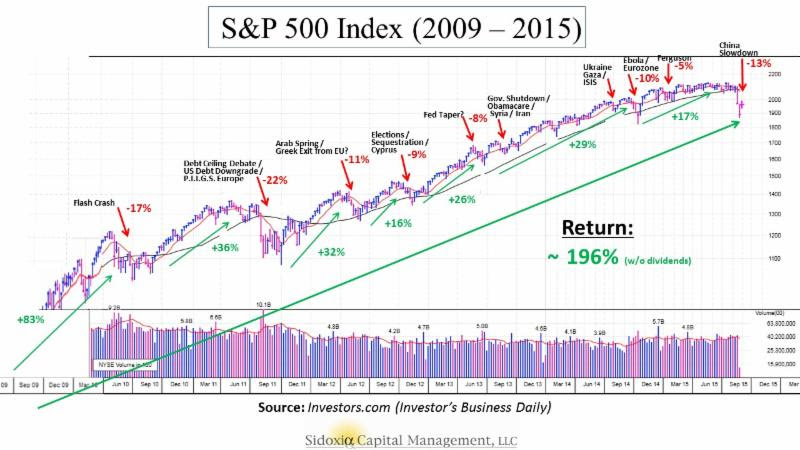
Welcome Back Volatility! Mini Flash Crash
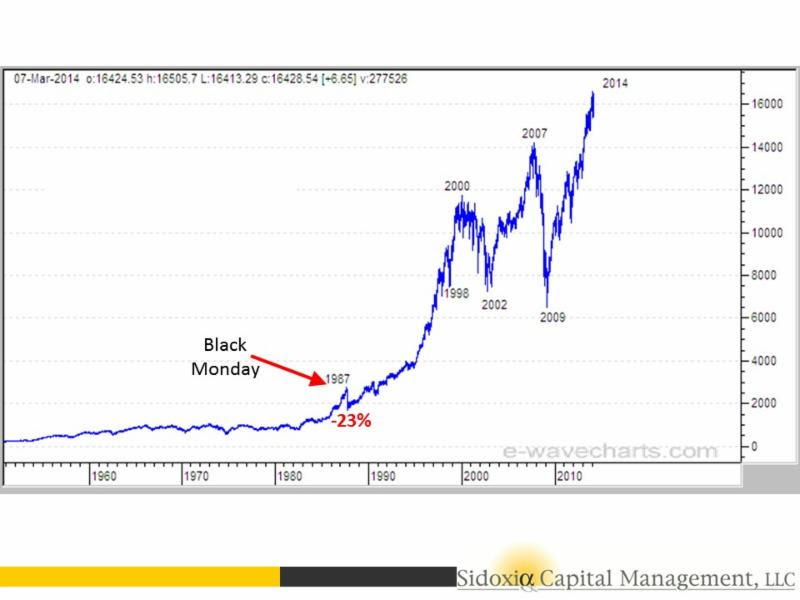
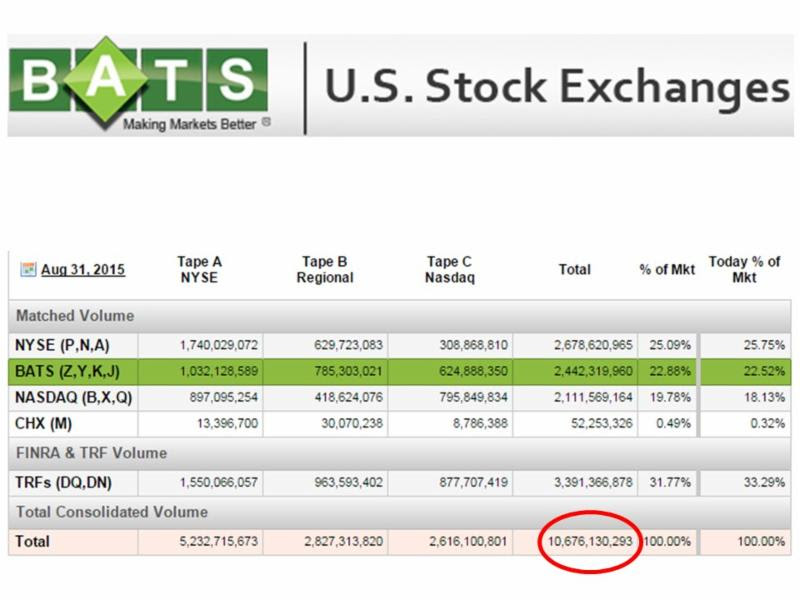
- Economic growth revised higher (Q2 GDP raised to +3.7% from +2.3%)
- Unemployment rate continues to drop ( at 5.3%, a 7-year low)
- Interest rates near historic lows (3.95%, 30-year mortgage rate), which will remain massively stimulative even if the Fed modestly increases short-term rates
- U.S. corporate profits are near record highs (despite dampening effect of the strong U.S. dollar on exports)
- Reasonable valuations (improved after latest index price declines)
- Housing market on a steady recovery (existing home sales at multi-year highs and pricing up +6% vs. July of last year)
- Massively accommodative central banks around the globe (e.g., European Central Bank and People’s Bank of China)

Wade W. Slome, CFA, CFP®
Plan. Invest. Prosper.
Investors Take a Vacation

This article is an excerpt from a previously released Sidoxia Capital Management complimentary newsletter (August 3, 2015). Subscribe on the right side of the page for the complete text.
It’s summertime and the stock market has taken a vacation, and it’s unclear when prices will return from a seven month break. It may seem like a calm sunset walk along the beach now that Greek worries have temporarily subsided, but concerns have shifted to an impending Federal Reserve interest rate hike, declining commodity prices, and a Chinese stock market crash, which could lead to a painful sunburn.
If you think about it, stock investors have basically been on unpaid vacation since the beginning of the year, with the Dow Jones Industrial Index (17,690) down -0.7% for 2015 and the S&P 500 (2,104) up + 2.2% over the same time period (see chart below). Despite mixed results for the year, all three main stock indexes rebounded in July (including the tech-heavy NASDAQ +2.8% for the month) after posting negative returns in June. Overall for 2015, sector performance has been muddled. There has been plenty of sunshine on the Healthcare sector (+11.7%), but Energy stocks have been stuck in the doldrums (-13.4%), over the same timeframe.

Source: Yahoo! Finance
Chinese Investors Suffer Heat Stroke
Despite gains for U.S. stocks in July, the overheated Chinese stock marketcaused some heat stroke for global investors with the Shanghai Composite index posting its worst one month loss (-15%) in six years, wiping out about $4 trillion in market value. Before coming back down to earth, the Chinese stock market inflated by more than +150% from 2014.
Driving the speculative fervor were an unprecedented opening of 12 million monthly accounts during spring, according to Steven Rattner, a seasoned financier, investor, and a New York Times journalist. Margin accounts operate much like a credit card for individuals, which allowed these investors to aggressively gamble on the China market upswing, but during the downdraft investors were forced to sell stocks to generate proceeds for outstanding loan repayments. It’s estimated that 25% of these investors only have an elementary education and a significant number of them are illiterate. Further exacerbating the sell-off were Chinese regulators artificially intervening by halting trading in about 500 companies on the Shanghai and Shenzhen exchanges last Friday, equivalent to approximately 18% of all listings.
Although China, as the second largest economy on the globe, is much more economically important than a country like Greece, recent events should be placed into proper context. For starters, as you can see from the chart below, the Chinese stock market is no stranger to volatility. According to Fundstrat Global Advisors, the Shanghai composite index has experienced 10 bear markets over the last 25 years, and the recent downdraft doesn’t compare to the roughly -75% decline we saw in 2007-2008. Moreover, there is no strong correlation between the Chinese stock market. Only 15% of Chinese households own stocks, or measured differently, only 6% of household assets are held in stocks, says economic-consulting firm IHS Global Insight. More important than the question, “What will happen to the Chinese stock market?,” is the question, “What will happen to the Chinese stock economy?,” which has been on a perennial slowdown of late. Nevertheless, China has a 7%+ economic growth rate and the highest savings rate of any major country, both factors for which the U.S. economy would kill.

Source: Yardeni.com
Don’t Take a Financial Planning Vacation
While the financial markets continue to bounce around and interest rates oscillate based on guesswork of a Federal Reserve interest rate hike in September, many families are now returning from vacations, or squeezing one in before the back-to-school period. The sad but true fact is many Americans spend more time planning their family vacation than they do planning for their financial futures. Unfortunately, individuals cannot afford to take a vacation from their investment and financial planning. At the risk of stating the obvious, planning for retirement will have a much more profound impact on your future years than a well-planned trip to Hawaii or the Bahamas.
We live in an instant gratification society where “spend now, save later” is a mantra followed by many. There’s nothing wrong with splurging on a vacation, and to maintain sanity and family cohesion it is almost a necessity. However, this objective does not have to come at the expense of compromising financial responsibility – or in other words spending within your means. Investing is a lot like consistent dieting and exercising…it’s easy to understand, but difficult to sustainably execute. Vacations, on the other hand, are easy to understand, and easy to execute, especially if you have a credit card with an available balance.
It’s never too late to work on your financial planning muscle. As I discuss in a previous article (Getting to Your Number) , one of the first key steps is to calculate an annual budget relative to your income, so one can somewhat accurately determine how much money can be saved/invested for retirement. Circumstances always change, but having a base-case scenario will help determine whether your retirement goals are achievable. If expectations are overly optimistic, spending cuts, revenue enhancing adjustments, and/or retirement date changes can still be made.
When it comes to the stock market, there are never a shortage of concerns. Today, worries include a Greek eurozone exit (“Grexit”); decelerating China economic growth and a declining Chinese stock market; and the viability of Donald’s Trump’s presidential campaign (or lack thereof). While it may be true that stock prices are on a temporary vacation, your financial and investment planning strategies cannot afford to go on vacation.

Wade W. Slome, CFA, CFP®
Plan. Invest. Prosper.
DISCLOSURE: Sidoxia Capital Management (SCM) and some of its clients hold positions in certain exchange traded funds (ETFs), but at the time of publishing, SCM had no direct position in any other security referenced in this article. No information accessed through the Investing Caffeine (IC) website constitutes investment, financial, legal, tax or other advice nor is to be relied on in making an investment or other decision. Please read disclosure language on IC Contact page.
China: The Trade of the Century?
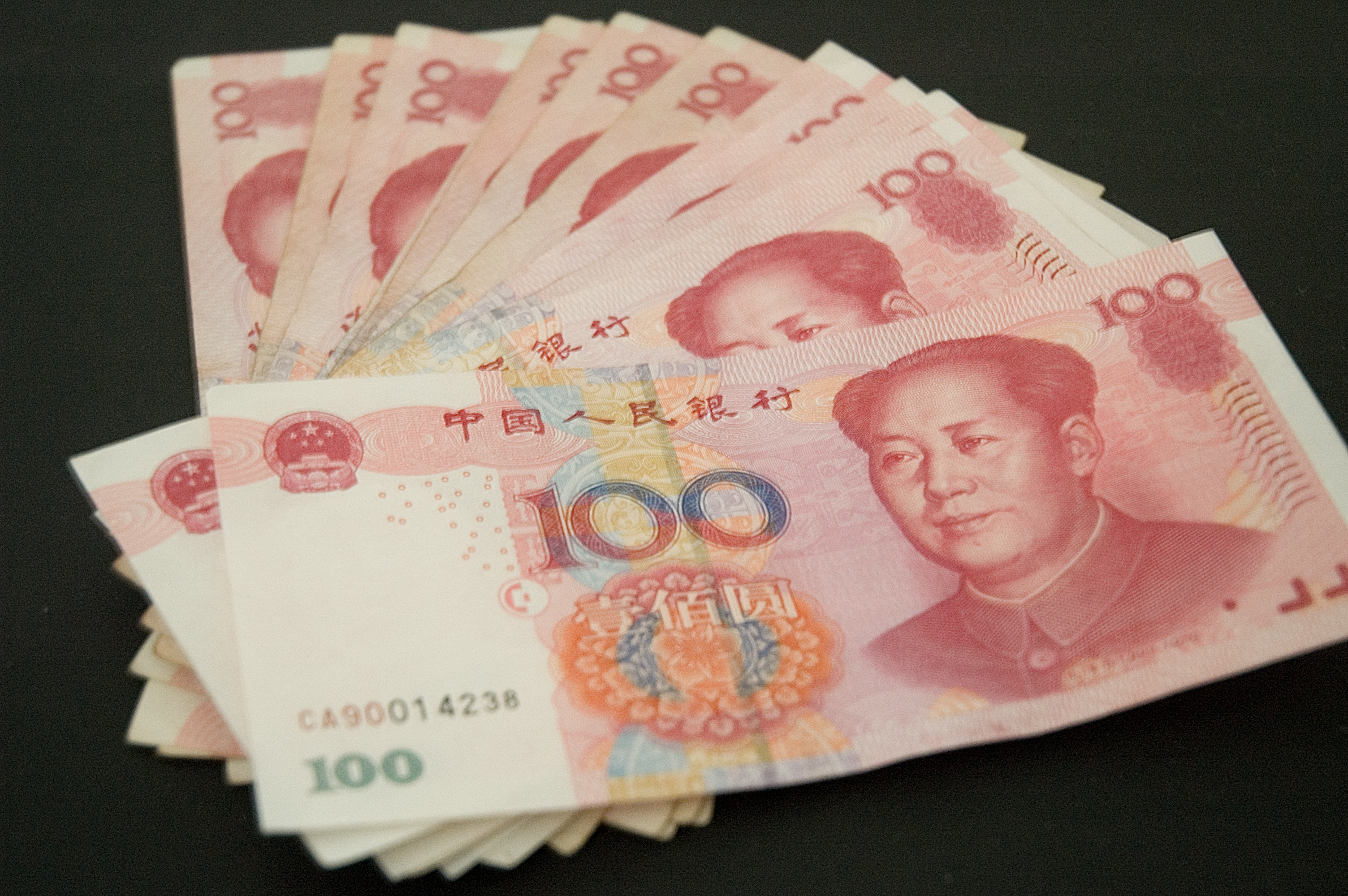
So it goes, Britain was the country of the 19th century, the United States was the country of the 20th century, and China will be the country of the 21st century. Is investment in China hype or reality? Here are some points in China’s favor:
- Large Labor Force: With a population exceeding 1.3 billion people, China has plenty of labor available to expand GDP (Gross Domestic Product).
- No Nonsense Government: An authoritarian government has its advantages. While pornography (see article) and unrest may be problems, infrastructure projects are not.
- Education: Chinese culture values education. As a result, China is slowly shifting away from its roots as the globe’s manufacturing and piracy capital. Intellectual property is appreciated more now that China is becoming a leader in emerging technology areas, such as solar power.
- Trade Surplus & Currency Reserves: Must be nice to have trade surpluses and massive currency reserves (~$2.3 trillion). This is what happens when you are in a position to export more than you import.
- Manageable Debt: China’s Debt/GDP ratio is less than 25%. You can compare that to the U.S. at around 100% and Japan at over 200%. Disciplined fiscal management provides the Chinese government with more options in dealing with the global slowdown (e.g., stimulus).
- Long Runway of Growth (Read More): China’s long runway of growth has allowed it, and should continue to allow it, to grow at above average growth rates – in the 3rd quarter of 2009 the Chinese economy grew at a very healthy +8.9% rate.
With all these positives, it’s no wonder China is the darling of the world. Given the constructive outlook, how can investors take advantage of the Far East opportunity in China? Our good friend at Investing Caffeine (figuratively speaking), Burton Malkiel (Princeton Professor of Economics and Chief Investment Officer at AlphaShares), is bullish about China and is sharing his preferred participation method…an all-cap China exchange traded fund (ticker: YAO) – Read more about Malkiel and Active vs. Passive Investing (12/8/09 Post).
Just how bullish is Professor Malkiel?
“I think China will continue to have the highest growth rate of any major country in the world, and within 20 years, China will be the world’s leading economic power.”
And he puts his money where his mouth is. Last year the professor shared his Chinese exposure in his personal portfolio:
“My portfolio is probably 20 percent Chinese, and that includes not only indices but also individual companies.”
Risks: The Price to Play
Professor Malkiel is not blindly diving into China – he researched the markets for years before taking the plunge. In an article from last year (From Wall Street to the Great Wall), he highlighted some of the inherent risks:
1) Foreign Neighbors: China continues to have tense, although cordial, relations with some of its neighbors like Taiwan and Japan. Their dealings are stable now, but the future is uncertain.
2) Social Unrest: An uneven distribution of income can lead to serious social unrest, especially in the rural parts of the country. If the government can’t keep the economy humming along, those left behind may fight back.
3) Environmental Degradation: China is building nuclear, wind, and solar projects at a frenetic pace, but China is also the globe’s largest emitter of greenhouse gases (relies on dirty coal for 70% of its energy), according to CNN. If China becomes an irresponsible power hog, there could be damaging effects to the economy.
4) Corruption: This continues to be a problem, but Malkiel points out the case of Zheng Xiaoyu, a former director of China’s FDA (Food and Drug Administration) equivalent. In 2007, he was executed after being found guilty of taking bribes.
5) Banking System: Malkiel notes that China continues to have a fragile banking system with a lot of bad loans. Due to political reasons, certain government owned entities may receive risky loans in the name of creating jobs – even if it means keeping unhealthy zombie banks alive.
Trading Strategies:
Beyond investing in AlphaShare ETFs (YAO), Malkiel advocates considering the other options, such as the “A”, “H”, and “N” shares. Unfortunately, the more inefficient “A” shares, which trade in Shanghai and Shenzen, are largely unavailable to investors outside of China. However, the “H” shares and “N” shares are available to international investors. “H” shares are listed on the Hong Kong Stock Exchange and the listed companies follow globally accepted accounting principles. The “N” shares come from companies registering with the SEC (Securities and Exchange Commission) and trade either on the NYSE (New York Stock Exchange) or NASDAQ exchanges.
Lastly, Malkiel knows he is not the only investor to pick-up on the China growth story. Multinationals are investing heavily in China, and these domestically based companies can serve as indirect investment vehicles to benefit from the attractive fundamentals as well.
Professor Malkiel calls China the “growth story of the world.” Simple math shows us that this Asian juggernaut (the third largest country in the world by GDP) will soon pass Japan in the number two position and the U.S. is likely only a few decades ahead after that. Having explored and studied China firsthand, I concur with many of Malkiels conclusions, which opens the possibility that China could reasonably be the top country (and top trade) of the 21st century?
Full Malkiel Article: From Wall Street to the Great Wall – Investment Opportunities in China
Wade W. Slome, CFA, CFP®
Plan. Invest. Prosper.
DISCLOSURE: Sidoxia Capital Management (SCM) and some of its clients own certain exchange traded funds, like FXI, at the time of publishing. No information accessed through the Investing Caffeine (IC) website constitutes investment, financial, legal, tax or other advice nor is to be relied on in making an investment or other decision. Please read disclosure language on IC “Contact” page.




 Investing Caffeine
