Posts filed under ‘Themes – Trends’
Time to Take Out the Trash: From Garbage to Cream
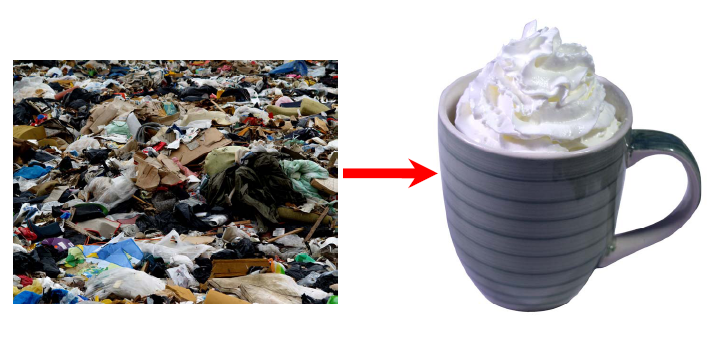
As we saw with the +50% move in the 2003 NASDAQ recovery when there was a flight to garbage (lower quality stocks), eventually the cream rose to the top in the later stages of the 2002-2007 bull market. Usually investors get what they pay for, yet many of the companies that were left for dead in 2008 (including bankruptcy fears) have rebounded the fiercest. As the “anti-Great Depression” trade has paid off handsomely for those low quality stocks, high quality stocks have patiently waited on the sidelines eager to jump along for the escalating ride. Ben Levisohn, Business Week writer, thinks it’s time for high quality stock’s to outperform their junky brethren. Here’s what Mr. Levisohn had to say:
“The stock market has gained 58% since its bear-market low Mar. 9, but the rally hasn’t lifted all equities equally. As is typical in many market bouncebacks, the worst recovered first. Low-quality companies, those with weak or nonexistent profits, mediocre return on equity, and less-than-stellar balance sheets, outpaced their more solidly profitable peers by nearly a 2-to-1 margin, according to research from Baird Private Wealth Management.”
Intuitively, the “garbage” rally makes sense from the standpoint, the harder you fall, the faster you will bounce. However, the sustainability of such rapid, fierce moves should be questioned. Eventually, fundamentals move up investors’ priority list and the “cream” (quality stocks) rises to the top.
Mr. Levisohn further highlights the disparity between “garbage” and “cream” by noting:
“Baird found that companies not earning a profit gained 92% from the Mar. 9 lows through the end of August, compared with a 47% rise for companies that had the highest profit margins. Companies with the lowest return on equity outperformed those with the highest by more than 2 to 1, according to Baird.”
With the sickly stock rally and the removal of the “global meltdown” scenario apparently behind us, I concur with Mr. Levisohn that now is the time to focus on “quality” stocks. What does “quality” mean? From a quantitative perspective, concentrating on those companies with high returns on invested capital (ROIC), high returns on equity (ROE), companies with low levels of debt (leverage), generating healthy levels of cash flow (See Cash Flow Article), represents “quality” investing to me. From a fundamental standpoint, management teams with a clear track record of success, and companies with deep barriers to entry, and a healthy pipeline of growth opportunities are other quality characteristics I look for.
Companies retaining these higher quality traits generally are not held hostage to the capital markets and banking system (i.e., no bailouts necessary). As a result, these companies have the flexibility to invest additional resources into areas like research & development, marketing, manufacturing, and mergers & acquisitions. Superior companies have the ability to step on the throats of weaker competitors, thereby extending their competitive advantage and garnering additional market share.
We have experienced a massive rebound in the markets since the March lows, but now it’s time to take out the garbage. As I search for high quality stocks through my computer terminal, I’ll be enjoying my delicious coffee…with extra cream.
Read Entire Business Week Article Here
Wade W. Slome, CFA, CFP®
Plan. Invest. Prosper.
Gold Market Lunacy Kicking Into Gear

So wait a second, let me get this right. A company pays billions of dollars to buy insurance, and then decides to sell $3.5 billion in dilutive ownership rights (current stockholders losing more than 10% of their ownership) so that they can pay somebody else another $5.6 billion to take that same insurance they previously loved away. In my book, I call that lunacy. This madness is exactly what Barrick Gold (ABX) just decided to do. The world’s largest gold miner issued approximately 95 million common shares at $37 per share to remove gold price hedges (used to lock in gold prices at a certain level), so if gold prices spike Barrick will now be able to participate fully without the drag of the hedges.
Effectively, management has decided to turn the mining company into a Vegas casino, where shareholders can now freely speculate in the price of gold without the volatility reducing hedges in place. Does this outlandish behavior signal a top in gold prices (now hovering around $1,000 per ounce)? I’m not stupid enough to call the end of frothing, speculative behavior – just witness Alan Greenspan’s “irrational exuberance” speech in 1996 when the NASDAQ traded at 1,300 (then went on to peak above 5,000). But what I am bold enough to do is call a spade a spade and to point out how ridiculous this reverse hedging activity is.
Other signs of speculation beyond the 4x price increase over the last 8 years or so, is the fact that gold prices have risen in the face of incredibly weak gold jewelry demand, -22% year-over-year globally in Q2 according to the Gold Demand Trends. This leaves the remaining demand coming largely from speculators and global central banks. If you need more evidence for the gold speculation, just turn on your local AM radio station and listen for the endless number of get-rich-quick on gold advertisements – some stations need to fill the gaping hole once held by those advertisers hawking mortgages.
From a gold investors’ perspective, I would say I fall more into Warren Buffett camp of thinking. Unlike other commodities (some of which I believe will be driven upwards by my emerging market demand and other forces) , gold is something dug up from the dirt in South Africa, melted, transported to another hole, buried in the ground (central bank), and then storage costs are incurred to guard the shiny metal. Sure, jewelry and small commercial applications are drivers for real demand, but the majority of demand is derived from intangible desires. Other commodities, for example oil, copper, uranium, and natural gas offer a lot more utility.
So what’s next when it comes to the price of gold? Peter Schiff an uber-gold bull broker at Euro Pacific Capital believes Armageddon is coming for the U.S. economy and hyper-inflation will drive gold upwards to the $4,000 per ounce price range (See How Peter Schiff’s Other Forecasts Have Performed). Another possibility to consider is a complete collapse in gold prices (and surge in the dollar) like we saw in the early 1980s after Paul Volcker raised interest rates and gold prices did not appreciate for a 25 year period. Hmmm, I wonder what direction interest rates are going next with the Federal Funds rate currently at effectively 0%? Could we see a repeat of the early ‘80s? Seems like a possibility to me. Certainly if you fall into the civil unrest, soup kitchen, and bread line camp, like Schiff and other U.S. bears, then piling into the diluted Barrick Gold shares may not be a bad strategy.
Inflation
Given the massive stimulus, debt loads, money supply growth and legislative agendas currently in place, inflation is a major medium and long-term concern. My remedy is government guaranteed Treasury Inflated Protection Securities (TIPS) that not only compensates investors with interest payments (unlike gold), but will also see principal values increase in tandem with principal if inflation indeed rears its ugly head. For those conspiracy theorists that believe the Consumer Price Index (CPI) is rigged, there are alternative international flavors of TIPs that reset according to other inflation benchmarks. As a kicker, some of these particular securities offer a hedge against a sliding U.S. dollar, which may or may not continue.
So as I lie in my recliner with my popcorn and TIPs, I’ll watch Barrick and other speculators continue the gold buying frenzy, wondering when and how ugly the gold finale will be?
Wade W. Slome, CFA, CFP®
Plan. Invest. Prosper.
DISCLOSURE: Sidoxia Capital Management and client accounts do not have direct long or short positions in ABX or gold related securities or BRKA/B at the time the article was published. Sidoxia Capital Management and its clients do have long exposure to TIP shares. No information accessed through the Investing Caffeine (IC) website constitutes investment, financial, legal, tax or other advice nor is to be relied on in making an investment or other decision. Please read disclosure language on IC “Contact” page.
From Pond Scum to the Pump

The “Green” movement got a shot in the arm recently when a $600 million joint venture between Craig Venter, the critical man behind mapping the human genome, and ExxonMobil the oil company (XOM) was formed to engineer oil from green algae. More than half of the money will be directed to Dr. Venter’s La Jolla, California-based biotech firm Synthetic Genomics.
On the surface the announcement is very appealing because it marries the biggest brains in genetic engineering (Venter) with the biggest brains in energy/oil (ExxonMobil). Add hundreds of millions of dollars to this powerhouse dream team and perhaps something miraculous can be commercialized in the next 5 – 10 years. Environmentalists appear to be on board too, if the hype turns to reality, because not only will cleaner fuels be created but the algae production will reduce harmful CO2 (carbon dioxide) emissions from the air. ExxonMobil’s grand scheme is to build algae farms near power plants and other major CO2 emitters –the farms will feed the algae and by doing so will help curb long-term fuel costs for the businesses.
ExxonMobil and Craig Venter are not the only game in town. A scientific article written by Molika Ashford claims there are more than 50 companies trying to affordably squeeze oil from slime, including a creative way of squeezing oil from algae-eating fish.
Although the “Greenies” seem to buy into the algae-oil process, the environmentalists are not the only constituency the genetic engineers must appease. The ethical debate over manipulating life forms is already percolating – just think, Frankenstein meets algae. In a newer Bloomberg article, Alison Smith, a professor of plant sciences at the University of Cambridge in England commented on the state-of-the-art research: “It is an untested technology, and there needs to be extensive debate about the ethics and environmental consequences of generating these new organisms.”
More recently, Dr. Venter performed a pioneering ‘gene swap’ on a simple species of bacteria called Mycoplasma mycoides, which raised optimism levels even higher that a green, bio-engineered fuel solution is indeed possible. Dr. Venter effectively created a new form of bacteria by swapping DNA from one form of bacteria into another. Researchers and scientists around the globe are searching for solutions to our worsening global energy problems, however time is required. I will anxiously watch from the sidelines to see if big brains and big oil can come together to make “green gold.”
Wade W. Slome, CFA, CFP®
Plan. Invest. Prosper.
Sidoxia Capital Management and its clients did not have any direct position in XOM at the time the article was published. No information accessed through the Investing Caffeine (IC) website constitutes investment, financial, legal, tax or other advice nor is to be relied on in making an investment or other decision. Please read disclosure language on IC “Contact” page.
Wealth Creation Using the Demi-Ashton Ratio

Ajay Kapur at Mirae Asset Securities is bullish on the global markets in the short-run (he sees the S&P 500 index reaching 1250 by March 2010), but even more optimistic in the long-run due to a demographic shift occurring in particular markets. According to this Chief Global Strategist, the more Demi Moores and less Ashton Kutchers we have populating the earth, the better our financial markets will perform.
Mr. Kapur’s Demi-Ashton argument is based on the belief that the higher the ratio of middle aged workers in their 40s (Demis) versus those in their 20s (Ashtons) will result in higher stock prices. Basically, those in their 40s generally have accumulated more wealth to invest and are very concerned about their impending retirement, while those in their 20s have little savings to invest and are more concerned about going to clubs and chasing the opposite sex. Seems to make logical sense.
Even though he is bullish in the domestic markets in the short-run, he sees the U.S., Canada, and Western Europe persisting through a secular bear market that began in 2000 and will last through 2015. Mr. Kapur is quick to point out these markets generally maxed-out when the Demi-Ashton ratios peaked in the 2000 timeframe. When these ratios were rising, for example as in Japan in the 1980s and the U.S. in the 1990s, the respective markets went on an upwards tear. Kapur sees emerging markets like Russia, Eastern Europe, and Latin America benefitting from the rising Demi-Ashton ratios in the coming years.
Whether his hypothesis proves correct or not, I admire the strategist’s bold call on the market direction. Typically economists and strategists herd together due to fear of being an outlier. As for Demi Moore and Ashton Kutcher, they should sleep fine with respect to their retirement plans, as long as they do not go on M.C. Hammer, Michael Jackson, or Mike Tyson spending binges.
Wade W. Slome, CFA, CFP®
Plan. Invest. Prosper.




 Investing Caffeine
