Posts filed under ‘International’
Spreading the Seeds of Democracy

Excerpt from Free March Sidoxia Monthly Newsletter (Subscribe on right-side of page)
As we bathe ourselves in petroleum products, it is moments like these that highlight our deeply engrained addiction to oil. The flames of fundamental human rights, freedom, and democracy are spreading like wildfire throughout the Middle East and North Africa, and as a result, the cost of living and doing business has gone up. What started as a random plea by a Tunisian fruit merchant in response to insidious corruption (26 year old Mohammed Bouazizi burned himself to death in revolt to continuous crooked government bribes) has resulted in a broad wave of protesters removing two authoritarian, autocratic Arab leaders. Egyptian President Hosni Mubarak and Tunisian President Zine al-Abidine Ben Ali have been swiftly cast out by energized protesters, and other repressive leaders are likely bound to topple as well.
Who’s next and when? You’ll have to stay tuned, but Colonel Muammar Gaddafi, the Libyan leader, is on the short list. Leaders in Yemen, Bahrain, Jordan, and Algeria are among the other countries that are feeling the heat too. Even though Egypt, Libya, Tunisia, and other aforementioned countries remain relative oil lightweights, fear over a political contagion spreading to more substantive countries like Saudi Arabia has gotten speculators frothing at the mouth, which pushed oil prices above $100 per barrel and gasoline prices to an average of $3.37 per gallon (about $3.60 in California according to AAA motor club).

Source: FT.com - The U.S. population is a fraction of the size of China and India, but we continue guzzling dramatically more crude.
While the bloodshed on the streets has created fodder for great sensationalist headlines for the media outlets, the fact of the matter is that the spread of democracy is nothing new, and the innate desire for basic human rights has never died. Going back to 1900 the world housed about 10 practicing democracies, and today there are arguably more than 100 democratic (and quasi-democratic) countries (see blue line in chart below).
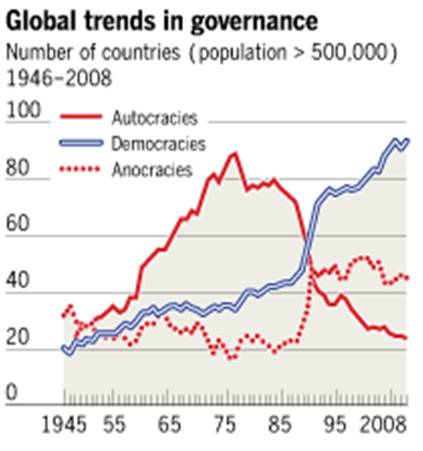
Source: The Financial Times.com
In the U.S., our standard of living has exploded for more than a generation. The internet – and applications like Facebook and Twitter – have flattened the planet and connected the rest of the world to the pleasures available to free, transparent, and open societies. As we have experienced firsthand in Iraq, however, regime changes and moves towards democracy can be messy and costly. Ultimately, the native populations must spearhead the drive toward democratic, political change. Regime change solely rammed through by the U.S. will only create temporary change, and with our fiscal wallets empty, we frankly cannot afford it (see Global Babysitter).
Embracing Alternatives
We didn’t run out of stones in the Stone Age, and we did not run out of steel in the Industrial Revolution. When it comes to oil, the same principle applies. As globalization accelerates the expansion of democratic, emerging middle classes around the world, other oil-rich countries, like Saudi Arabia, understand the havoc that $100-$125 dollar a barrel has on demand destruction. Just like a drug dealer does not want to scare its addicted users, so too oil producers do not want to price consumers out of the market with high prices. Oil may be the lubricant for global commerce, but unlike the empty promises offered by the Jimmy Carter era in the 1970s, technology advancements in the alternative energy industry have reached critical mass. If you don’t believe me, just take a gander at the $17 billion the Chinese are pouring into electric vehicle technology (see Electrifying Profits), or the 20% total energy mandate from renewable sources being instituted in Europe by 2020. Even if we choose to watch from the sidelines and pick our noses, our foreign competitors will wave with delight as they embrace alternative energy resources and race past us. Even if political turmoil temporarily worsens in the Middle East, any additional oil price increases will only make alternative energy resources more economical, and thereby accelerate adoption and make disciples of alternative energy less dependent on some of these oil-rich, corrupt regimes.
Wade W. Slome, CFA, CFP®
Plan. Invest. Prosper.
DISCLOSURE: Sidoxia Capital Management (SCM) and some of its clients own certain exchange traded funds, but at the time of publishing SCM had no direct position in any other security referenced in this article. No information accessed through the Investing Caffeine (IC) website constitutes investment, financial, legal, tax or other advice nor is to be relied on in making an investment or other decision. Please read disclosure language on IC “Contact” page.
Foreign Frights & Debt Doubts

Excerpts from Sidoxia monthly newsletter (Subscribe on right side of page)
Over the last few years the globalized nature of the financial crisis has forced a diverse set of world leaders to deal with obscure international flare-ups in countries ranging from Iceland to Dubai, and Greece to Tunisia. The crisis du jour is the popular revolt in Egypt against 30-year president Hosni Mubarak and his autocratic, authoritarian government. The situation for the U.S. becomes a little sticky because Egypt, although creating a GDP (Gross Domestic Product) of less than the state of Illinois, is still the largest Arab country by population (approximately 82 million – even larger than Iran); a staunch ally with the U.S. in keeping peace with Israel; has contributed important intelligence to our country’s war on terror; and has been a responsible partner in controlling commerce through the all-important Suez Canal. The problem with Egypt and Mubarak’s regime is that the Egyptian economy is in relative shambles (they do not have oil reserves like their neighbors), unemployment is through the roof, and the government has been slow to push democratic advancements forward for the Egyptian people.
As emerging market “haves” increasingly join the ranks of the middle class, the people representing the “have-nots” of Yemen, Jordan, Algeria, Tunisia, Egypt, and others are thirsting for a cocktail of democracy and a higher standard of living, like some of their wealthier neighbors. These autocratic, authoritarian regimes can do their best to slow or delay the democratizations of their countries, but they cannot put the genie back in the bottle. Information is flowing faster than ever, and societies previously kept in the dark are now seeing the light of democracy.
Like any volatile government situation, there are threats and opportunities, depending on whether Mubarak stays in power, and if not, the nature of the new leadership. If an extremist government fills the leadership void, the U.S. may wish to rewind the clock and put the slow-moving reformist, Mubarak, back in power.
The short-term impact of the popular revolt may create additional volatility in the markets, but in the long-run, if the turmoil introduces more open, transparent, less corrupt, and democratic ideals to the new agenda, then the world will become a better place.
Bitter Debt Pill Tough to Swallow

There is never a shortage of issues to worry about, and from an economic standpoint, the suffocating amount of debt our country is dealing with is at the top of the concern list. The 2008-2009 financial crisis hole that we are still climbing our way out of is a friendly reminder of what happens to countries adopting irresponsible fiscal policies. The choking amount of debt the U.S. is swallowing remains a central issue for the current administration and will be a core topic to be debated through the 2012 Presidential election cycle.
How serious is the issue? The problem is serious enough the Congressional Budget Office (CBO) just raised its budget deficit forecast for fiscal 2011 to hit a record $1.5 trillion (9.8% of GDP), a level higher than $1.3 trillion in fiscal 2010. The blame for the new record can be largely attributed to the recent extension of the $858 billion in Bush tax-cuts and other benefits/breaks. Kicking the can down the road recently led Moody’s Investors Services of threatening the U.S. with a downgrade of its triple-A rated debt.
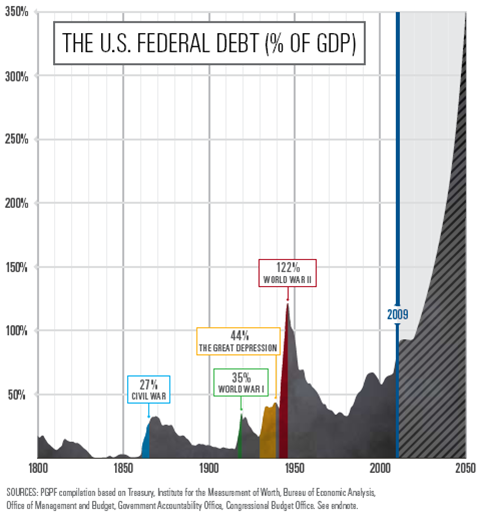
Source: The Peterson Institute
The President addressed some of our fiscal problems in his State of the Union Address recently (e.g., proposing a freeze on discretionary spending), but the rubber really hits the road when he comes out with his budget proposal later this month. How serious is he about reducing our hemorrhaging deficits? We’ll soon find out when the individual budget line-items are distributed for everyone to see. Shortly thereafter, around the end of March, the debt ceiling impasse will become a game of political “chicken.” Each side, Democrats and Republicans, will attempt to withdraw concessions from the other party, in exchange for a vote that will prevent a disastrous default of our government’s debt payments. Basically, our government is effectively looking to expand its credit card credit line, because our government credit limit is maxed out.
The situation isn’t hopeless if our politicians can show leadership by making difficult, unpopular fiscal decisions, but if America ignores our painful debt problems and does not take its bitter medicine, then prepare for an economy on the verge of keeling over.
Wade W. Slome, CFA, CFP®
Plan. Invest. Prosper.
DISCLOSURE: Sidoxia Capital Management (SCM) and some of its clients own certain exchange traded funds, but at the time of publishing SCM had no direct position in any other security referenced in this article. No information accessed through the Investing Caffeine (IC) website constitutes investment, financial, legal, tax or other advice nor is to be relied on in making an investment or other decision. Please read disclosure language on IC “Contact” page.
From Bearded Monks to Greek Decline

Photo source: vatopaidi.wordpress.com
Noted author Michael Lewis has sold millions of books and written on topics ranging from professional baseball to Wall Street and Iceland to Silicon Valley. Now, he has decided to tackle the gripping but nebulous Greek financial crisis through the eyes and bearded mouths of Greek monks in a recently released article from Vanity Fair.
At the heart of the story is a Christian monastery (Vatopaidi), located on a northeastern peninsula of Greece. This ten-century old sanctuary has helped expose the tenuous state of the Greek economy, which is estimated to be sitting on $1.2 trillion in debt (representing $.25 million per working Greek adult) – a massive number considering the relatively petite size of the country. Beyond interviewing the Vatopaidi monks, Lewis trolled through the country interviewing various politicians, businessmen, government officials, and natives in order to make sense of this Mediterranean mess.
The Scandal Genesis
Starting in 2008, news filtered out that Vatopaidi had somehow acquired a practically worthless lake and swapped it for 73 different government properties, including a 2004 Olympics center. The Vatopaidi monastery effectively created an estimated $1 billion+ commercial real estate portfolio from nothing, thanks to one of the key Vatopaidi monks negotiating a fishy, behind-the-door government exchange scheme. This scandal, among other issues, ultimately lead to the collapse of the prior Greek ruling party and sent Prime Minister Kostas Karamanlis packing his bags.
The Greek crisis did not happen overnight, but rather decades. A casual observer may mistake the caustic Greek media headlines as proof to blame Greece as the reason behind the global financial meltdown, Rather, the challenges faced by this island-based country are more symptomatic of the weak global credit standards and the undisciplined disregard for excessive debt levels. Even with an embarrassingly high debt/GDP ratio (Gross Domestic Product) of about 130%, Greece’s desperate financial situation is a relatively minor blemish in the whole global scheme of things. More specifically, the $300 billion or so in Greek GDP represents the equivalent of a pubescent pimple on the face of a $60 plus trillion global economy.
The Greek Concern
The Vatopaidi scandal is still being investigated, but how did this broader debt-induced, Greek fiscal catastrophe occur?
Lax tax collection, absence of legal enforcement, and simple corruption are a few of the contributing reasons. Lewis describes the situation as follows:
“Everyone is pretty sure everyone is cheating on his taxes, or bribing politicians, or taking bribes, or lying about the value of his real estate. And this total absence of faith in one another is self-reinforcing. The epidemic of lying and cheating and stealing makes any sort of civic life impossible; the collapse of civic life only encourages more lying, cheating, and stealing.”
A tax collector and real estate agent from the article had this to say:
“If the law was enforced, every doctor in Greece would be in jail.” AND
“Every single member of the Greek Parliament is lying to evade taxes.”
The Greek government also did an incredible job of distorting the reported economic data and swept reality under the rug:
“How in the hell is it possible for a member of the euro area to say the deficit was 3 percent of G.D.P. when it was really 15 percent?” a senior I.M.F. (International Monetary Fund) representative asked.
The Greek debacle was not an isolated incident. The significant dislocations occurring around the earth’s small and dark corners have directly impacted our lives here in the U.S. Take for example Iceland, the country that New York Times columnist Thomas Friedman called a converted “hedge fund with glaciers.” Not only did this historically tiny fishing island do dynamic damage to its southern neighbors in Europe, but damage from its collapsing banks extended all the way to busted condominium developments in Beverly Hills, California. Or consider Dubai and the multi-billion dollar debt restructuring at Nakheel Development that held the world breathless as people around the world watched in trepidation.
These examples, coupled with the Greek financial crisis highlight how widespread the collateral damage of cheap credit proliferated. The cost of money is still dangerously low, as governments around the globe attempt to stimulate demand, however the regulators and banking industry must remain vigilant in maintaining loan and capital deployment discipline. The hot debates over financial regulatory reform in the U.S., along with the recent Basel III banking requirement discussions are evidence of the need to restore balance and stability to the global financial playing field.
The global financial crisis has spooked billions of people around the world. Like a mysterious boogeyman, the crisis has turned cheap and easy credit into the public’s worst nightmare. The mysticism and general opacity surrounding the inner-workings of Wall Street and global financial markets attacks at investors’ inherent emotional vulnerabilities. Michael Lewis has once again helped turn what on the exterior seems extremely complex and confusing and boiled the essence of the problem down into terms the masses can digest and put into perspective.
Bearded monks loading up on government-swapped commercial real estate may have provided valuable lessons and insights into the global financial crisis, however now I can hardly wait for Michael Lewis’s next topic…perhaps balding nuns in South African gold mines?
Read the whole Vanity Fair article written by Michael Lewis
Wade W. Slome, CFA, CFP®
Plan. Invest. Prosper.
DISCLOSURE: Sidoxia Capital Management (SCM) and some of its clients own certain exchange traded funds, but at the time of publishing SCM had no direct position in any other security referenced in this article. No information accessed through the Investing Caffeine (IC) website constitutes investment, financial, legal, tax or other advice nor is to be relied on in making an investment or other decision. Please read disclosure language on IC “Contact” page.
Colombia: The Hidden Latin American Gem

Judging by the all the volatility in the markets and the gloomy headlines blanketing business periodicals, one would think the global walls of capitalism and democracy were crumbling into oblivion. That’s why it’s a nice diversion to discover a diamond in the rough, shining through the darkness in the form of the Colombian stock market. How special is this South American gem? An +1,845% return over 10 years sounds pretty exceptional to me. Those are the results that Professor Dr. Mark J. Perry from the University of Michigan calculated in a posting he recently wrote about the MSCI Colombia stock market index in his blog, Carpe Diem.
Source: Carpe Diem
Fueling the surge in the equity markets has been a right-leaning, free market government with a hawkish defense stance, led by President Álvaro Uribe for the last eight years. The voters voted to continue Uribe’s mandate by voting in his former defense minister, Juan Manuel Santos, who promises to keep the disruptive guerilla forces operating under Revolutionary Armed Forces of Colombia (FARC) in check.
Colombia has been a close ally of the United States, thanks to their support of a joint crackdown on drug smuggling into the U.S. In return for their support, Colombia has received a nice fat $600 million check from the U.S. each year. What would even make our relationship tighter is an approval stamp placed on an awaiting U.S.-Colombia free trade agreement, which Congress has inexplicably kept on the backburner.
The U.S. and Colombia also agree on something else…their mutual disdain for Venezuelan leader, Hugo Chavez. Mr. Chavez poses a threat to the region, but Santos and the wave of free market leaders in the territory are more likely to wreak havoc on the Venezuelan leader according to Investor’s Business Daily:
“But Santos is probably most dangerous for Chavez, because Colombia’s rags-to-riches success story is so dramatic — showing that any beat-up nation can drag itself out of misery through markets — and because Venezuela and Colombia are such close neighbors. Word gets out about how well things are going in Colombia and it spreads fast in Venezuela. Santos need never fire a shot at Venezuela to slay Chavez’s revolution because the power of the markets will do it for him.”
Colombia’s Gross Domestic Product (GDP) is not overly large relative to some more developed neighbors, but the World Bank estimated the country’s 2008 GDP at $244 billion, almost triple the figure from five years earlier. The explosive economic growth explains how this market was the highest returning market in the world over the last decade, even eclipsing white hot markets like China, Russia, Brazil, Peru, India, and Turkey, among many others.
How does one invest in this Colombian gem? One way to gain exposure is through an exchange traded fund (ETF): Global X/InterBolsa FTSE Colombia 20 ETF (GXG). This particular ETF is concentrated into 20 positions, with heavy weightings in financial, energy, and industrial stocks. So, as you continue to read about the so-called inevitable “double-dip” recession and collapse of the U.S. dollar as the global reserve currency, please do not forget there are some brilliant free market economies, like Colombia, that are growing brilliantly and producing sparkling returns.
Read Professor Perry’s complete article on the Colombia market
Read the WSJ article written on the subject
Wade W. Slome, CFA, CFP®
Plan. Invest. Prosper.
*DISCLOSURE: Sidoxia Capital Management (SCM) and some of its clients own certain exchange traded funds, but at the time of publishing SCM had no direct positions in GXG, or any other security referenced in this article. No information accessed through the Investing Caffeine (IC) website constitutes investment, financial, legal, tax or other advice nor is to be relied on in making an investment or other decision. Please read disclosure language on IC “Contact” page.
Blowing the Perfect Investment Game
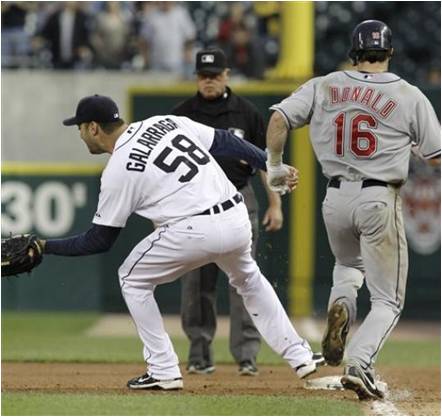
Photo source: Boston.com
Armando Galarraga, pitcher from the Detroit Tigers baseball team, became a victim of a blown call by umpire Jim Joyce, resulting in a lifetime opportunity being ripped from his clutches. Not only did the error in judgment cost Galarraga a perfect game – a feat only achieved by 20 pitchers over the last 130 years – but the blunder also cost him a no-hitter. Perfect games are difficult to come by in the investment world too, but for those ambitious investors reaching for the finance Hall of Fame, I strongly believe a healthy dosage of international and emerging markets is required to achieve perfection (or significant outperformance).
The Fab Five
The oft quoted view that the U.S. was the dominant economic powerhouse in the 20th century (after Britain controlled the 19th century) led me to analyze five emerging growth markets outside of the U.S. There are some clear leaders in pursuit of 21st century economic supremacy, however nothing in the global pecking order is guaranteed. What I do know is that me and my clients will be relying on the financial tailwinds of growth coming from these international markets to provide excess return potential to my portfolios (albeit at the cost of shorter-term volatility). Even retired individuals, or those with shorter time horizons, should consider small bite sizes of these emerging markets in their portfolios, if merely for some of the diversification benefits (see diversification article).
Pundits and media types endlessly write and talk about the “lost decade,” the demise of “buy and hold,” and/or the “death of equities.” Well, as you can see, the lost decade through the first half of 2010 turned out to be a significantly lucrative period for investors with the stomach and courage to invest outside the familiar comfort zone of the United States (see chart below).
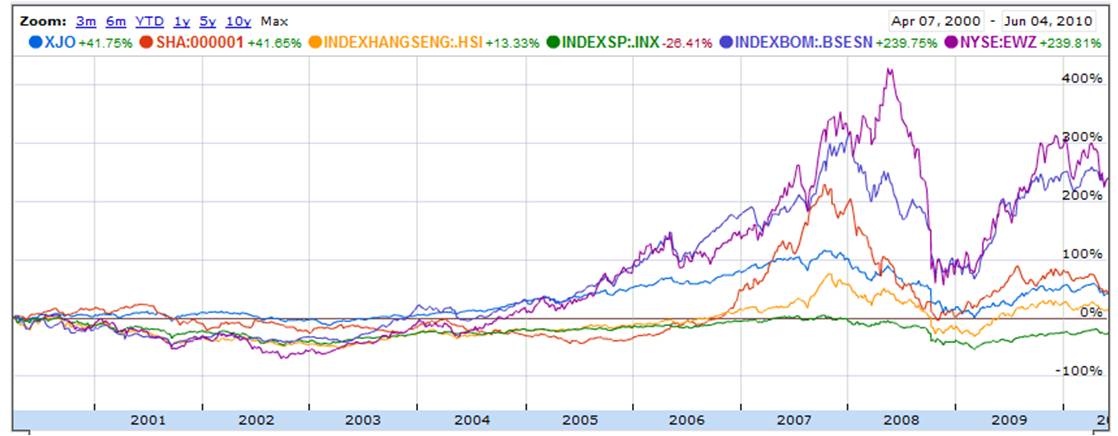
Specifically, here is the international outperformance achieved in the sample of international markets as compared to the United States (S&P 500 Index):
- Brazil +266.22% (EWZ tracking Bovespa Index)
- India +266.16% (Bombay Stock Exchange – BSE)
- Australia +68.16% (ASX 200 Index)
- China +68.06% (Shanghai Index)
- Hong Kong +39.74% (Hang Seng Index)
- United States -128.19% Average Underperformance versus five other geographic indexes.
An added kicker for investment consideration is valuation. According to The Financial Times market data section, all these international markets, with the exception of India, trade at a discount to the S&P 500 on a Price/Earnings ratio basis (P/E).
Victim of Our Own Success
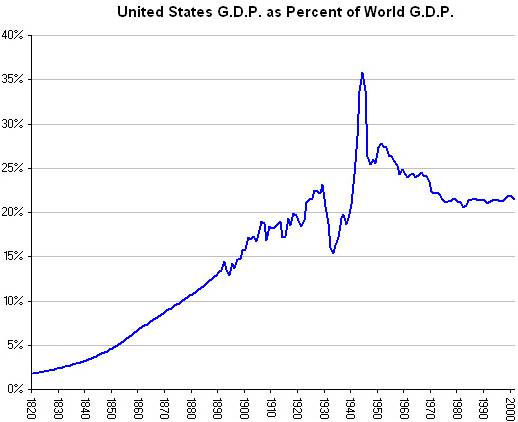
Graph source: The New York Times
In many respects, our country has continued to thrive in spite of some of our political and economic shortcomings. As you can see from the chart below (NY Times article) our country’s market share of the world’s Gross Domestic Product (GDP) has been steadily been declining since World War II (and we’ve still done OK). With U.S. GDP exceeding $14 trillion, our sheer size makes it much more difficult to grow relative to our smaller, more nimble international brethren. Given our top economic position in the world, Warren Buffett succinctly identified the force working against size when he said, “Gravity always wins.” I would expect gravitational influences to continue to weigh us down in the future, but our declining share should not be considered a detrimental trend. Globalization needs to be embraced by policymakers so we can take advantage of these faster growing countries as opportunistic export markets. We Americans can improve our standard of living while riding the coattails of our speedy neighbors. Do yourself a favor and include a healthy chunk of higher growth markets into your portfolio – it’s important you do not blow your own investment game.
Wade W. Slome, CFA, CFP®
Plan. Invest. Prosper.
*DISCLOSURE: Sidoxia Capital Management (SCM) and some of its clients own certain exchange traded funds (including BKF, FXI, EWZ), but at the time of publishing SCM had no direct positions in any other security referenced in this article. No information accessed through the Investing Caffeine (IC) website constitutes investment, financial, legal, tax or other advice nor is to be relied on in making an investment or other decision. Please read disclosure language on IC “Contact” page.
Google vs. China: Running Away from 660 Million Eyeballs?

Wait, let me get this straight. Google, the $185 billion behemoth that wants to take over the world is seriously considering turning its back on a rapidly growing cluster of 660 million eyeballs (330 million Chinese internet users according to BusinessWeek)? After hitting their head on an obscenely high market share in the U.S. (67% search share based on Nielsen data) and looking for new geographies to expand, I’m supposed to believe Google will walk away from the third largest economy on this planet (see China: Trade of the Century)? The explanation given for Google’s capitulation is discontent related to unknown hackers and censorship concerns. If that’s not enough, this alleged saint-like posturing comes after Google sold its censorship soul for years, before seeing the free speech light. Although the company’s mission is to “do no evil,” Google had no qualms aggressively poaching Microsoft (MSFT) miracle maker, Kai-Fu Lee, to kick-start their Chinese presence. If free speech is truly at the root of the Google’s unease, then why wait four whole years and a hack-attack before laying down an ultimatum on the Chinese government?
I Smell a Rat
In a blog post written by Google’s Chief Legal Officer, David Drummond, the company explains how their iron curtain digital defense was bent but not broken:
“We have evidence to suggest that a primary goal of the attackers was accessing the Gmail accounts of Chinese human rights activists. Based on our investigation to date we believe their attack did not achieve that objective. Only two Gmail accounts appear to have been accessed, and that activity was limited to account information (such as the date the account was created) and subject line, rather than the content of emails themselves.”
I’m no exterminator, but I smell a rat. All this feels a lot more like politics and business tactics then it does an altruistic display of free-speech martyrdom. The Chinese government and Google executives know what is at risk, as they both play a high stakes game of “chicken.”
Google goes onto say:
“As part of our investigation we have discovered that at least twenty other large companies from a wide range of businesses–including the Internet, finance, technology, media and chemical sectors–have been similarly targeted.”
I’m confused. These unknown hackers attacked 20 different companies and only unsuccessfully cracked two Gmail accounts. The evidence sounds pretty harmless on the surface, if this language is representative of reality. Maybe I’m wrong, and a foiled cyber-attack is reason enough to cease operations in a country inhabiting a potential 1.3 billion customers.
Sure China represents a relatively small portion of Google’s revenues (estimated at less than $1 billion and a single digit percentage of revenues), but Google would be insane to walk away from this massive long-term growth market, even if Baidu (BIDU) is currently eating their lunch. Although Google has a smaller #2 position in China, it still has a respectable 35.6% search market share (according to BusinessWeek).
Not Just About Search – Cell Phones Too
Even if they claimed they were throwing in the white towel on their Chinese search business, I don’t think they really want to flush their newly minted cell phone prospects down the toilet. Even if 275 million or so cell phone users in the U.S. is fertile ground for Google to target their new Android-based phones, I’m guessing they have penciled out the gigantic mobile potential of the rapidly expanding 700 million+ Chinese mobile phone user market.
While I can’t take the scenario of Google ceasing China operations off the table, I consider the chance of Google shutting its doors in China significantly less than 50%. While the bold Google statement of feasibility review regarding their Chinese business existence has gained a lot of attention, I think calmer heads will eventually prevail and Google will resume their targeting of 660 million Chinese eyeballs. Who knows, the high stake game of “chicken” may even benefit their bottom-line as they win the hearts and minds of more future free-speech users.
DISCLOSURE: Sidoxia Capital Management (SCM) and some of its clients own GOOG shares and China based exchange traded funds at the time of this article’s publishing, but did not have a direct position in MSFT and BIDU shares. No information accessed through the Investing Caffeine (IC) website constitutes investment, financial, legal, tax or other advice nor is to be relied on in making an investment or other decision. Please read disclosure language on IC “Contact” page.
Mobius: The Kojak of Emerging Markets
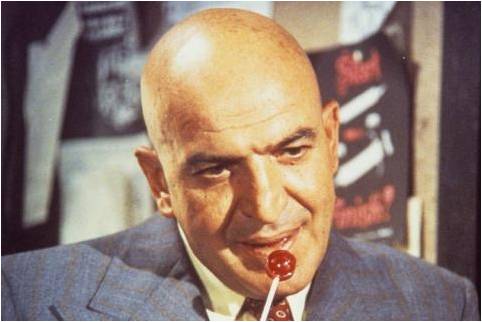
Kojak substituting lollipops for nicotine.
Lieutenant Theo Kojak, played by Telly Savalas in the 1970s television series Kojak, is a bald, hard-nosed New York City police detective who hunts down criminals. Mark Mobius, executive chairman of Templeton Asset Management, is a bald, hard-nosed investment manager devoted to hunting down winning stocks in emerging markets. Expanding on his numerous authored books, Mobius recently decided to write his own blog expanding on his global travels and reporting back his investment findings.
Recently Mobius fielded some questions from his readers, covering emerging markets from China and Brazil to “Frontier” markets like Sri Lanka and Serbia (see also Trade of the Century). Here are a few of the exchanges:
In which countries, regions or sectors are you finding the best values?
“We are finding opportunities in almost all emerging markets. Our ground-up research process locates opportunities in countries where the political or economic outlooks may not, at first appearance, look good. Nevertheless, we generally favor China and Brazil, but also have large positions in Russia, India and Turkey. In terms of sectors, we believe commodity stocks look good because we expect the global demand for commodities to continue its long-term growth. We also favor consumer stocks. With rising per-capita income and strong demand for consumer goods and services in many emerging markets, we believe the earnings growth outlook for these stocks is positive.”
It appears that the financial market has changed, in that one needs to be more skeptical and cautious when investing than in the past. Alan Greenspan said that last year’s crash was unforeseen, and given the uncertainty of the markets and global financing, the big crash could happen again. What say you?
“Actually some analysts did see the crash coming in view of Greenspan’s loose monetary policies. The nature of markets is that there will always be booms and crashes since people tend to get either too optimistic or too pessimistic. The good news is that on average, bull markets have lasted longer than bear markets, and bull markets have gone up in percentage terms more than bear markets have gone down. In terms of other risks, I believe there is still a danger of the unregulated derivatives market.
Do you think Sri Lanka will turn around?
“We believe that Sri Lanka is fundamentally a rich country and that the challenges revolve around how the true potential in tourism, agriculture and industry can be effectively met. We have been investing in Sri Lanka for many years. For us, the biggest challenge in the public market is liquidity. Trading turnover is rather low although we have found some investment bargains.”
Belgrade’s Stock Exchange suffered heavy losses in the 2008 meltdown, with the Belex index falling sharply. I am from Serbia, and so I was thrilled to find out that Franklin Templeton is investing in Serbia.
“Yes, we are interested in the Serbian market and we are now looking at opportunities there. Of course, when markets are down, it is the best time to start looking and Belgrade is definitely on our list. We have already invested in a company in Serbia and look forward to looking more closely at that market.”

Mark Mobius - Not Moby
While Telly Savalas discovered fame 30 years ago from his Kojak role, Mr. Mobius has spent more than 30 years in the emerging markets chasing successful investments. Franklin Templeton Investors should remain happy if Mobius’ picks continue to shine, like his bald, polished crown.
Wade W. Slome, CFA, CFP®
Plan. Invest. Prosper.
DISCLOSURE: Sidoxia Capital Management (SCM) and some of its clients own certain exchange traded funds (EEM, FXI, BKF). No information accessed through the Investing Caffeine (IC) website constitutes investment, financial, legal, tax or other advice nor is to be relied on in making an investment or other decision. Please read disclosure language on IC “Contact” page.
China: The Trade of the Century?
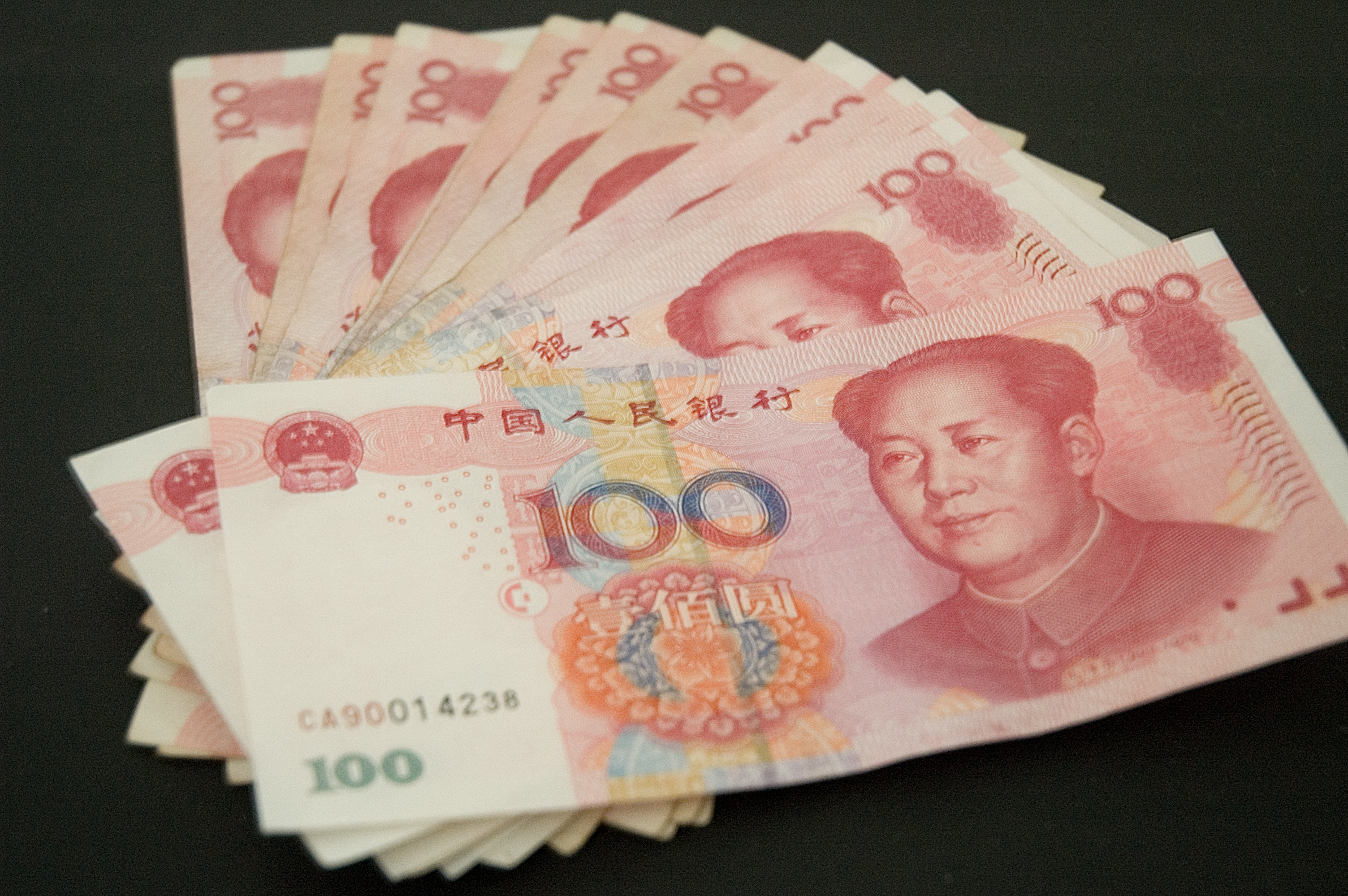
So it goes, Britain was the country of the 19th century, the United States was the country of the 20th century, and China will be the country of the 21st century. Is investment in China hype or reality? Here are some points in China’s favor:
- Large Labor Force: With a population exceeding 1.3 billion people, China has plenty of labor available to expand GDP (Gross Domestic Product).
- No Nonsense Government: An authoritarian government has its advantages. While pornography (see article) and unrest may be problems, infrastructure projects are not.
- Education: Chinese culture values education. As a result, China is slowly shifting away from its roots as the globe’s manufacturing and piracy capital. Intellectual property is appreciated more now that China is becoming a leader in emerging technology areas, such as solar power.
- Trade Surplus & Currency Reserves: Must be nice to have trade surpluses and massive currency reserves (~$2.3 trillion). This is what happens when you are in a position to export more than you import.
- Manageable Debt: China’s Debt/GDP ratio is less than 25%. You can compare that to the U.S. at around 100% and Japan at over 200%. Disciplined fiscal management provides the Chinese government with more options in dealing with the global slowdown (e.g., stimulus).
- Long Runway of Growth (Read More): China’s long runway of growth has allowed it, and should continue to allow it, to grow at above average growth rates – in the 3rd quarter of 2009 the Chinese economy grew at a very healthy +8.9% rate.
With all these positives, it’s no wonder China is the darling of the world. Given the constructive outlook, how can investors take advantage of the Far East opportunity in China? Our good friend at Investing Caffeine (figuratively speaking), Burton Malkiel (Princeton Professor of Economics and Chief Investment Officer at AlphaShares), is bullish about China and is sharing his preferred participation method…an all-cap China exchange traded fund (ticker: YAO) – Read more about Malkiel and Active vs. Passive Investing (12/8/09 Post).
Just how bullish is Professor Malkiel?
“I think China will continue to have the highest growth rate of any major country in the world, and within 20 years, China will be the world’s leading economic power.”
And he puts his money where his mouth is. Last year the professor shared his Chinese exposure in his personal portfolio:
“My portfolio is probably 20 percent Chinese, and that includes not only indices but also individual companies.”
Risks: The Price to Play
Professor Malkiel is not blindly diving into China – he researched the markets for years before taking the plunge. In an article from last year (From Wall Street to the Great Wall), he highlighted some of the inherent risks:
1) Foreign Neighbors: China continues to have tense, although cordial, relations with some of its neighbors like Taiwan and Japan. Their dealings are stable now, but the future is uncertain.
2) Social Unrest: An uneven distribution of income can lead to serious social unrest, especially in the rural parts of the country. If the government can’t keep the economy humming along, those left behind may fight back.
3) Environmental Degradation: China is building nuclear, wind, and solar projects at a frenetic pace, but China is also the globe’s largest emitter of greenhouse gases (relies on dirty coal for 70% of its energy), according to CNN. If China becomes an irresponsible power hog, there could be damaging effects to the economy.
4) Corruption: This continues to be a problem, but Malkiel points out the case of Zheng Xiaoyu, a former director of China’s FDA (Food and Drug Administration) equivalent. In 2007, he was executed after being found guilty of taking bribes.
5) Banking System: Malkiel notes that China continues to have a fragile banking system with a lot of bad loans. Due to political reasons, certain government owned entities may receive risky loans in the name of creating jobs – even if it means keeping unhealthy zombie banks alive.
Trading Strategies:
Beyond investing in AlphaShare ETFs (YAO), Malkiel advocates considering the other options, such as the “A”, “H”, and “N” shares. Unfortunately, the more inefficient “A” shares, which trade in Shanghai and Shenzen, are largely unavailable to investors outside of China. However, the “H” shares and “N” shares are available to international investors. “H” shares are listed on the Hong Kong Stock Exchange and the listed companies follow globally accepted accounting principles. The “N” shares come from companies registering with the SEC (Securities and Exchange Commission) and trade either on the NYSE (New York Stock Exchange) or NASDAQ exchanges.
Lastly, Malkiel knows he is not the only investor to pick-up on the China growth story. Multinationals are investing heavily in China, and these domestically based companies can serve as indirect investment vehicles to benefit from the attractive fundamentals as well.
Professor Malkiel calls China the “growth story of the world.” Simple math shows us that this Asian juggernaut (the third largest country in the world by GDP) will soon pass Japan in the number two position and the U.S. is likely only a few decades ahead after that. Having explored and studied China firsthand, I concur with many of Malkiels conclusions, which opens the possibility that China could reasonably be the top country (and top trade) of the 21st century?
Full Malkiel Article: From Wall Street to the Great Wall – Investment Opportunities in China
Wade W. Slome, CFA, CFP®
Plan. Invest. Prosper.
DISCLOSURE: Sidoxia Capital Management (SCM) and some of its clients own certain exchange traded funds, like FXI, at the time of publishing. No information accessed through the Investing Caffeine (IC) website constitutes investment, financial, legal, tax or other advice nor is to be relied on in making an investment or other decision. Please read disclosure language on IC “Contact” page.
Sukuk: Islamic Loophole for Dubai Debt Debacle

Islamic followers can be capitalists too. Although oil prices (currently around $77 per barrel) have fallen from the peak near $150 per barrel in 2008, oil rich nations have gotten creative in how they raise debt-like financing. Critical to fueling the speculative expansion in some oil rich areas has been the growth in sukuk bonds, which have been created as a function of an exploited loophole embedded in Islamic finance principles.
U.S. Does Not Have Monopoly on Debt Driven Greed
The pricked debt bubble that spanned a range of entities, from Icelandic banks to Donald Trump’s empire (read more), has now spread to Dubai commercial real estate. At the center of the storm is Dubai World, a quasi-government owned conglomerate of Dubai, which is in the process of negotiating a $26 billion debt restructuring with the government and sukuk bondholders. The overleveraged Dubai market ($80 billion in total debt) is home to the tallest building in the world, largest man-made islands, and a ski-resort based in the desert – all projects built with the help of debt in the face of collapsing real estate prices. Critical to Dubai World’s debt restructuring is a $3.5 billion sukuk bond issued by its commercial real estate subsidiary Nakheel Development (“Nakheel”). So what exactly is a sukuk (plural of sakk)?
Investopedia lists the following definition for sukuk:
“An Islamic financial certificate, similar to a bond in Western finance, that complies with Sharia, Islamic religious law. Because the traditional Western interest paying bond structure is not permissible, the issuer of a sukuk sells an investor group the certificate, who then rents it back to the issuer for a predetermined rental fee. The issuer also makes a contractual promise to buy back the bonds at a future date at par value.”
Sukuk “No-No”s
The generation of money on top of money – interest payments or what’s called “Riba” – is strictly forbidden by Shari’ah law. As a result, issuers must issue and repurchase sukuk at par (original value), not at a discount or a premium. Shari’ah law encompasses more than Islamic law, it also covers the amorphous spiritual and moral obligations demanded from the religious practitioners. In order to ensure compliance with Islamic principles, many financial institutions and funds typically have a Shari’ah Board monitoring the details of the sukuk. Shari’ah law is very consistent with the teachings in the Quran (the Western version of the Bible). Mixing finance and religion may seem strange on the surface, but I guess if we use world history as a proxy, we shouldn’t be surprised that money and Muhammad somehow find a way to coexist.
Click Here to View CNBC Interview on Sukuk Bonds
Sukuk Structure & Market
The core Islamic finance principles underpinning the sukuk market have been around for more than 1,500 years, but the actual sukuk market was actually introduced in Malaysia around 1990. Since then, the market has been on a continual uptrend. What makes this $1 trillion Islamic debt market (HSBC estimate) even fuzzier is the scores of sukuk structures (See Ijara Sukuk chart below – very similar to a sale-leaseback arrangement), and the diverse geographic issuer/investor base. For example, greater than 60% of Nakheel’s investors are based outside the Middle East (a large portion in Malaysia). Making matters as clear as mud, each geographic region and structure has its own interpretation of legal rights and Shari’ah law. Layer on issues such as derivatives, bankruptcy rights, and penalty fees and you end up with only more complexity. What’s more, many of these sukuk bonds involve Special Purpose Vehicles (SPVs) – made famous by the off-balance sheet variety used by Enron Corp. – in order to get around the Islamic issuance loopholes.
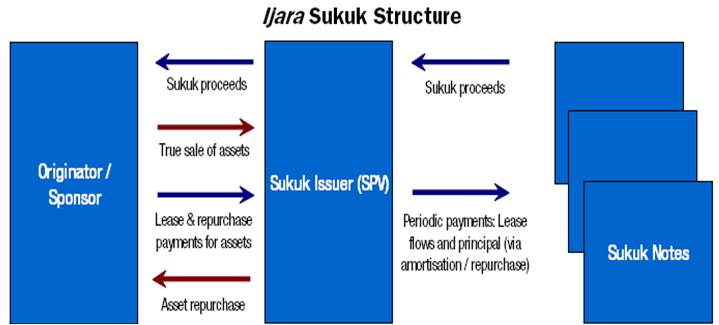
Source: Moody's Investor Service
Sukuk Liquidity
The illiquidity of sukuk market hasn’t made resolving the Dubai debt restructuring any easier. The sukuk market doesn’t come close to matching the liquidity of traditional corporate and sovereign debt markets. Little trading is done in secondary markets because most investors in sukuk bonds follow a buy and hold strategy. The lion’s share of trading in this immature market gets completed through inter-institution, over-the-counter transactions. A recent $500 million sukuk deal issued by General Electric (GE) last month has only raised awareness for the financing structure (pre-Nakheel restructuring). As oil rich states strive to diversify their economic bases, I would expect more deals to get done, in spite of the recent Dubai mess. How severe the recent Dubai sukuk black eye will be depends on how Nakheel, the United Arab Emirates (UAE), Abu Dhabi, bondholders, and other constituents restructure the pending sukuk obligations by the December 14th deadline.
The recent debt restructuring talks in Dubai highlight the complexity of this relatively new Islamic financing structure. With very few sukuk bankruptcy cases in existence, the structures remain largely untested and uncertain. How the Dubai debt debacle ultimately gets resolved will have a significant impact on this nascent, but rapidly growing market. Until the sukuk restructuring is settled, Dubai may just need to put the construction of that next man-made island on hold.
Wade W. Slome, CFA, CFP®
Plan. Invest. Prosper.
DISCLOSURE: Information and data from Moody’s Investor Service (Shari’ah and Sukuk: A Moody’s Primer 5/31/2006), CNBC interview 12/2/09, Financial Times 12/1/09, and other articles. Sidoxia Capital Management (SCM) and some of its clients own certain exchange traded funds, but at time of publishing had no direct positions in GE. No information accessed through the Investing Caffeine (IC) website constitutes investment, financial, legal, tax or other advice nor is to be relied on in making an investment or other decision. Please read disclosure language on IC “Contact” page.
Teen Prom of Listings Driven by Globalization

The international and emerging markets are like maturing teenagers attending a prom. If the U.S. represents the incumbent Seniors, then the international regions, like Europe and China, are the underclassmen now overwhelming the dance party. In 2009 for example, China has accounted for approximately 40% of all IPOs (Initial Public Offerings), according to The Financial Times.
This trend, however, is not a new phenomenon. Grant Thorton, an accounting consultancy firm, found the declining trend in American stock listings occurring for more than a decade. Specifically, Grant Thorton discovered the following:
“…the number of US exchange-listed companies is down by more than 22 per cent since 1991 and down by 53 per cent when allowing for real, inflation-adjusted gross domestic product growth.”
Why is the U.S. losing listing market share? David Weild, a former Nasdaq Vice Chairman, believes the advent of online brokerage firms in the mid-1990s shoulders a lot of the blame. The new order handling rules established in 1997 made the profitability of supporting small-cap stocks less profitable for the traditional brokerage firms.
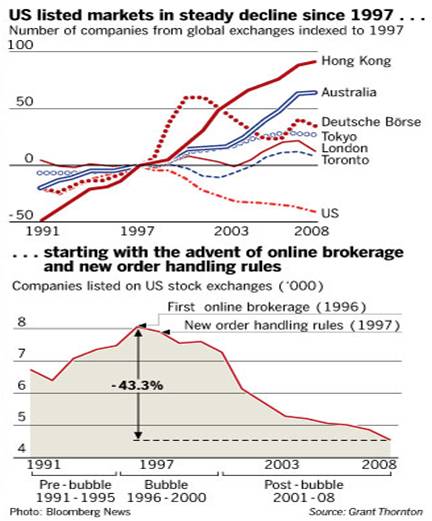
Source: Charts from The Financial Times show steady U.S. listings decline.
The reasons for the rule changes were designed to drive lower costs and improved transparency. These goals have largely been achieved, but due to globalization and the heightened liquidity in international and emerging markets, alternative exchanges have been gaining share.
Although profitability in supporting small-cap stocks has dropped, the evolution of high frequency trading (HFT) has stirred up the pot of controversy (read HFT article here). Exchanges, in an attempt to offset lost listings profits, are building new streams of revenues targetting these rapid pace computer traders.
As globalization spreads, thanks in part to the spread of technology advances, foreigners are joining what Thomas Friedman calls a new “flat” world, and the underclassmen are coming to the party with their dancing shoes.
Read The Financial Times Article Here
Wade W. Slome, CFA, CFP®
Plan. Invest. Prosper.
DISCLOSURE: No information accessed through the Investing Caffeine (IC) website constitutes investment, financial, legal, tax or other advice nor is to be relied on in making an investment or other decision. Please read disclosure language on IC “Contact” page.




 Investing Caffeine